

A widely watched inflation rate may look cooler on September 30 even if no store, landlord, lawyer or software company cuts a price. The U.S. Bureau of Economic Analysis plans to revise how three parts of the Personal Consumption Expenditures price index are measured, applying the changes back to the first quarter of 2021.
The overhaul matters because the Federal Reserve uses PCE inflation for its 2% target. Outside economists told Reuters that the changes could lower May's 3.4% year-over-year core PCE reading to roughly 3.2% or 3.3%. That is an estimate, not an official BEA forecast, and the final effect will depend on revised source data and how the three components offset one another.
The practical takeaway is simple: a lower revised rate would mean the statistical ruler improved or changed. It would not mean prior bills were refunded, household purchasing power suddenly rose or the Fed automatically gained permission to cut interest rates.
What BEA is changing
BEA's official preview of the 2026 annual update identifies three affected categories: portfolio management and investment advice, legal services, and computer software and accessories. The agency says the annual update begins September 30 and will revise national accounts covering the first quarter of 2021 through the first quarter of 2026.
For portfolio-management services, BEA currently converts nominal spending into inflation-adjusted spending using a producer-price index. The new approach will estimate the quantity of services consumed from employment and hours data for the industry. The implied price change will then be derived from nominal spending and that estimated quantity.
For legal services, BEA will replace a consumer-price series with a composite built from detailed producer-price indexes. The agency said the unpublished consumer-price values it had received from the Bureau of Labor Statistics no longer met publication-quality guidelines and had shown erratic moves that other data could not confirm.
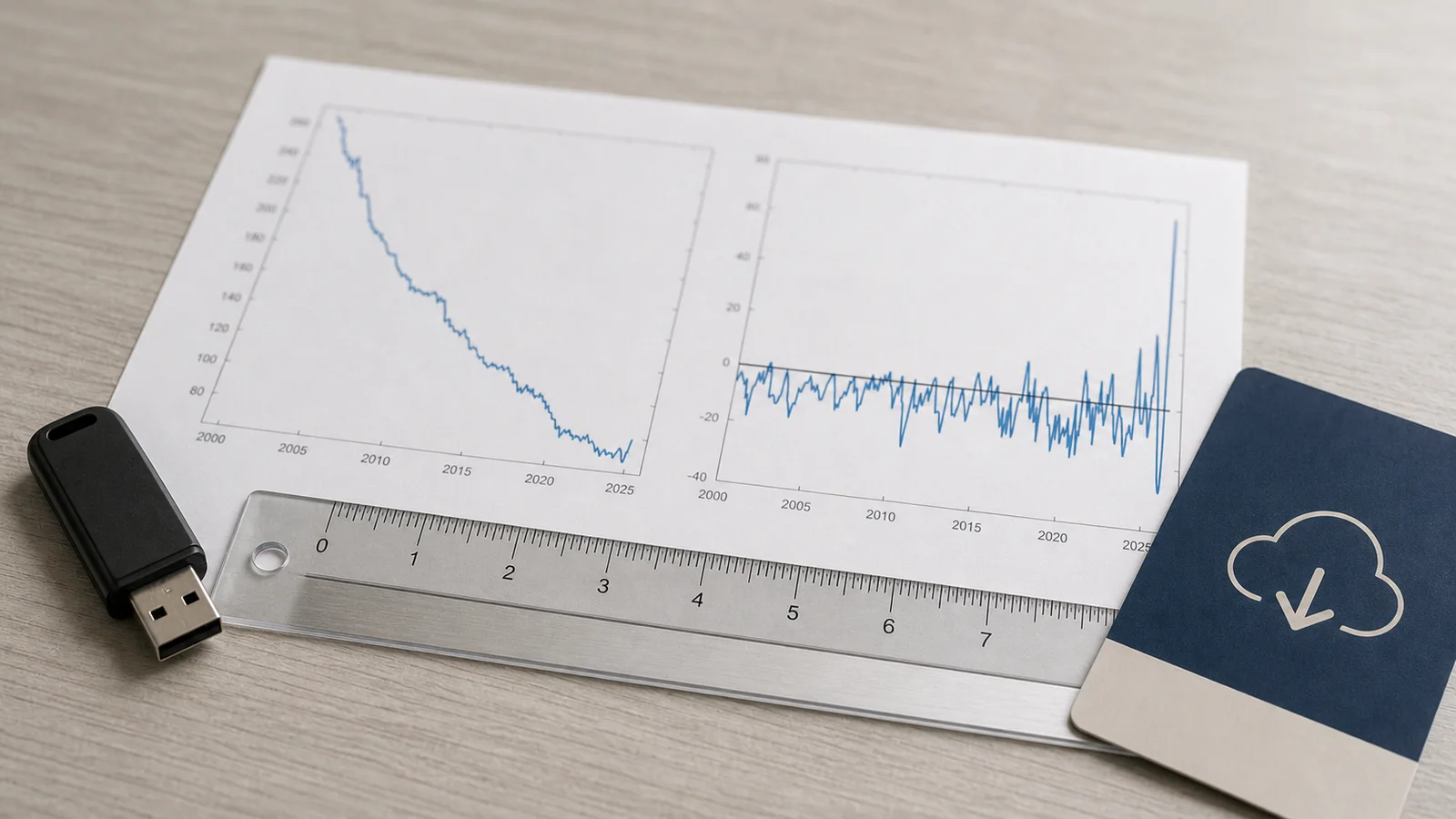
The software change addresses a different mismatch. BEA will blend the consumer-price index for software and accessories with producer-price indexes for game-software publishing, hosting and other information-technology infrastructure services. The current PCE method relies only on the consumer-price series.
Why software became the pressure point
A Federal Reserve staff note published May 22 found that the software-and-accessories component rose at a 73% annualized rate from November 2025 through March 2026. That was a striking reversal for a category that had historically declined about 5% a year as technology improved and distribution costs fell.
The researchers identified two central problems. First, the consumer-price basket includes items such as flash drives and blank media that are not part of BEA's corresponding PCE category. Second, rapidly improving AI features and the shift toward subscriptions make it harder to separate a pure price increase from a change in product quality.
The mismatch is magnified by weighting. The Fed researchers calculated that software and accessories represented about 0.035% of core CPI in March but about 1.2% of core PCE. A noisy price series that barely moves CPI can therefore have a much larger effect on the Fed's preferred core gauge.
Is this moving the goalposts?
The timing creates an obvious credibility problem. Kevin Warsh has criticized traditional core PCE as an imperfect measure and has favored trimmed-mean measures that remove extreme price movements. A revision that lowers the reported inflation rate could therefore look politically convenient.
But the institutional distinction matters. BEA, an agency within the Commerce Department, publishes the official PCE accounts and announced the methodology changes in June. The Federal Reserve chooses how much weight to place on PCE and alternative measures; its chair does not personally recalculate the government index. Statistical agencies also make annual revisions so newer data and better methods can replace weak proxies.
The fair test is not whether the revision raises or lowers inflation. It is whether the new method better matches the products and services households actually consume, is documented clearly and is applied consistently when the result is inconvenient as well as convenient.
What the revision could change for rates
Core PCE was 3.4% in May, according to BEA's latest published data, still well above the Fed's 2% objective. Goldman Sachs economists estimated the revised May rate could be 3.2%, while JPMorgan estimated 3.3% after rounding, Reuters reported on June 29.
A reduction of one or two tenths would narrow the gap but would not establish that inflation is back at target. Policymakers will still examine monthly momentum, labor costs, housing, tariffs, energy shocks, inflation expectations and the distribution of price changes. They will also know that September's release contains a break in method, making comparisons with unrevised headlines especially easy to misuse.
What readers should watch on September 30
Start with the revised 12-month core PCE rate, then compare the contributions from software, legal services and portfolio management. Check whether revisions extend across the five-year window or are concentrated in recent months. Finally, distinguish the updated historical series from the fresh August data released at the same time.
The headline may say inflation fell after a methodological change. The more accurate reading will be narrower: BEA changed how it estimates three services and products, and the revised history may show that prior inflation was slightly overstated. That can influence the rate debate. It cannot lower a bill that has already been paid.


