
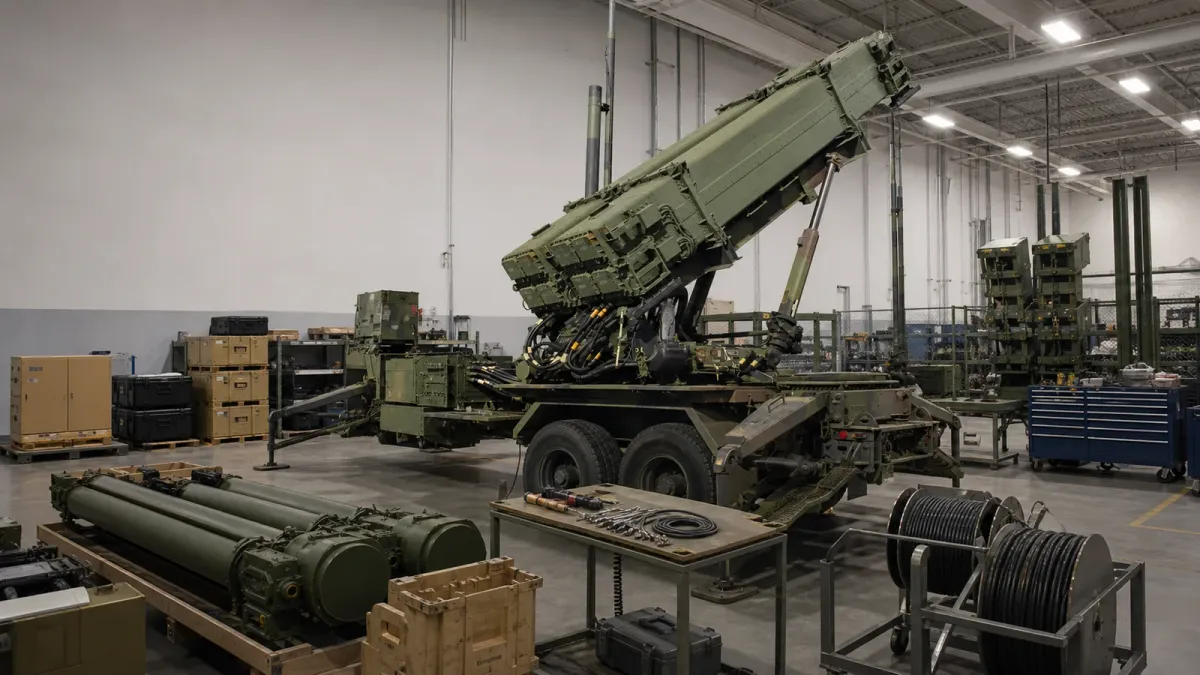
The Pentagon's latest missile-defense push is no longer just a weapons story. It is a factory-capacity story: whether the United States can build enough Patriot and THAAD interceptors to support current commitments without leaving future crises short.
Fox News reported Tuesday, August 11, 2026, that the Army's fiscal 2027 plan sharply raises the long-term objective for PAC-3 MSE Patriot interceptors to 13,773 missiles. Reuters reporting from August 3 separately described a more than $3 billion framework agreement tied to Patriot and THAAD interceptor parts production.
The practical question is simple: air defenses can be decisive only if there are reloads behind them. Recent use in the Middle East, the war in Ukraine, and planning for a possible Indo-Pacific crisis have turned interceptor inventory from a specialized procurement line into a broader readiness test.
The numbers
The newly highlighted figure is the 13,773-missile PAC-3 MSE acquisition objective cited in the Army budget context and current Fox report. The earlier Reuters-confirmed agreement was aimed at expanding production of components used in Patriot and THAAD systems, including parts that can determine whether final missile assembly can actually accelerate.
That distinction matters. A bigger objective does not instantly create missiles. Interceptors depend on solid rocket motors, seekers, electronics, tested production lines, trained labor, and multiyear contracts that give suppliers a reason to invest before the next emergency order arrives.
Why it matters
For U.S. readers, the issue reaches beyond defense contractors. Missile-defense shortages can affect how quickly Washington can arm allies, how much risk commanders accept when deploying forces, and how expensive emergency replenishment becomes. CSIS has warned that repeated deployments and recent combat use have put pressure on scarce interceptor inventories, especially for high-end ballistic-missile defense systems.
The same problem shapes diplomacy. If the United States promises air-defense support to partners in Europe, the Middle East, and Asia at the same time, production speed becomes part of credibility. A country can have advanced systems on paper and still face hard choices if the missile supply chain cannot keep up with demand.
The caveat
The ramp-up is not proof that the U.S. is out of missiles, and public budget documents do not provide a clean real-time inventory count. They show intent, procurement targets, and funding lines, while many operational stockpile details remain classified. That is why the most useful lens is not panic, but bottlenecks.
The next test is whether Congress, the Pentagon, and manufacturers can turn larger targets into sustained production rather than one-time surges. Watch for signed multiyear contracts, new supplier capacity, delivery timelines, and whether Patriot and THAAD production plans survive budget fights. Those details will show whether the missile ramp is a durable readiness shift or another warning that arrived faster than the factories could move.


