
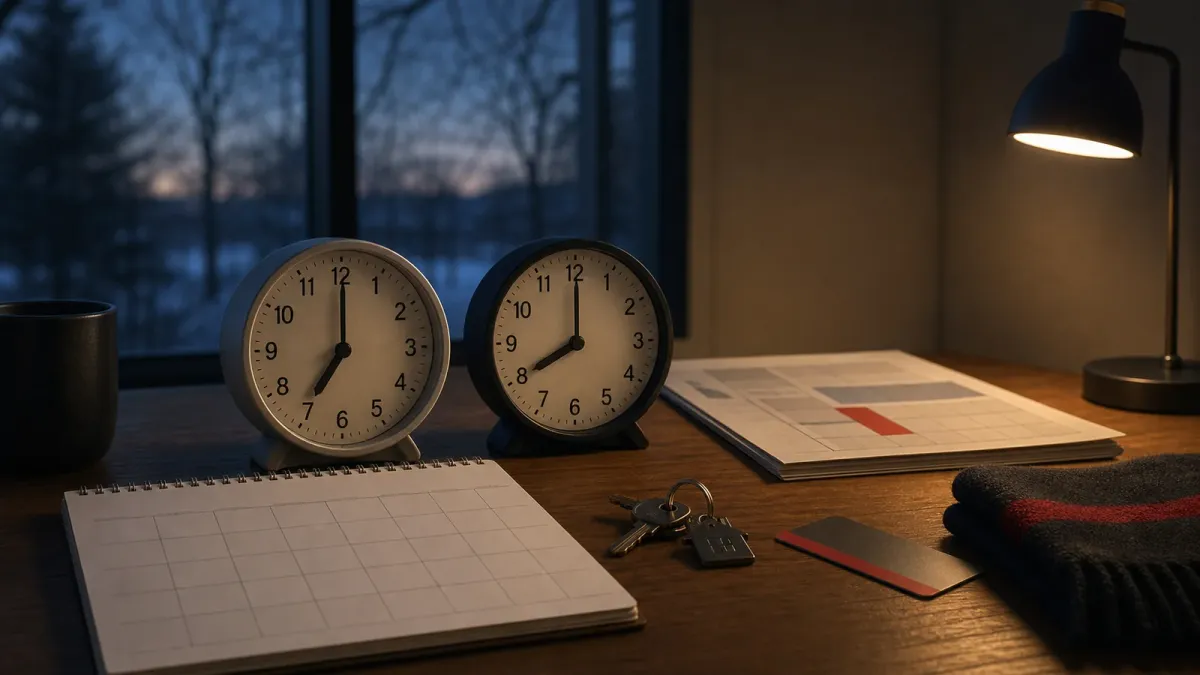
The permanent daylight saving time debate is no longer just a twice-a-year complaint. After the House passed the Sunshine Protection Act on July 14, 2026, the practical question for families, workers and travelers is simpler: would you rather keep later winter sunsets, or protect more morning light?
The short answer: the bill would not create more daylight. It would move the clock so winter sunrises and sunsets happen about one hour later in most places that now switch between standard time and daylight saving time. The measure still needs Senate approval and a presidential signature before it could change anyone's clock.
The short answer
If permanent daylight saving time becomes law, most Americans would stop setting clocks back in November and would stay on the later daylight-saving clock year-round. That means brighter winter evenings, darker winter mornings and no spring-forward or fall-back clock change for most states.
It would not force every place onto the same rule. The U.S. Department of Transportation says the Uniform Time Act lets states exempt themselves from observing daylight saving time. Hawaii, most of Arizona and several U.S. territories already do not observe daylight saving time.
What the House vote changed
The House Energy and Commerce Committee said H.R. 139, the Sunshine Protection Act, passed the House on July 14, 2026. The bill would make daylight saving time permanent by changing the federal framework that now treats it as a temporary period of the year.
That is why the state-by-state debate matters. The National Conference of State Legislatures says state legislatures have considered hundreds of bills and resolutions in recent years on whether to stay on standard time or daylight time year-round. But under the current federal setup, states can choose permanent standard time more easily than permanent daylight saving time.
That legal distinction can be confusing because people often use “ending daylight saving time” to mean two different things. One option is permanent standard time, which keeps mornings lighter and evenings earlier during winter. The other is permanent daylight saving time, which keeps evenings lighter and mornings later. The House bill is the second option.
What to check in your daily routine
Start with the winter morning, not the summer evening. If your household is already out the door before sunrise, permanent daylight saving time would push that sunrise one clock hour later during the part of the year when many places now use standard time.
For families, that can affect school commutes, bus stops, child care handoffs and teen sleep schedules. For workers, it can change the feel of early shifts, construction starts, deliveries and morning commutes. For people who exercise outdoors, care for older relatives, or rely on public transit before work, the tradeoff is not abstract.
A useful household test is to list the first fixed commitment of the day and work backward. If the first deadline is a school bell, an opening shift, a train, a medical appointment or a flight, ask whether a later winter sunrise would change the margin for getting there safely and on time.

Why sleep experts are cautious
The strongest health caution is not about the annoyance of changing clocks. It is about how morning light helps anchor circadian rhythm, the body's internal timing system. The American Academy of Sleep Medicine has argued for permanent standard time, saying that standard time better aligns with human circadian biology.
That does not mean every person would experience the change the same way. Some people value later daylight after work or school, and supporters argue that ending the clock change could reduce disruption. The useful distinction is this: ending the twice-yearly switch and choosing permanent daylight saving time are related but separate decisions.
Travel and work schedules could need a transition plan
Travelers should watch implementation dates if the Senate acts. Airlines, rail systems, calendar apps, schools and employers would need time to align schedules, especially for trips crossing time zones or countries that do not change at the same time as the United States.
For most people, the first practical checklist is modest: confirm school start times, recurring medical appointments, travel bookings, work shifts and automated calendar settings before any federal change takes effect. Do not assume that every app, ticket, reminder or workplace policy updates in the same way on the same day.
What happens next
The bill is not law unless it clears the Senate and is signed by the president. Until then, the current seasonal clock changes remain in place for most of the country.
The best way to think about the debate is not whether daylight saving time is popular in July. Ask what your household would gain from brighter winter evenings, what it would lose from darker winter mornings, and whether your state might choose a different path if federal law gives it room.


