
Permanent daylight saving time is back in the national conversation after the House Energy and Commerce Committee said the House passed H.R. 139, the Sunshine Protection Act, on July 14, 2026. The bill would end the twice-yearly clock change by keeping most of the country on daylight saving time all year.
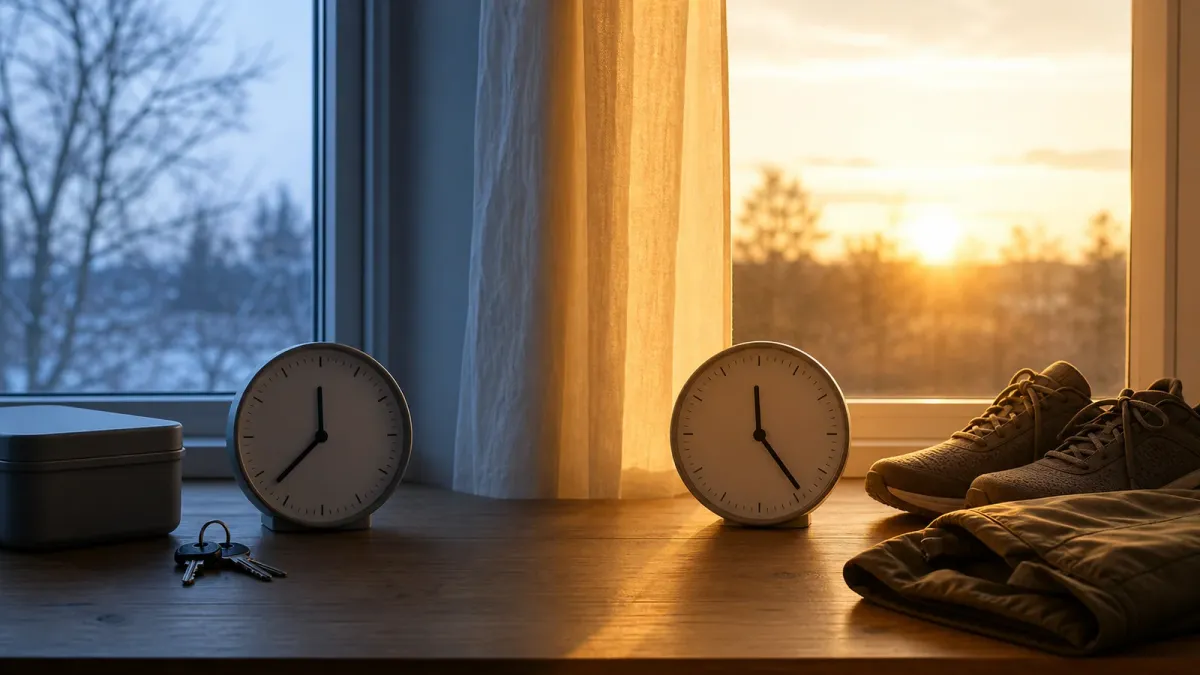
The short version: it would not create more sunlight. It would move an hour of winter daylight from the morning to the evening on the clock. For many households, that is the whole tradeoff.
The short answer
If permanent daylight saving time became law, most places that currently turn clocks back in November would stop doing that. A 7:30 a.m. winter sunrise would become 8:30 a.m. by the clock, while a 4:45 p.m. sunset would become 5:45 p.m. The amount of daylight would be the same; daily schedules would meet it at different times.
The bill still needs to clear the Senate and become law before anything changes. Until then, the current federal schedule remains in place: states that observe daylight saving time must start and end it on federally mandated dates, according to the U.S. Department of Transportation.
Who would notice first
Morning commuters, school families and outdoor workers would feel the darker mornings most sharply in winter, especially on the western edges of time zones where sunrise is already late. Evening commuters, restaurants, sports leagues, retailers and after-work walkers would notice the extra evening light.
Travelers would also need to pay attention. Airlines, trains, calendar apps, international calls and live events are built around coordinated time zones. A national change can be manageable, but it needs clear effective dates so schedules do not collide.
Which places are different
Federal law already lets states exempt themselves from daylight saving time. The Transportation Department says daylight saving time is not observed in Hawaii, American Samoa, Guam, the Northern Mariana Islands, Puerto Rico, the Virgin Islands and most of Arizona.
That matters because permanent standard time is already allowed at the state level, while permanent daylight saving time generally requires Congress to change federal law. In plain English: a state can opt out of daylight saving time, but it cannot simply decide on its own to stay on daylight saving time all winter.
The health argument
Sleep-medicine groups generally oppose permanent daylight saving time and prefer permanent standard time. An American Academy of Sleep Medicine position statement says standard time aligns better with human circadian biology, while seasonal clock changes and darker mornings can disrupt sleep and safety.
Supporters of year-round daylight saving time focus on a different benefit: more usable light after work and school, plus an end to the spring and fall clock disruption. AP-NORC polling released in October 2025 found only 12% of U.S. adults favored the current twice-yearly clock-changing system, though respondents split between year-round daylight saving time and year-round standard time.
What to watch next
The important question is not whether the House has acted; it has. The question is whether the Senate takes up the bill, changes it, stalls it or passes it. Readers should also watch for any effective date, because a law signed near a seasonal transition could leave schools, employers and transportation companies little time to adjust.
For now, do not change your calendars or assume the November clock change is canceled. Treat permanent daylight saving time as a live policy debate with a very practical consequence: brighter winter evenings would be paid for with darker winter mornings.


