
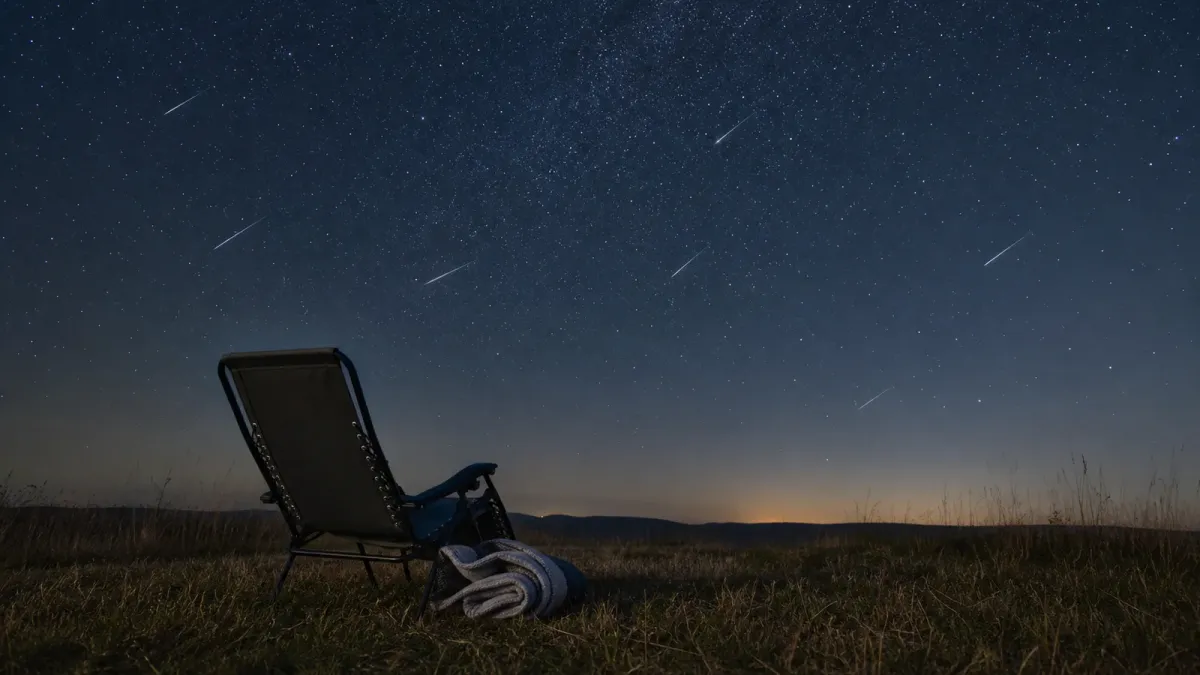
The 2026 Perseid meteor shower is underway, and this year’s peak has one big advantage: the moon will not wash out the sky. The American Meteor Society lists the Perseids as active from July 17 through August 24, with the next peak on the night of August 12-13, 2026.
That makes the next few weeks a planning window, not a one-night scramble. The best results will still depend on local weather, wildfire smoke, and light pollution, but the moonlight setup is unusually favorable for a summer meteor shower.
The Short Answer
For most U.S. readers, the best plan is to choose a dark location for late Wednesday, August 12, into the predawn hours of Thursday, August 13. The Perseid radiant rises higher as the night goes on, and meteor rates usually improve after midnight as your side of Earth turns into the stream of comet debris.
Under ideal dark-sky conditions, meteor calendars list a zenithal hourly rate near 100 for the 2026 peak. That number is not a guarantee for a backyard view. Suburban lights, haze, clouds, a blocked horizon, and limited patience can cut what you actually see.
Why 2026 Is A Good Year
The Perseids are popular because they arrive during warm Northern Hemisphere nights and often produce swift, bright meteors. NASA describes the shower as one of the year’s best, with meteors that can leave brief trails of light and color as they burn through Earth’s atmosphere.
The source is Comet 109P/Swift-Tuttle. Each year, Earth crosses debris left by the comet, and small particles hit the atmosphere at high speed. The American Meteor Society lists the Perseids’ meteor velocity at about 37 miles per second.
The 2026 moon phase is the practical difference. Meteor showers are easiest to watch when the sky is dark, and the peak night falls with the moon essentially new. That gives faint meteors a better chance to stand out.
How To Watch
Do not look only toward Perseus. The meteors appear to radiate from that constellation, but the longer streaks can show up across wide areas of the sky. Bring a reclining chair or blanket, face the darkest open part of the sky, and give your eyes at least 20 minutes away from bright screens.
Check a local forecast before leaving, including cloud cover, smoke, and humidity. A darker rural site is usually worth more than a slightly better view of the radiant from a bright neighborhood. Binoculars and telescopes are not needed because meteors move too fast and cover too much sky.
What To Watch
The shower builds gradually and then falls off more quickly after the peak, so the nights around August 11-14 can still be useful if the peak night is cloudy. If you can only try once, aim for the darkest clear stretch after midnight and before dawn on August 13.
Keep expectations realistic: a strong meteor shower rewards time outside more than equipment. The real checklist is simple: dark sky, open view, clear weather, warm layer, and enough patience to let the sky do the work.


