
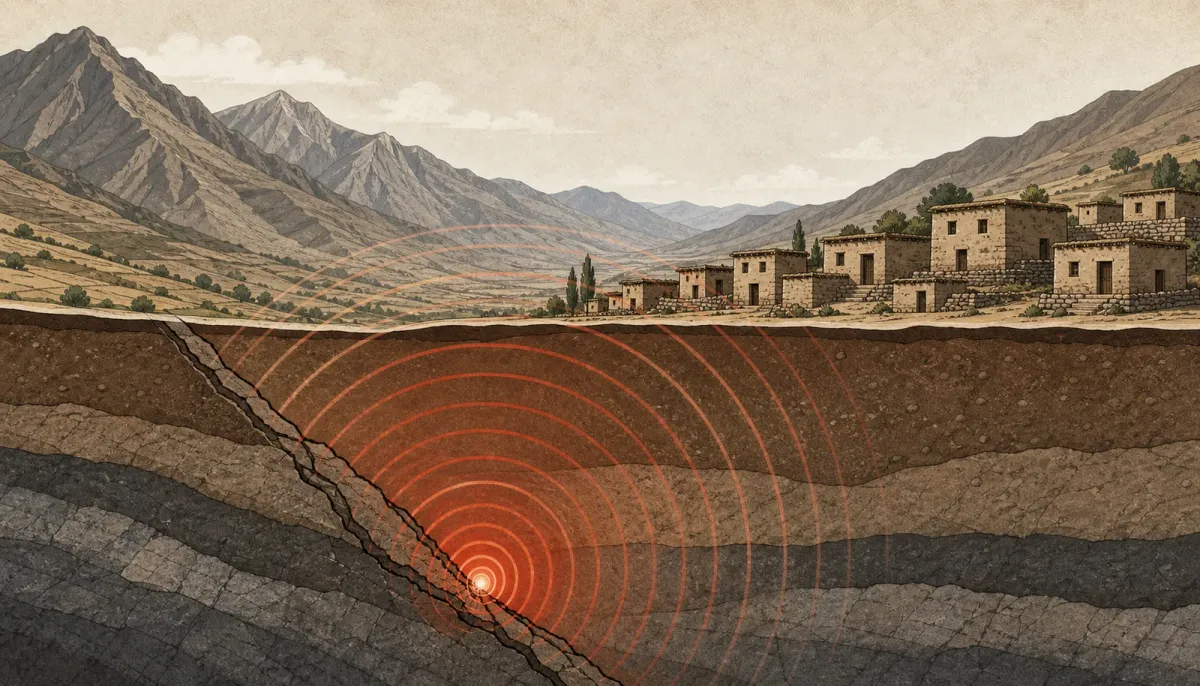
A magnitude 5.5 earthquake that struck Peru's central Andes late Saturday, July 18, 2026, has killed at least six people, injured more than 30 and displaced about 300, according to reporting from The Associated Press citing authorities.
The U.S. Geological Survey placed the quake 2 kilometers west-southwest of Sicaya, Peru, with an origin time of 02:24:36 UTC on July 19, or 9:24 p.m. local time on July 18. USGS listed the depth at 10 kilometers and issued a yellow PAGER alert, a signal that local impact was possible.
The damage is a reminder that the number attached to an earthquake is not the whole story. A 5.5 quake is moderate on a global scale, but shallow shaking near vulnerable buildings can still be deadly.
The short answer
Three factors appear to explain why this quake caused serious harm: it was shallow, it hit close to communities in Junin, and many damaged structures were made with materials that can fail quickly during strong shaking. AP reported collapsed homes and damage to historic structures in the Chongos Bajo area.
That combination matters because an earthquake is experienced locally, not as an average across a map. A community just a few kilometers from a shallow epicenter can face very different conditions than a city farther away, even when both places hear the same magnitude number in alerts.
Why depth matters
Earthquake magnitude measures the energy released at the source. Depth helps determine how much of that energy reaches people and buildings at the surface. A shallow quake can produce sharper local shaking than a deeper quake of the same magnitude because the rupture is closer to the places above it.
USGS data put this event at 10 kilometers deep. That does not guarantee damage by itself, but it raises the importance of local soil, building design and distance from the epicenter. The Peruvian Geophysical Institute says its national seismic center is the official state service for reporting earthquakes in the country, and local authorities use those reports alongside damage assessments after a quake.
What residents usually check
After a damaging quake, emergency managers typically focus first on trapped people, unstable buildings, blocked roads, power outages, water service and shelter for residents who cannot safely return home. Historic structures and adobe homes can require special inspection because visible cracks may not show the full structural risk.
Families in an affected area should follow official local instructions, avoid entering cracked or leaning buildings and prepare for aftershocks. People outside the impact zone can still use the event as a preparedness check: secure heavy furniture, know where emergency alerts come from and keep basic supplies reachable.
What to watch next
Officials still need to complete damage assessments, confirm whether the casualty count changes and decide what support displaced residents need. Aftershocks can also complicate rescue work and make already weakened buildings more dangerous.
For readers far from Peru, the practical lesson is simple: do not judge earthquake risk by magnitude alone. Location, depth, construction quality and emergency access often decide whether a moderate quake becomes a local disaster.


