
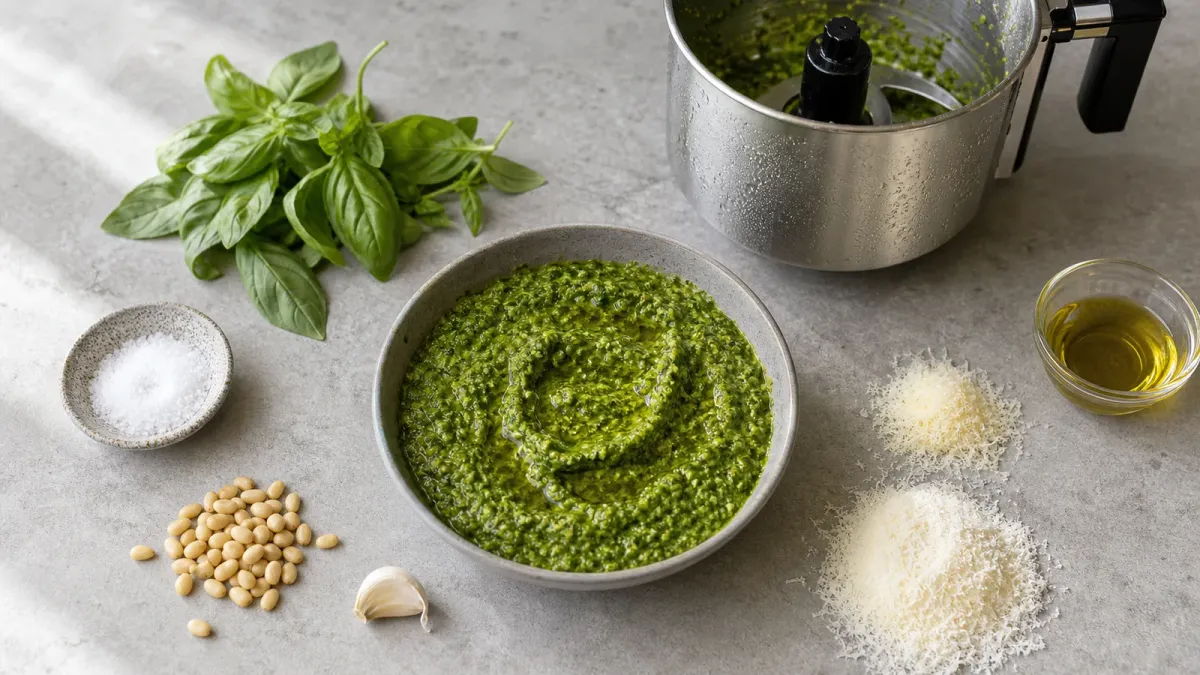
The best pesto recipe is less about speed than temperature. Keep the basil dry and cool, process it only as long as necessary, and add the olive oil gently. That simple method produces a fragrant, bright-green sauce instead of a dark, bitter paste.
This version takes about 15 minutes and makes roughly 1 cup—enough to sauce 1 pound of pasta or finish several rounds of sandwiches, grilled vegetables and eggs. It follows the traditional seven-ingredient family used for pesto Genovese, while adapting the method for a home food processor.
The short answer: chill the processor bowl, pulse rather than run the motor continuously, and stop while the sauce still has a little texture. Heat and prolonged exposure to air speed the browning that cooks often blame on the basil itself.
Ingredients
- 2 packed cups fresh basil leaves, about 2 ounces
- 1/3 cup pine nuts
- 1 small garlic clove, roughly chopped
- 1/2 teaspoon kosher salt, plus more to taste
- 1/2 cup finely grated Parmigiano-Reggiano
- 1/4 cup finely grated pecorino, preferably Pecorino Sardo or Romano
- 1/2 cup extra-virgin olive oil
Choose small, tender basil leaves when possible. Large leaves can still make good pesto, but taste one first; flowering plants and stressed basil can be more assertive. Wash the leaves only if needed, then dry them completely in a salad spinner and between clean towels. Water left on the leaves thins the sauce and can keep the oil from blending smoothly.
How to make pesto in a food processor
- Chill the equipment. Place the processor bowl and blade in the refrigerator for 10 to 15 minutes. Put the olive oil in the refrigerator while you prep the remaining ingredients.
- Build the base. Add the pine nuts, garlic and salt. Pulse six to eight times, scraping the bowl once, until the mixture resembles coarse crumbs rather than nut butter.
- Add the basil. Add about half of the basil and pulse three or four times. Add the rest and pulse again just until the leaves are finely chopped. Do not let the motor run continuously.
- Mix in the cheese. Add both grated cheeses and pulse twice. Scrape down the bowl so no dry pockets remain.
- Add the oil gently. With the machine off, pour in about half the oil and pulse twice. Add the remaining oil and pulse only until the sauce comes together. Taste and adjust the salt.
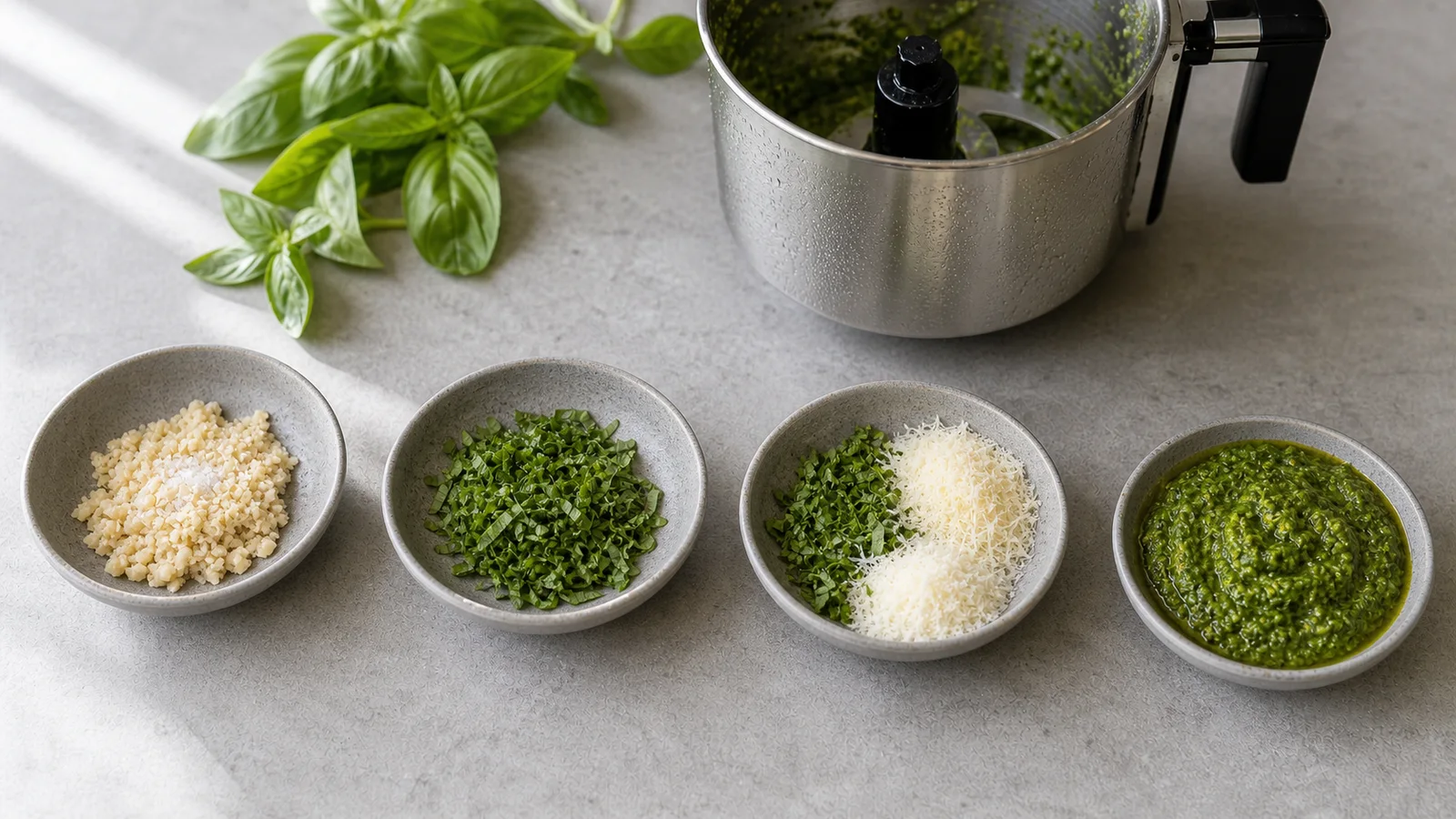
For a looser sauce, stir in another tablespoon of oil by hand. If the pesto is headed for pasta, leave it slightly thick; hot pasta water will loosen it without making it greasy.
Why this pesto stays bright green
Cut basil darkens as its damaged cells meet oxygen. A food processor speeds that contact and also creates heat through friction. Chilling the equipment and using short pulses cannot stop oxidation forever, but they slow the process while protecting the basil's fresh aroma.
Dry leaves matter for another reason: pesto is an oil-based sauce. Excess surface water makes the texture less cohesive and can mute the flavor. Grating the cheeses before they enter the processor also shortens the mixing time.
Some cooks add ice or blanch the basil to preserve color. Both can work, but they change the sauce. Ice adds water, while blanching softens the herb's raw fragrance. For a classic fresh-basil flavor, cold equipment and quick processing are the cleaner compromise.
The traditional mortar method
The Genoa Pesto World Championship's official recipe uses a marble mortar and wooden pestle. It begins with garlic and pine nuts, adds salt and basil with a light circular motion, then works in the cheeses and olive oil. The organization emphasizes speed because oxidation begins as soon as the leaves are bruised.
To use a mortar at home, crush the garlic, pine nuts and salt to a paste. Add the basil a handful at a time and rotate the pestle against the wall of the mortar rather than pounding straight down. Fold in the cheeses, then work in the oil. The result is usually more textured and aromatic than processor pesto, but it requires patience and a mortar large enough to keep the leaves from spilling.
How to sauce pasta without breaking the pesto
Do not cook pesto in a hot pan. Heat can flatten the basil flavor and cause the cheese and oil to separate. Instead, transfer the cooked pasta to a large bowl, let it stand for about 30 seconds, and toss it with the pesto off the heat.
Add reserved pasta water one tablespoon at a time until the sauce clings to the noodles. Start with about 1/2 cup pesto for 1 pound of pasta, then add more to taste. The starch in the water helps the oil and cheese form a creamy coating. Serve immediately with more grated cheese if desired.
Substitutions that still taste balanced
Pine nuts give pesto a soft, buttery character, but walnuts are the most practical substitute. Toasted almonds make a firmer, slightly sweeter sauce. If you change the nut, start with the same volume and adjust after tasting.
Parmigiano-Reggiano supplies nutty depth; pecorino adds salt and sharper flavor. Using only Parmesan makes a milder pesto. For a dairy-free version, omit both cheeses, reduce the oil slightly and add a teaspoon of lemon juice only if the finished sauce tastes flat. It will be basil sauce rather than traditional pesto Genovese, but the balance can still work.
If garlic dominates, do not add more cheese to hide it. Let the sauce rest for 10 minutes, then reassess. One small clove is enough for most batches, and old or sprouting garlic can taste harsher than a fresh clove.
Storage and freezing
Spoon leftover pesto into a clean airtight container and press a small piece of parchment directly onto the surface to reduce air contact. Refrigerate promptly at 40°F or below and use within three to four days, following federal guidance for refrigerated leftovers. Discard it sooner if it develops mold, an off odor or unusual bubbling.
For longer storage, freeze pesto in tablespoon-size portions, then transfer the solid portions to a freezer container. A freezer should remain at 0°F or below, according to USDA food-safety guidance. Use the pesto within about three months for the best color and flavor, and thaw only what you need in the refrigerator.
Bottom line
Bright pesto comes from control, not tricks: cool tools, thoroughly dried basil, short pulses and gentle oil mixing. Make it quickly, keep it away from direct heat, and loosen it with pasta water only at the moment you serve it.


