
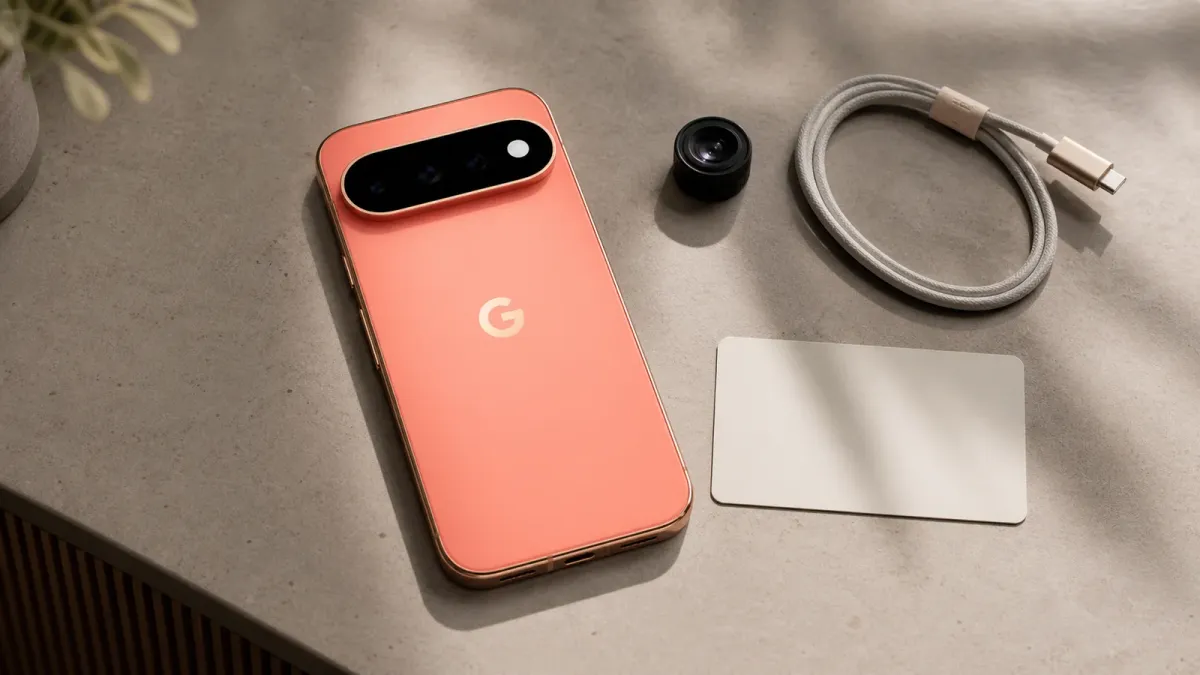
Google unveiled its Pixel 11 phone lineup on Wednesday, August 12, putting a bigger consumer bet behind a simple promise: your next phone should notice more, capture more, and require fewer taps.
The short version for shoppers is this: Pixel 11 is a hardware launch, but Google is selling it as an AI upgrade. The standard Pixel 11 starts at $899, Pixel 11 Pro starts at $1,099, and Pixel 11 Pro XL starts at $1,299, with preorders open now and retail availability scheduled for August 20, according to Google.
Google also introduced the Pixel 11 Pro Fold, Pixel Watch 5, Pixel Buds updates, and its first Pixel Tag tracker. But the main phone question is whether the new AI and camera tools are enough to justify waiting, preordering, or skipping another year. The timing also puts Google's pitch in front of shoppers before the next major iPhone cycle reshapes the comparison.
What changed
Google says the Pixel 11 phones are designed for Gemini Intelligence, the company's push to make its assistant more proactive across apps. The company says the phones can surface useful cards in context, suggest actions during conversations, and connect more work across apps instead of forcing users to search manually.
The camera pitch is more concrete. A new feature called Magic Capture can analyze hundreds of frames to automatically pick still photos from a moment while also saving video. Google says Camera Looks adds selectable photo styles at capture, while the Pro models get faster low-light shooting and stronger zoom tools.
The Associated Press described the launch as a move toward slimmer cameras, stronger zoom, and AI features meant to reduce taps and swipes. That framing matters because Google is still trying to make Pixel feel less like a niche Android favorite and more like a mainstream alternative before Apple's next iPhone cycle.
The buying test
The best reason to care is not the longest spec sheet. It is whether these features solve problems you actually have. If you regularly miss quick photos, record social video, translate media, or want your phone to pull trip and reservation details into view at the right moment, the Pixel 11 pitch is more relevant.
If your current phone already handles battery life, camera quality, and messaging well, the higher starting prices raise the bar. AI features can be useful, but they are also uneven, language-limited, and sometimes subscription-linked. Google notes that availability varies by country, language, age, and usage limits.
What to watch next
The first test arrives before reviews: preorder offers. A phone that starts at $899 can look very different once trade-ins, store credits, carrier credits, and bundled subscriptions enter the math.
The second test is August 20, when the phones reach stores and reviewers can judge whether Magic Capture, Gemini prompts, battery life, and camera gains work outside Google's launch examples. Until then, Pixel 11 is best understood as a question, not a verdict: does the AI save enough time to matter, or is this another expensive refinement cycle?


