
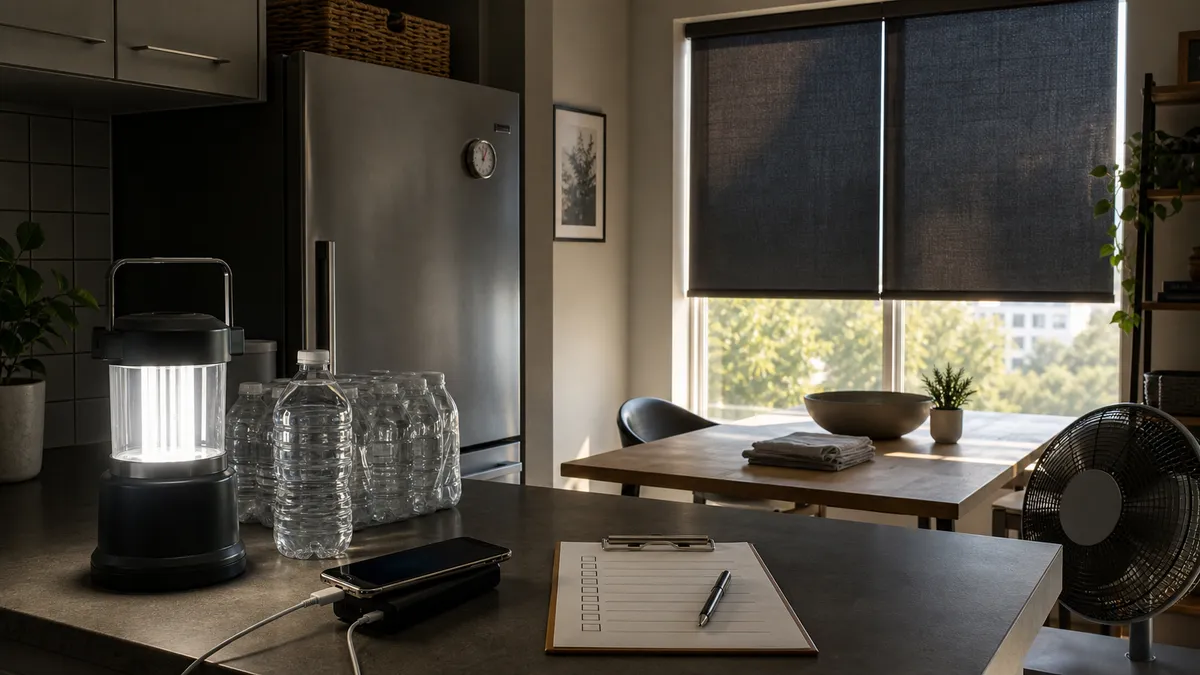
A power outage is inconvenient on any day. During extreme heat, it can become a health problem within hours, especially for older adults, infants, people with chronic conditions and anyone who depends on powered medical equipment.
The safest response is not to wait until a home feels unbearable. On Saturday, July 4, 2026, heat, storms and outage searches were active across parts of the United States, a reminder that the practical steps are useful before the lights go out and while utility crews are still working.
The core advice from the CDC, Ready.gov and the National Weather Service is simple: keep your body cool, reduce heat inside the home, protect food, avoid generator hazards and move to air conditioning if the indoor temperature is no longer safe.
Start with body temperature, not the thermostat
If the air conditioning stops, focus first on cooling people. Drink water or other nonalcoholic fluids, slow down physical activity and move to the coolest part of the home. Close blinds or curtains on sunny windows. If a lower floor or basement is available and safe, it may stay cooler than upstairs rooms.
Cool showers, baths, wet cloths and placing hands or feet in cool water can help lower body temperature when fans and air conditioning are unavailable. A battery-powered fan can help if the room is not dangerously hot, but a fan alone is not enough protection when indoor heat keeps climbing.
Watch for heat illness. Heat exhaustion can include heavy sweating, weakness, dizziness, nausea or headache. Heat stroke is an emergency and can include confusion, fainting, loss of consciousness or very high body temperature. Call 911 for suspected heat stroke and begin cooling the person while help is on the way.
Know when to leave
A good outage plan includes a destination, not just supplies. Identify nearby cooling centers, libraries, malls, community centers, relatives or hotels with power before the situation is urgent. Check local emergency management alerts, utility updates and local news for opened cooling sites.
Leaving is especially important if someone in the home uses oxygen equipment, a ventilator, a powered mobility device, refrigerated medication or another medical device that needs electricity. People in that situation should contact their health provider, medical equipment company or local emergency management office before an outage becomes prolonged.
Keep food cold by keeping doors closed
Food safety depends on time and temperature. The CDC says refrigerated food can stay safe for up to four hours during a power outage if the door stays closed. A full freezer can hold a safe temperature for about 48 hours, while a half-full freezer can last about 24 hours if unopened.
That means every unnecessary check shortens the clock. Keep refrigerator and freezer doors closed, use a cooler with ice for items you need soon and rely on an appliance thermometer if you have one. After four hours without power, discard perishable refrigerated foods such as meat, fish, eggs, milk, cut produce and leftovers unless they have been kept at 40 degrees Fahrenheit or below.
Use generators outside only
Portable generators, grills and camp stoves should never be used inside a home, garage, basement, porch or near an open window. The danger is carbon monoxide, a colorless and odorless gas that can build up quickly and kill. Ready.gov advises keeping generators outdoors and away from doors, windows and vents.
Use flashlights or battery lanterns instead of candles when possible. Stay away from downed power lines, and do not drive or walk through standing water if power lines may be involved. If traffic signals are out, treat intersections with extra caution and follow local instructions.
Build the kit before the heat arrives
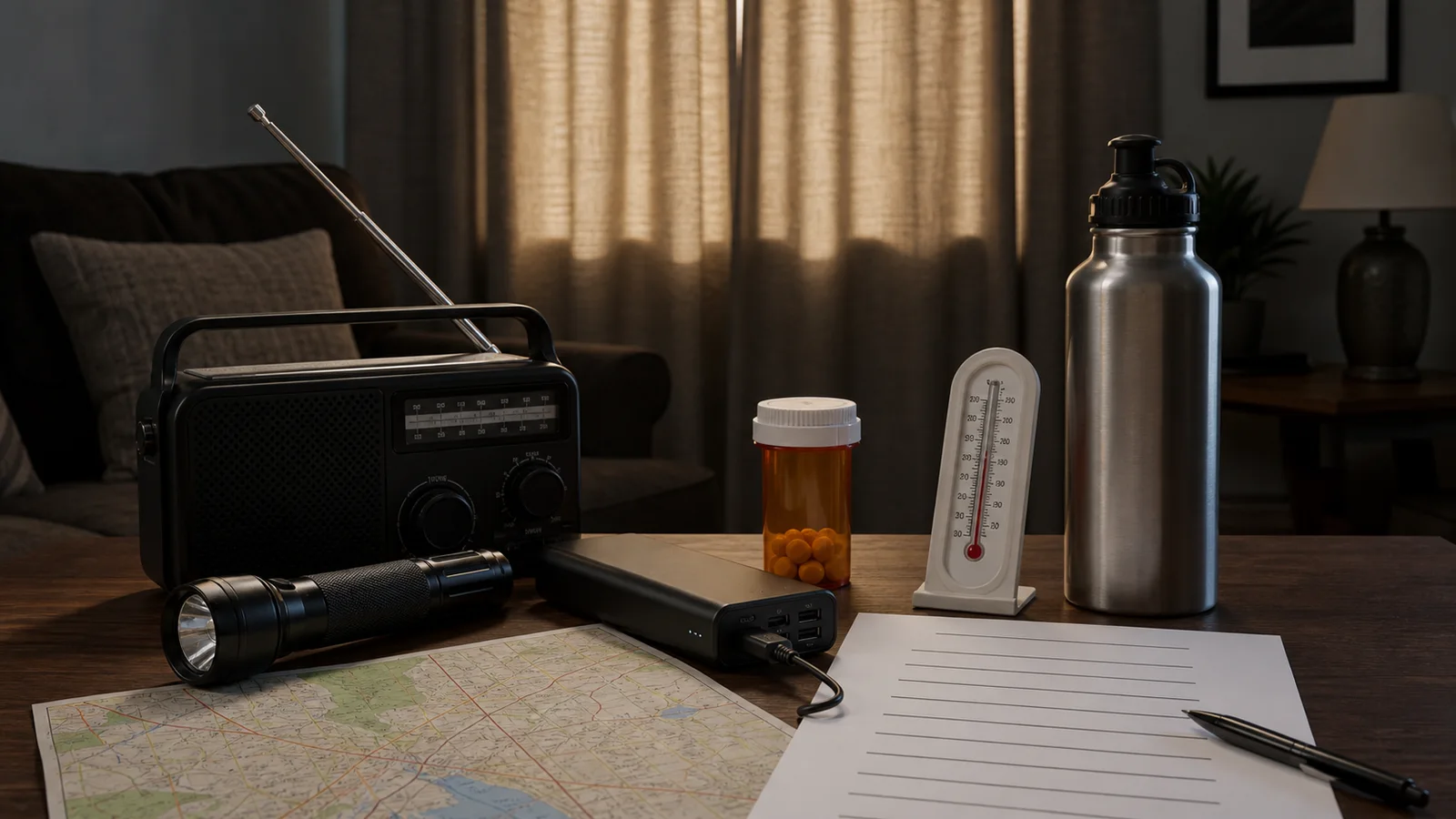
A practical hot-weather outage kit should include water, shelf-stable food, flashlights, batteries, a battery or hand-crank radio, charged power banks, a first-aid kit, a thermometer, copies of important phone numbers and a list of cooling destinations. Households with medication should know which prescriptions need refrigeration and how long they can safely remain at room temperature.
Check on neighbors and relatives, especially people who live alone or may be reluctant to ask for help. During a heat outage, a short call or knock can reveal whether someone needs water, transportation, a charged phone or a cooler place to wait.
The main rule is to make the decision early. If the home is getting hotter, someone is showing symptoms or medical equipment is at risk, do not wait for a utility estimate to change. Move to a cooler, safer place and keep monitoring official local updates until power is restored.


