
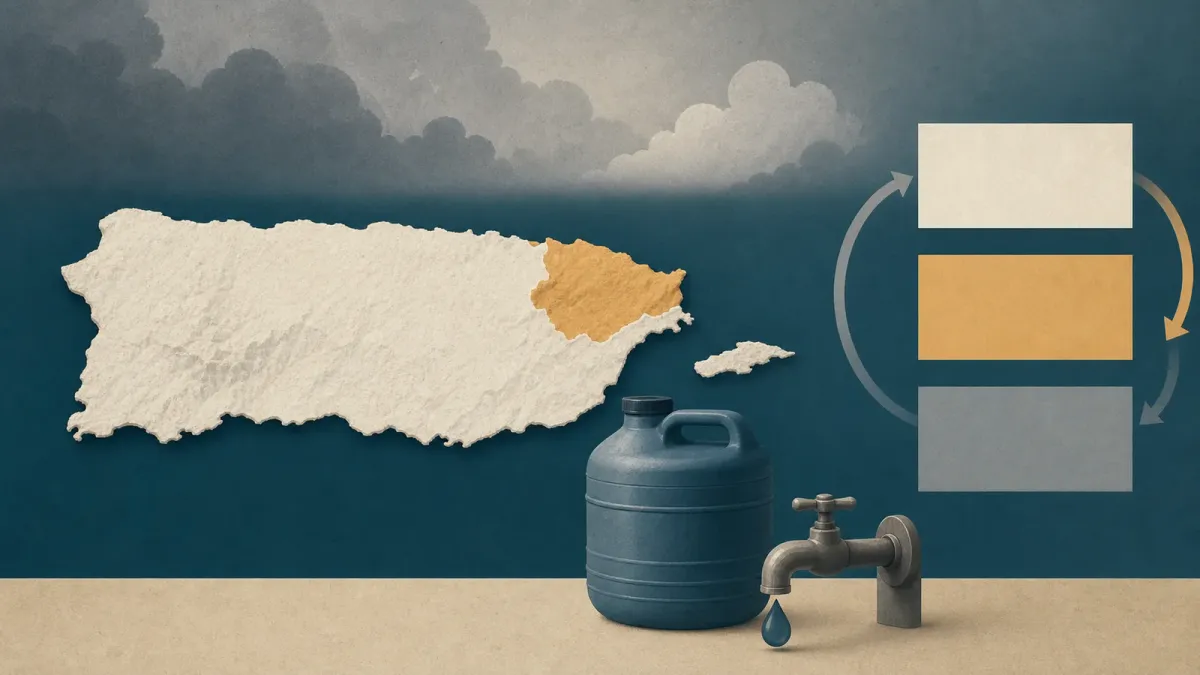
Puerto Rico has moved parts of its northeast into scheduled water rationing as drought conditions deepen across the island, adding a new layer of disruption to months of unreliable service.
The Puerto Rico Aqueduct and Sewer Authority said several communities in Canovanas and Rio Grande would face 48-hour interruptions beginning Friday, July 17, 2026. Officials said the schedule could expand if rainfall does not improve.
What changed
The immediate change is the start of rotating shutoffs in affected northeastern communities. Residents should check the latest local schedule from the water authority before storing water, changing work plans or assuming service will return at a fixed hour.
The Associated Press reported that Luis Gonzalez, executive president of the water and sewer authority, tied the new rationing to a shortage of rain. The same report noted that Puerto Rico's water problems did not begin with the current drought: outages in heavily populated areas had already led Gov. Jenniffer Gonzalez to activate the National Guard after nearly 40,000 customers lost service last month.
The drought picture
Federal drought data show why officials are watching the situation closely. Drought.gov's Puerto Rico page, using U.S. Drought Monitor data valid July 14, 2026, listed 45.0% of Puerto Rico in moderate drought and 14.3% in severe drought, with another 23.0% abnormally dry.
Drought.gov also notes that Puerto Rico's midsummer dry period typically falls in June and July, and that drought and water scarcity are recurring concerns across the Caribbean because communities rely heavily on rainfall for drinking water and agriculture.
Why it matters
For households, a 48-hour interruption can affect drinking water, cooking, laundry, medication routines, child care and elder care. For small businesses, especially restaurants and cafes, uncertain water service can mean buying water, changing hours or canceling service.
The disruption is also arriving during hurricane season. That does not mean a storm is imminent, but it makes planning more complicated because water storage, backup power, transportation and health needs can overlap quickly when utilities are already strained.
What to check first
Residents in Canovanas, Rio Grande and nearby communities should verify whether their neighborhood is inside a scheduled interruption zone, when the next service window begins, and whether any boil-water notice or water-quality advisory applies after service returns.
People caring for infants, older adults, people with disabilities or anyone using medical equipment should plan around the full interruption window rather than the earliest possible restoration time. Visitors should confirm water availability with hotels, rentals or event hosts before travel, especially outside major tourism corridors.
What happens next
The key question is whether rainfall and reservoir conditions improve enough to keep rationing contained to the current northeast communities. If they do not, officials have already warned that scheduled interruptions could be extended to other areas.
The broader issue will take longer to resolve. The current drought is exposing a water system already under pressure from leaks, maintenance problems and public frustration. That means the next useful update may be less about one rain event and more about whether officials publish a clear, neighborhood-level plan residents can actually use.


