
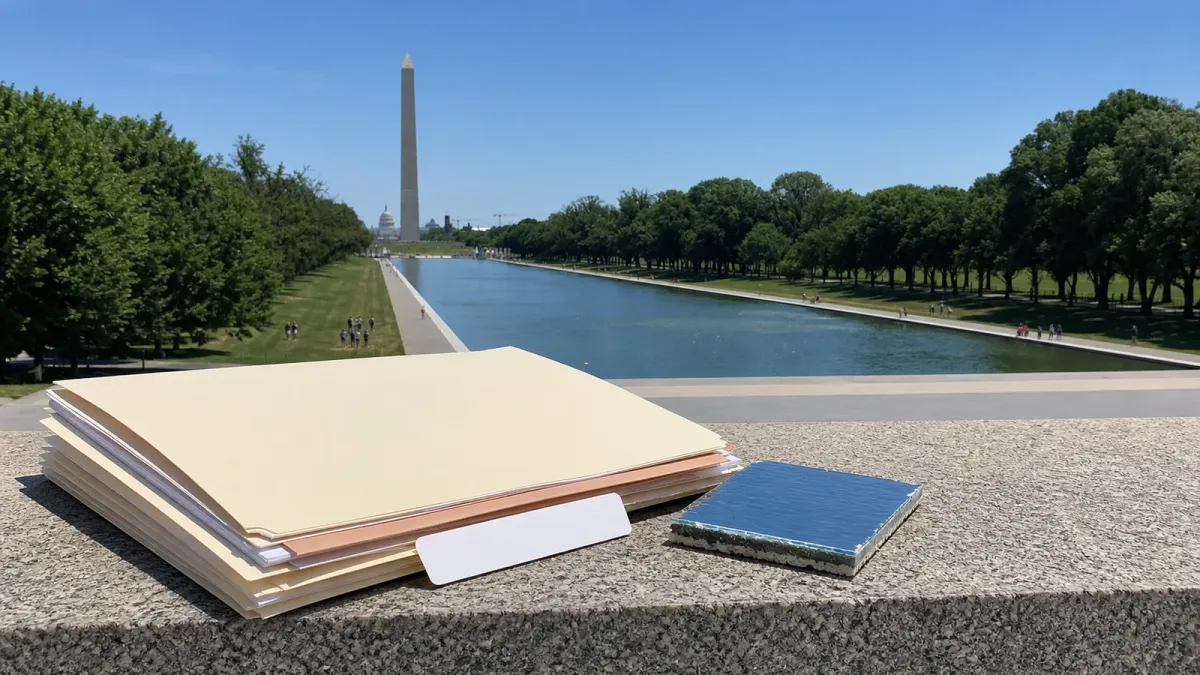
The fight over the Lincoln Memorial Reflecting Pool is no longer just about a damaged landmark. It is now about a federal prosecution that collided with the government's own evidence.
President Donald Trump continued this week to say the newly coated pool was vandalized, even after U.S. Attorney Jeanine Pirro's office moved to dismiss the felony destruction case against former Olympic canoeist David Hearn. The Justice Department motion said information from the Interior Department pointed instead to flawed installation and a rush to finish the project before America 250 events around Independence Day 2026.
That makes the episode unusually consequential: the dispute is not merely between Trump and the press, or between the president and political opponents. It is between Trump's public claim and a filing made by the federal prosecutors who had brought the case.
What changed
According to the Associated Press, Pirro openly refuted Trump's vandalism claim in court filings after her office concluded the Reflecting Pool damage was tied to shoddy workmanship. Trump told reporters Tuesday night, August 4, that he was unhappy with Pirro's decision and said he believed video supported his version, even though AP reported the footage did not clearly show property destruction.
FactCheck.org's review of the July 31 dismissal motion said prosecutors received additional Interior Department documents after Hearn had been indicted. The motion said those documents indicated that June 2026 damage to the pool resulted from the contractor's flawed installation and the hurry to complete the project before the July 4 anniversary events.
The filing also said prosecutors had pressed Interior officials for more information after a July 17 visual inspection of the drained pool raised doubts about the vandalism theory. The motion described damage across the pool, including places where a vandal would be unlikely to try to peel the lining.
Why the filing matters
A dropped case is not rare. What is rare is the reason this case collapsed. The same administration that had amplified the vandalism theory later placed a different explanation in court: contractor error, delayed disclosures, and a project schedule that outpaced the work.
That matters for Hearn because the felony case exposed him to the risk of a criminal record and potential punishment for damage prosecutors now say they cannot prove he caused. It matters for the public because landmark repair projects, charging decisions, and public claims by officials all depend on a basic sequence: gather facts first, then assign blame.
The Reflecting Pool is also not an obscure site. The National Park Service describes it as one of Washington's most recognizable and filmed places, and as a key part of the Lincoln Memorial landscape. A dispute over its renovation therefore quickly became a national argument about monuments, evidence, and credibility.
What remains unsettled
The dismissal motion does not mean no one ever touched damaged material at the pool. It means prosecutors concluded they could not attribute the broad damage to Hearn beyond a reasonable doubt. FactCheck.org noted that some images and videos showed people handling already-peeling coating after the pool's problems had become public, but that is different from proving the sweeping vandalism theory Trump described.
Interior Secretary Doug Burgum has continued to defend the vandalism account, while Pirro's office blamed incomplete information from Interior for the initial case. That leaves two questions still alive: who knew the installation problems were serious, and when did they tell prosecutors?
For readers, the practical takeaway is simple. When an official story changes inside a court filing, the filing carries more weight than the first press conference. The next meaningful development will be whether the court dismisses the case in a way that prevents it from being revived, and whether Congress, inspectors general, or the courts ask how the prosecution reached an indictment before the government had the repair record in hand.


