
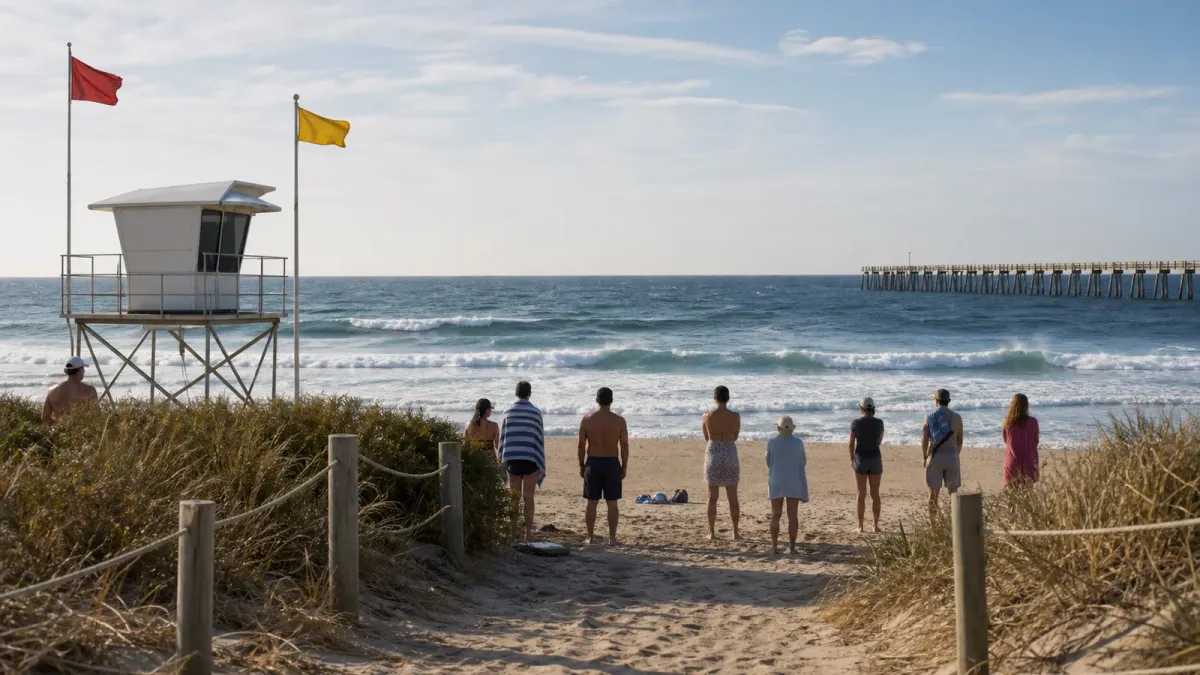
A beach day can look safe from the parking lot and still carry a rip-current risk. The National Weather Service warns that good weather does not always mean safe swimming, because rip currents can form on calm, sunny days and may appear near sandbar breaks, piers, jetties and other structures.
The practical move is simple: check the local surf zone forecast before leaving, read the flags when you arrive and ask a lifeguard where swimming is safest. Treat those three checks as part of packing for the beach, not as something to figure out after someone is already in the water.
Rip currents are channels of water moving away from shore. NOAA's National Ocean Service says they are common along U.S. ocean coasts and the Great Lakes, and can move faster than an Olympic swimmer. The danger is not that they pull swimmers under; the danger is panic and exhaustion when someone tries to swim straight back against the current.
Do this first
- Check the official forecast. Use the National Weather Service surf zone or beach hazards forecast for the beach you plan to visit, then check again if storms, wind or surf conditions change.
- Look for flags and signs. NWS guidance says green generally means safer conditions, while other colors signal that conditions are not safe. Flag systems can vary by location, so read the posted sign rather than assuming every beach uses the same rules.
- Pick a lifeguarded area. NOAA and NWS both emphasize swimming near lifeguards when possible. Ask where the designated swimming area is before children or weak swimmers go in.
- Stay extra cautious near structures. The National Hurricane Center says life-threatening rip currents can still occur near groins, jetties, reefs and piers, even when the overall risk is listed as low.
If you get caught
Do not fight the current by swimming straight toward the beach. NOAA's core advice is to stay calm, float to conserve energy and, if you can, swim out of the current in a direction following the shoreline before angling back toward land.
If you cannot make progress, face shore, wave and call for help. If you see someone else in trouble, get a lifeguard or call 911, then throw something that floats if you can do so without entering the water. NWS warns that rescuers can become victims when they go in without flotation.
Check these details
A low-risk forecast is not a guarantee. It means the overall risk is lower, not that every spot is safe for every swimmer. The National Hurricane Center says moderate risk means life-threatening rip currents are possible, while high risk means they are likely and swimming conditions are unsafe for all skill levels.
Families should also separate beach comfort from water safety. Warm air, small waves near shore and a crowded beach do not cancel a posted warning. Keep young children within arm's reach near water, assign a sober adult to watch swimmers and move plans to sand-only time when flags, lifeguards or local officials say conditions are unsafe.
Bottom line
Before swimming, make one final scan: forecast, flags, lifeguard, children, exit plan. If any part of that check is missing or uncertain, stay shallow, move to a guarded beach or stay out of the water.


