
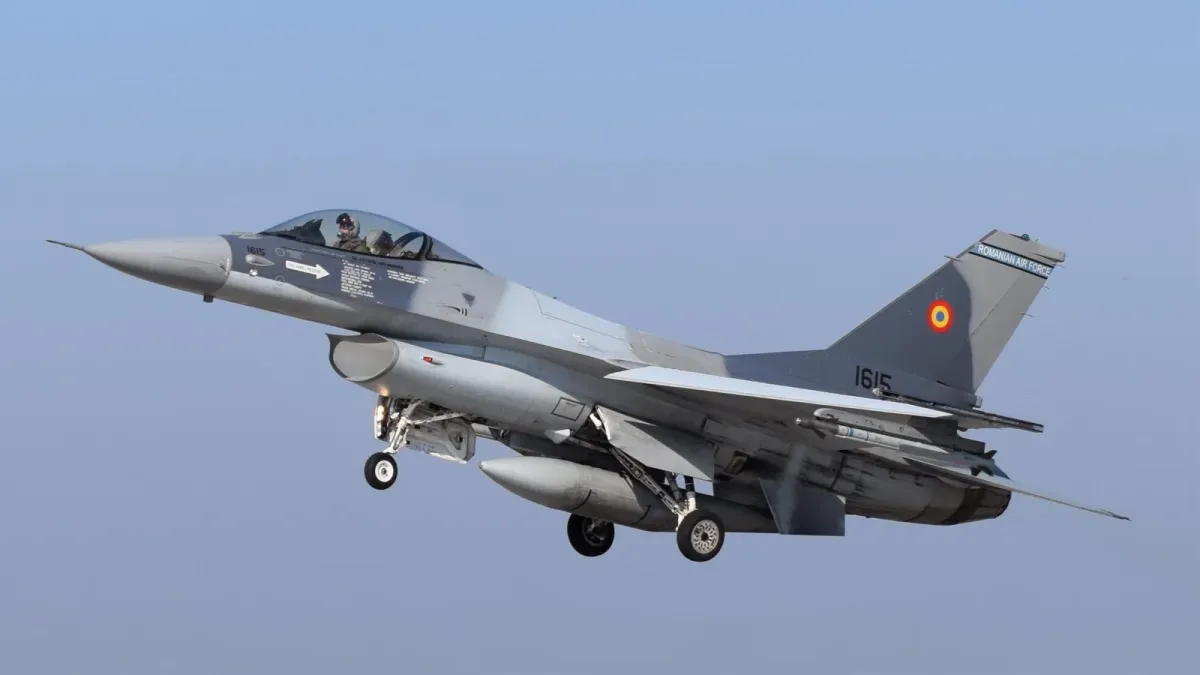
Romanian F-16 pilots shot down three drones on three consecutive days from July 24 through July 26, marking a clear shift in how the NATO member responds when the war in Ukraine crosses into its airspace.
The third drone entered Romanian airspace near the Black Sea on Sunday and was destroyed by a missile five minutes later, 12 kilometers northeast of Sulina and inside Romania's territorial waters, according to the Romanian Ministry of National Defence. No casualties were reported.
The immediate change is operational: after years of scrambling jets, issuing civilian alerts and collecting debris, Romania is now intercepting unauthorized drones when commanders determine they can do so safely. Officials describe that posture as airspace defense in peacetime, not Romanian entry into the Russia-Ukraine war.
What changed
Romania adopted legislation in 2025 allowing its forces to destroy drones that violate national airspace, but it had avoided doing so until this month. That restraint weakened after repeated incursions and a May incident in which a Russian drone crashed into an apartment building in Galați, injuring a mother and child.
Prosecutors identified the drone downed on Friday, July 24, as a Russian-made Shahed type. Investigations into the drones destroyed on Saturday and Sunday are continuing. Romania's defense ministry said the Sunday interception was the third successful F-16 engagement in three days.
The pattern did not end there. On Monday, July 27, Romania detected another drone, scrambled two F-16s and issued a public RO-Alert in Tulcea County. The target briefly entered Romanian airspace before crossing back toward Ukraine, where explosions were later reported.
Why it matters for NATO
Romanian territory is also NATO and European Union territory, so every incursion forces commanders to balance civilian protection against the danger of escalation. Shooting down a drone does not automatically trigger NATO's collective-defense clause, and Romanian officials have not characterized these incidents as a deliberate attack on the country.
But the repeated interceptions show that NATO's eastern members are becoming less willing to let suspected attack drones pass unchallenged. Romania and Poland have acquired the mobile MEROPS counter-drone system, while Romanian crews have refined procedures for finding and destroying low-flying targets.
The shift also carries a cost. Fighter-launched missiles can be far more expensive than the drones they destroy, increasing pressure for cheaper ground-based interceptors that can protect communities and Black Sea infrastructure without exhausting scarce air-defense weapons.
What remains uncertain
Romania says recovered fragments and prosecutor findings establish Russian origin for the first drone. Russia's embassy denies that Moscow directed combat drones toward Romanian territory. The origin and flight paths of the other two downed drones remain under investigation.
That distinction matters. A drone pushed off course by navigation failure or electronic warfare creates a different political calculation from a deliberately targeted strike, even though both can threaten people on the ground.
What happens next
Romania says it will continue round-the-clock radar monitoring, alert NATO structures in real time and scramble aircraft when targets approach the border. Bucharest has also summoned Russia's ambassador and expelled a Russian diplomat, adding diplomatic consequences to the new military posture.
The next test is whether the interceptions deter further violations or become a routine feature of Russia's attacks near Ukraine's Danube ports. For residents along Romania's eastern border, the practical signal is already clear: air alerts are no longer followed only by surveillance. Romanian pilots now have both the authority and the demonstrated willingness to fire.


