
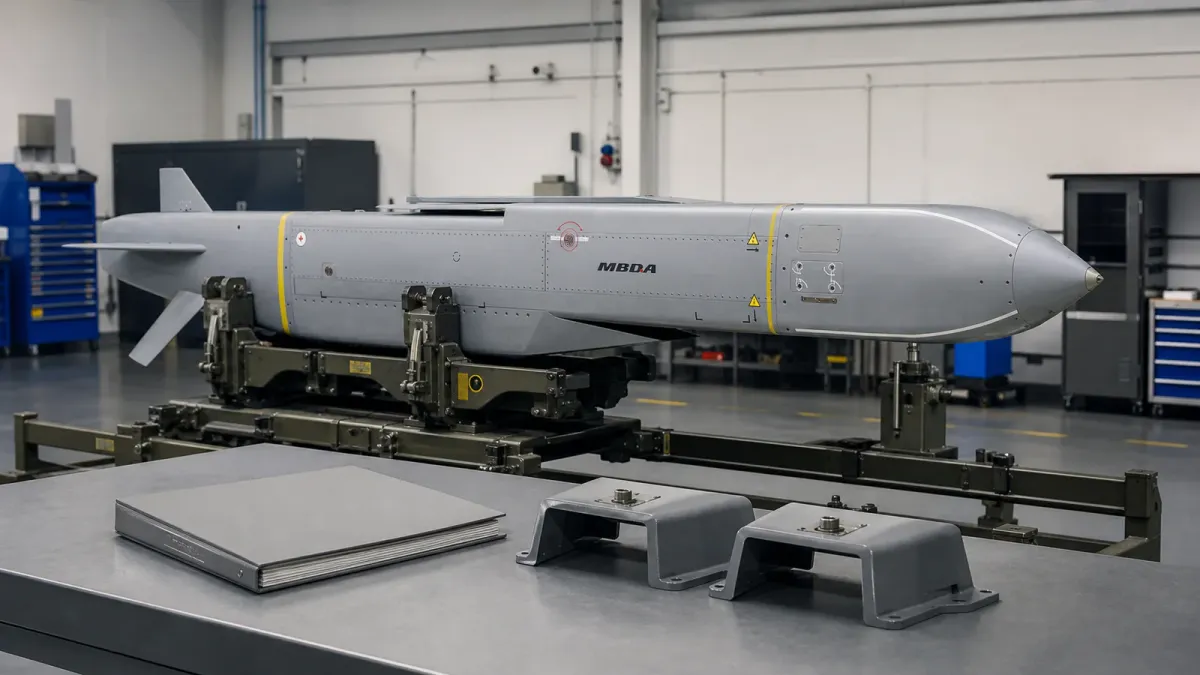
Russia warned on Thursday, August 27, that British military facilities and equipment inside and outside Ukraine could be targeted in response to Ukrainian strikes using British long-range weapons. The statement raises the temperature between Moscow and London, but it is a threat, not evidence that Russia has launched an attack on Britain.
Russian Foreign Ministry spokesperson Maria Zakharova delivered the warning at a briefing in Moscow, according to Reuters. She linked it to Ukraine’s use of the Franco-British Storm Shadow, also known in France as SCALP, and to Britain’s decision to expand the transfer of sensitive missile technology.
The most important new fact is Britain’s August 24 announcement that defense company MBDA may release classified information about British-made SCALP components so Ukraine can establish local assembly lines. That is a deeper form of support than simply shipping completed weapons.
What Russia said
Zakharova said British military installations and equipment in Ukraine and beyond could be considered targets if Ukraine strikes Russian territory with British weapons. She also accused Britain and France of taking an increasingly dangerous path by supplying missile technology.
Moscow has issued similar warnings before. Reuters described the latest statement as sharper and more urgent, but Russian rhetoric has not always translated into direct action against a NATO member. Any deliberate strike on British territory would cross a much more serious threshold than attacking Western-supplied equipment inside Ukraine.
What Britain actually approved
The UK government said Prime Minister Andy Burnham approved the release of classified information on British components for the long-range SCALP missile. The stated goal is to help establish local assembly capacity in Ukraine. Britain and Ukraine also announced a wider defense-technology partnership involving artificial intelligence, drones, robotics and battlefield data.
The government did not publish the classified technical details, a production schedule or a date when Ukrainian-assembled missiles could become operational. The announcement therefore expands Kyiv’s long-term industrial options without necessarily changing its battlefield supply immediately.
Why this matters
The decision moves part of the missile relationship from delivery toward licensed production and technical cooperation. If implemented, it could make Ukraine less dependent on finished missiles shipped from abroad and give it more control over maintenance, assembly and future supply.
For Russia, that creates a longer-term threat to military sites farther from the front. For Britain and France, it also tests how far support for Ukraine can deepen without turning recurring Russian warnings into a direct confrontation.
What remains unverified
Russia said a Storm Shadow strike hit a shopping center in Russian-controlled Donetsk and wounded civilians. Reuters said it could not independently verify that account, and Ukraine had not immediately commented. The claim should not be treated as established fact.
There was also no immediate new public response from London to Thursday’s warning. A joint statement issued earlier in the week said Ukraine’s partners would not be deterred by what they called irresponsible Russian threats and would continue sharing relevant defense technologies.
What happens next
Watch for a formal British response, evidence that missile assembly is beginning in Ukraine, and any change in how Russia targets British-linked equipment or personnel. The current development is an escalation in language around a concrete technology-transfer decision. It is not, by itself, confirmation of a wider Russia-NATO military clash.


