
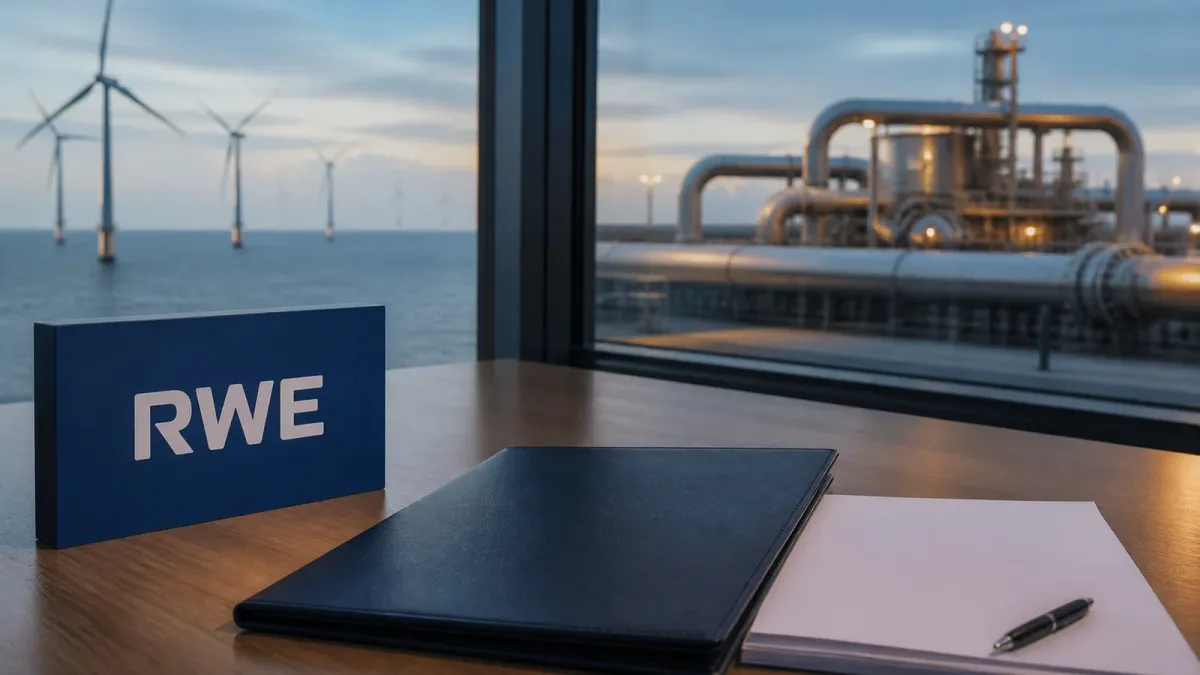
RWE U.S. Offshore said Thursday, August 6, 2026, that it has reached a $1.22 billion settlement with the U.S. Department of the Interior to give up offshore-wind leases off New York, California and Louisiana.
The deal turns a renewable-energy pipeline into a gas-and-LNG pivot. RWE said the settlement resolves its legal claims against the U.S. government and lets the company move capital into energy projects it believes can advance with more certainty.
The practical consequence is bigger than one developer. A major global power company is signaling that U.S. offshore wind has become too difficult to permit under current federal policy, while gas projects are being treated as the surer path for meeting rising electricity demand.
What changed
RWE said it had invested more than $1 billion toward the leases and early project development after securing legal rights to develop offshore wind capacity in American waters. The leases covered the New York Bight, waters off California, and an area off Louisiana.
After reviewing the outlook, the company said it determined there was no foreseeable path to permit the projects in the United States. In exchange for relinquishing the leases, RWE said the settlement provides $1.22 billion in funds.
The company said it plans to use $900 million to acquire an indirect 16% stake in the Louisiana LNG Project. It also said it has signed a $300 million turbine reservation agreement tied to a pipeline of 15 natural-gas peaking projects across target U.S. markets.
Why it matters
For energy buyers, the settlement is another sign that the U.S. power mix is being reshaped by permitting risk as much as by technology costs. Offshore wind projects can add large amounts of carbon-free electricity, but they require years of federal reviews, coastal infrastructure, supply-chain work and power contracts before turbines produce electricity.
Gas peaker plants solve a different problem. They can turn on when demand spikes or renewable output drops, which makes them useful for grid reliability. They also keep the power system tied to fossil-fuel prices and emissions, a tradeoff that will matter as data centers, factories and electric vehicles add load to the grid.
Associated Press reported that the Trump administration has used similar buyback deals as part of a broader move away from offshore wind and toward fossil-fuel development. The Guardian reported that the RWE agreement is the fifth such deal and brings the total near $4 billion.
What to watch next
The next question is whether states or clean-energy groups challenge the agreement, as they have challenged earlier federal offshore-wind settlements. Another is whether other developers decide that holding U.S. leases is no longer worth the political and permitting risk.
RWE still describes itself as an investor in U.S. power generation. Its release said RWE Americas plans to invest about €17 billion in the United States over the next six years and grow generation capacity from about 13 gigawatts across 27 states today to 22 gigawatts by 2031.
For readers, the bottom line is simple: the settlement does not just cancel prospective turbines. It shifts capital, political support and planning momentum from one future power source to another.


