
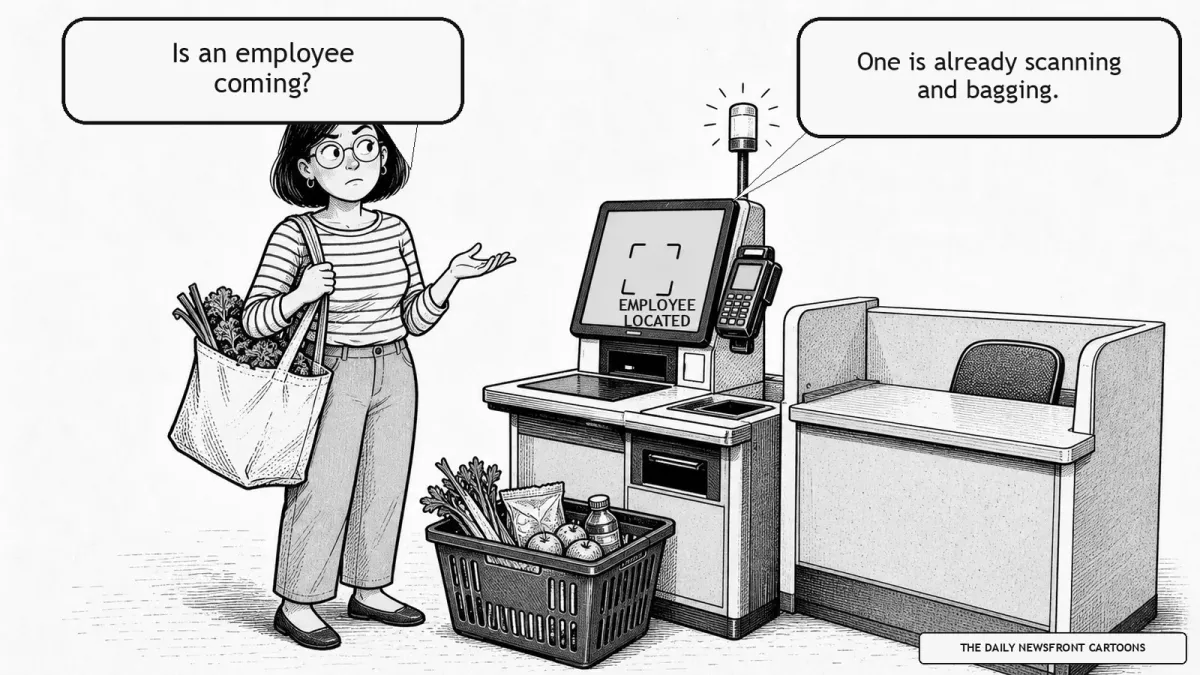
A self-checkout can call itself self-service right up until it needs a person. In this cartoon, a shopper asks whether an employee is coming after the kiosk stops. The machine replies that one is already scanning and bagging. The line is satire, not a quotation from any retailer.
The joke works because self-checkout shifts part of the cashiering job to customers without eliminating human intervention. Oracle's current retail documentation describes alerts for kiosks that need associate assistance or have hardware errors. Transactions can wait for an associate login, and age verification may also require staff action.
Why the premise is timely
Lawmakers are still debating how much staffing self-checkout requires. Ohio Senate Bill 415, introduced on April 1, 2026, remains in committee and proposes rules for staffed lanes, employee supervision, and item limits. California Senate Bill 442 likewise defines self-service checkout as scanning, bagging, and paying without human assistance while proposing staffing and transaction restrictions.
A research paper based on interviews with 22 current and former cashiers found that self-checkout monitoring creates simultaneous demands and more problem-focused work. The cartoon targets the automation promise and its incentives, not retail employees or shoppers trying to get through the line.
The composite store, talking kiosk, and dialogue are invented. The assistance workflows and legislative proposals are factual.


