
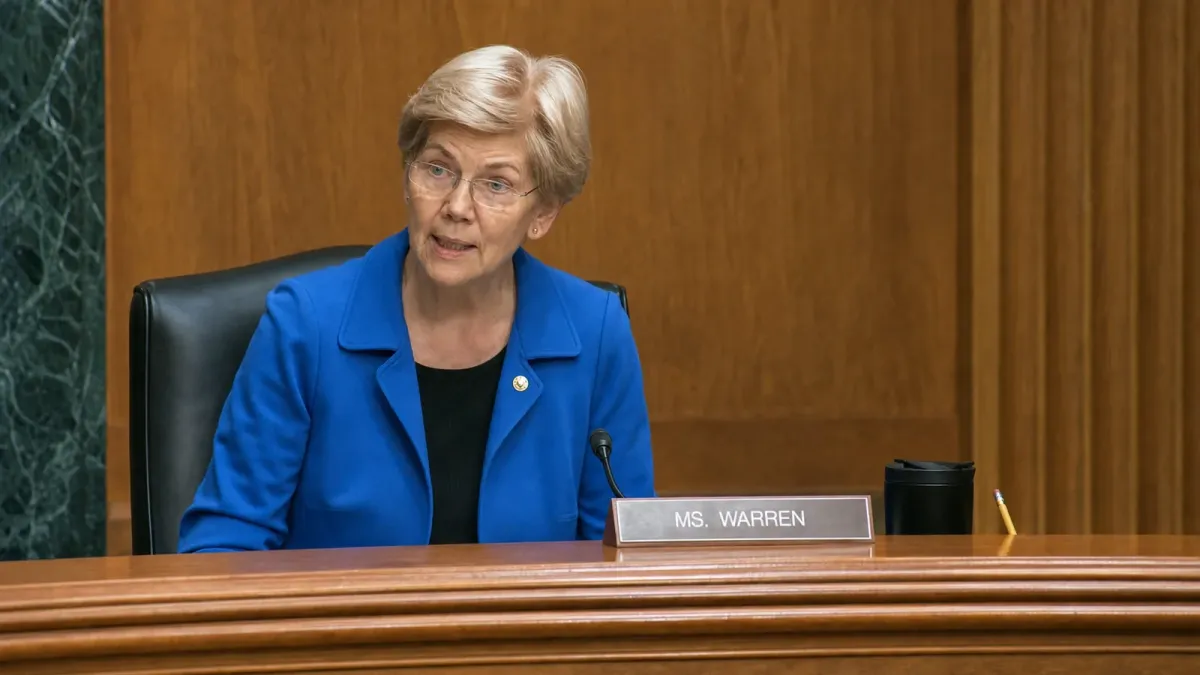
The Senate Banking Committee interrupted a public markup on Thursday, July 23, and moved behind closed doors after questions emerged from confidential FBI background investigations into three of President Donald Trump’s nominees.
Sen. Elizabeth Warren of Massachusetts, the committee’s ranking Democrat, said she and Chairman Tim Scott, a South Carolina Republican, had both received briefings on the investigations. Warren said the briefing left important questions unanswered and argued that senators should not vote until the FBI had completed its work.
Scott initially ordered the hearing room cleared after Warren moved for a closed session and Sen. Jack Reed seconded the motion. When the committee later returned to open session, members voted 12–10 to close the proceedings again and continue discussing the undisclosed issue in private.
What changed
The committee had been scheduled to vote on three nominations: Christopher Phelan to chair the Council of Economic Advisers, John Crews to serve on the National Credit Union Administration board, and Jeffrey Ledbetter to become inspector general at the Department of Housing and Urban Development.
The closed session did not itself reject or confirm any of the nominees. It temporarily removed the discussion from public view because senators are restricted from discussing confidential background material in an open hearing.
The committee’s public notice and Warren’s office did not identify which nominee, if any, was connected to the unanswered questions. They also did not describe the substance of the concern. Nothing released publicly establishes misconduct by Phelan, Crews or Ledbetter.
Why the nominations matter
The three jobs touch different parts of economic policy and federal oversight. The Council of Economic Advisers helps shape the president’s economic recommendations. The NCUA supervises federally insured credit unions. HUD’s inspector general investigates waste, fraud and abuse inside federal housing programs.
At the nominees’ June 25 confirmation hearing, Scott argued that Phelan would bring economic experience to the White House, that Crews understood the pressures on credit unions, and that Ledbetter’s law-enforcement background would support oversight of HUD programs. Warren and other Democrats raised separate concerns about the nominees’ independence and their answers on economic data, regulation and civil-rights enforcement.
What we do not know
The public exchanges reveal only the procedure, not the information that prompted it. Warren said the FBI needed time to run down answers, but she did not say what remained unresolved. Scott did not publicly describe the briefing or dispute Warren’s characterization before the room was cleared.
The committee also had a separate open confirmation hearing scheduled Thursday for Brian Johnson to lead the Consumer Financial Protection Bureau, Abby Warren to become assistant secretary for export administration at the Commerce Department, and Irving Dennis to serve as HUD’s chief financial officer. Those nominees were not the subjects of the closed markup described in the committee release.
What happens next
The committee can resume public proceedings, postpone the votes, request additional information or report the nominations to the full Senate. Until the panel publishes a vote result or a new schedule, the status of the three nominations remains unresolved.
The distinction matters: a closed session signals that senators considered the confidential questions serious enough for private discussion, but it does not reveal what the questions were or answer them. The next verifiable development will be an official committee vote, postponement notice or statement explaining whether the background review is complete.


