
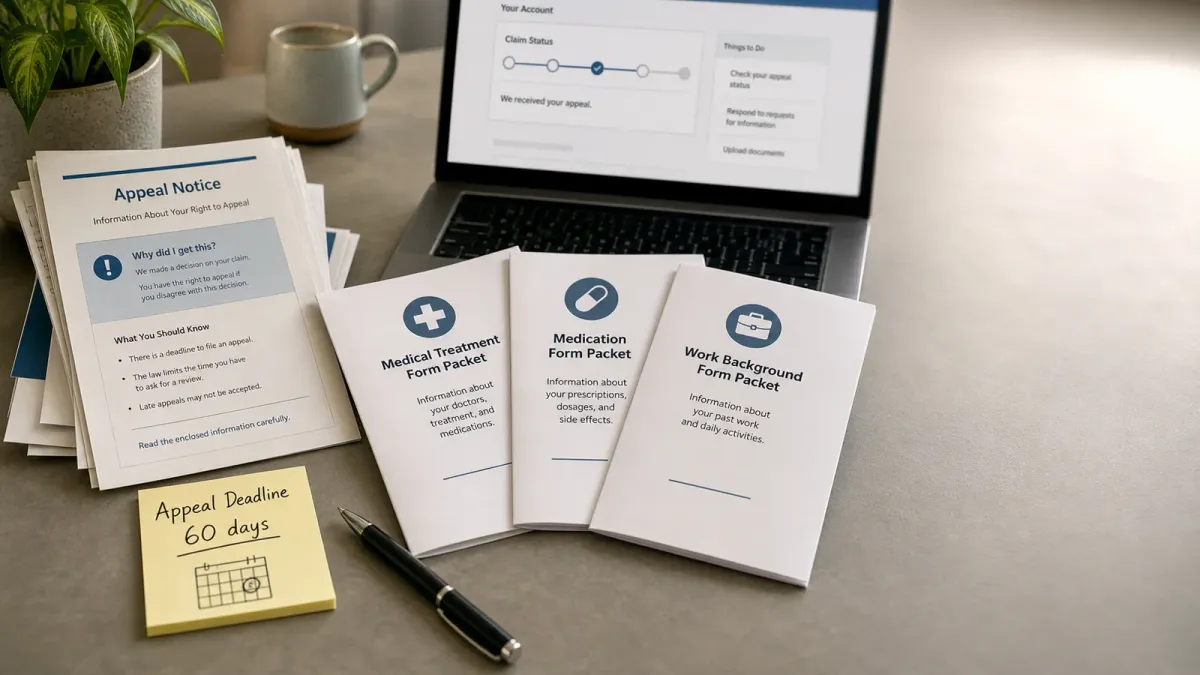
Social Security's newest online disability-appeals tools may save claimants a trip, a phone call, or a stack of mailed forms. They do not make the appeals process automatic, and they do not remove the deadline printed on a denial or decision notice.
The Social Security Administration announced the my Social Security updates on Tuesday, July 21, 2026. The agency says people with disability claims, appeals, or recently decided claims can now use their personal online account to submit certain forms, track hearing-and-appeals milestones, and receive more hearing-related notices electronically.
The practical rule is simple: use the new tools for visibility and document handling, but treat the official notice as the source of your appeal clock. SSA's electronic-appeals terms say a claimant generally has 60 days to request an appeal, starting five days after the date on the Notice of Decision.
What changed online
SSA says claimants can now submit three disability adjudication forms through my Social Security: HA-4631 for recent medical treatment, HA-4632 for medication information, and HA-4633 for work background. Those forms can matter because a disability case often turns on medical updates, medication changes, and whether work activity has changed since the prior application step.
The Claim Status Tracker also now covers more of the hearings and appeals process. SSA says users can see when a hearing office receives a Request for Hearing, when the office is reviewing information or preparing for a hearing, when a hearing decision is issued, and when an Appeals Council request is received or completed.
The Message Center expansion may be the most important change for people who worry about missing mail. SSA says 26 additional hearing-related notices are now available electronically, including notices of hearing, requests tied to late filing or withdrawals, postponement and continued-hearing notices, case-status letters, hearing reminders, and proffer letters. A proffer letter is sent when new evidence is added after a hearing so the claimant can review and respond before a decision.
What has not changed
Paper notices are still part of the process. SSA says mailed notices will continue for claimants and appointed representatives, even as account holders can choose email or text alerts when new digital documents are available. That means an online alert should help you react faster, but it should not replace checking mailed notices, account messages, and representative communications.
The appeal request is not complete just because someone starts an online form. SSA's terms say the claimant must select submit on the review page for the request to be filed. If the person exits before submitting, the request is not complete and will not be processed.
Evidence timing still matters, too. SSA says claimants who cannot submit evidence with an electronic appeal can indicate that more evidence is coming. If SSA later sends a notice requesting that evidence, the terms say the claimant has 15 days from the date on that notice before the agency may process the appeal without it.
What to check first
Before relying on the new tools, write down the date on the Notice of Decision, the appeal level, the deadline, and the confirmation number or receipt after submission. Keep copies of any medical-treatment, medication, or work-background details entered online. If you have an appointed representative, make sure they can see the same notice and timeline.
For people with a pending disability case, the update is useful because it brings more of a slow, document-heavy process into one account. The safest way to use it is as a checklist and status window, not as a reason to wait. When a notice asks for action, the deadline should move first and the online convenience should come second.


