
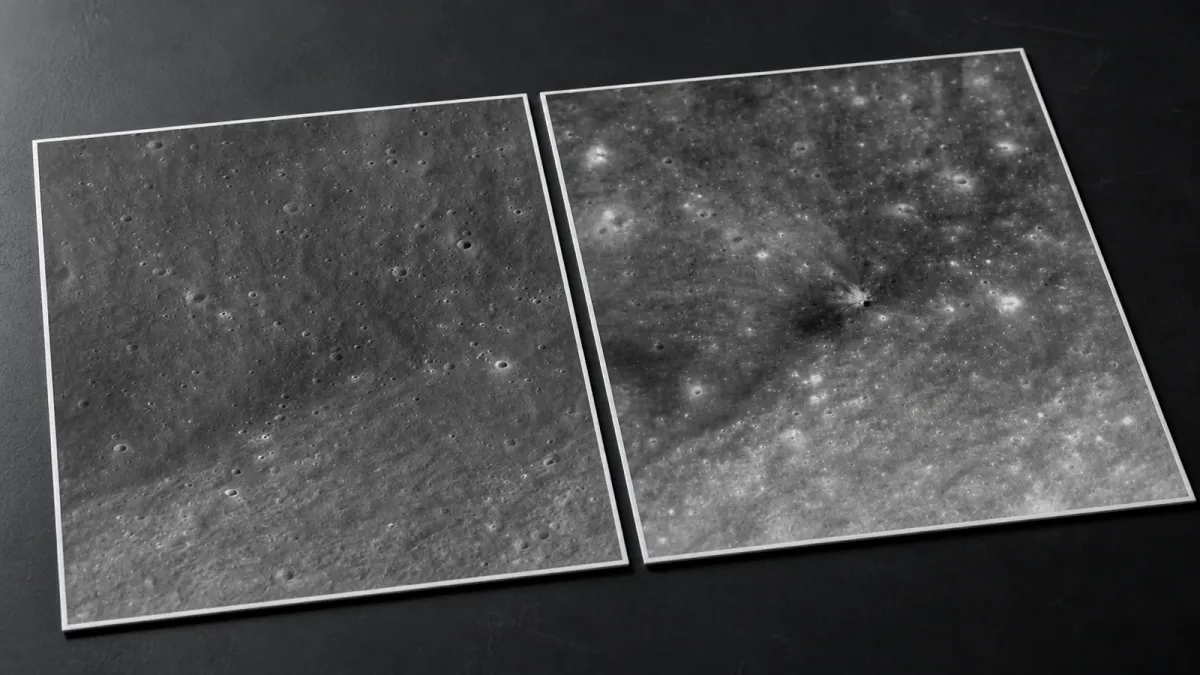
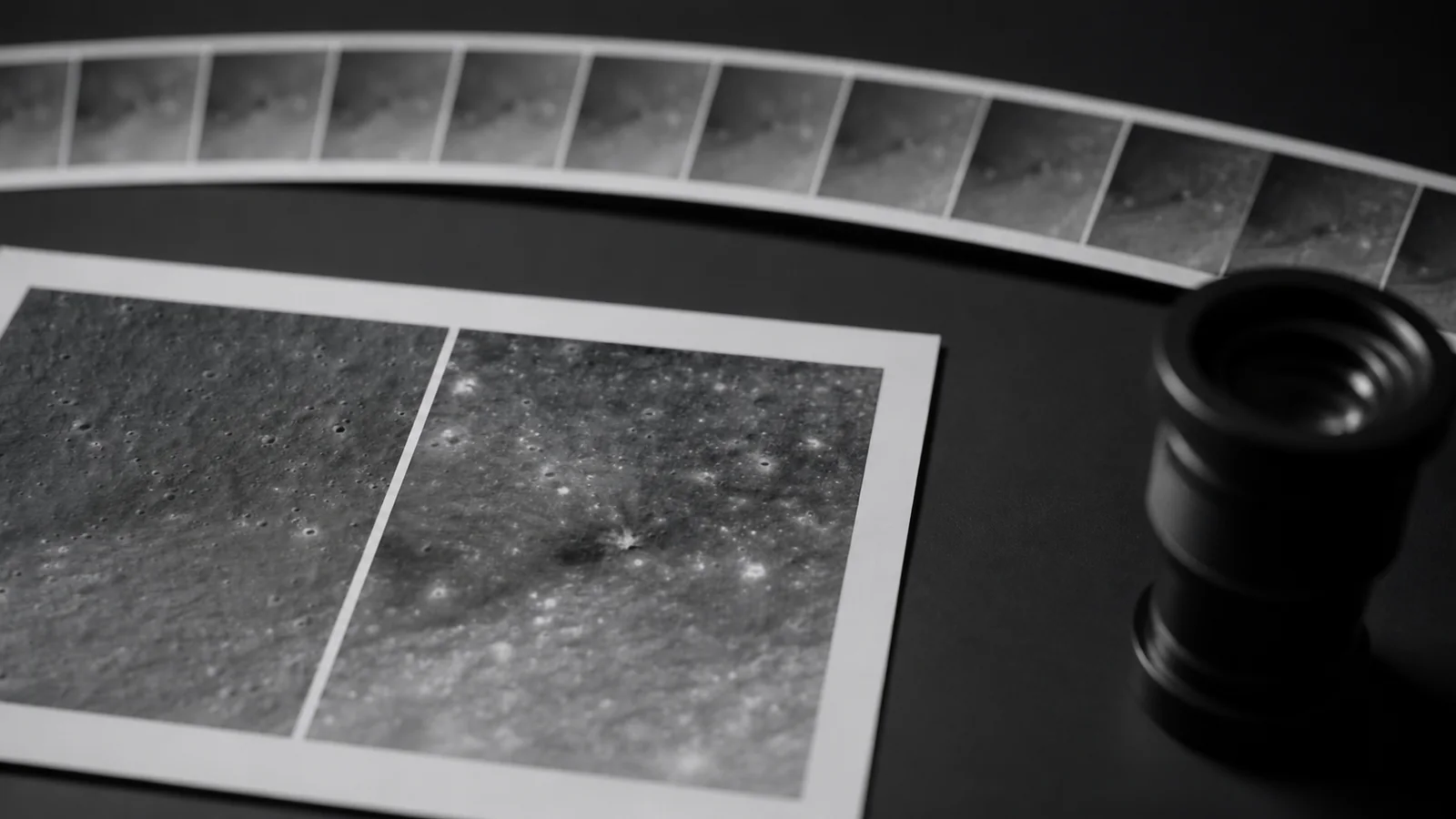
South Korea's Danuri lunar orbiter has given scientists the first before-and-after look at the Moon site where a spent SpaceX Falcon 9 upper stage hit on August 5, turning a predicted space-debris event into visible evidence of a fresh artificial crater.
The images matter because the crash was not a danger to Earth, but it was a live test of a harder problem: how well agencies and private operators can track old hardware as traffic grows around the Moon.
The Associated Press reported that Danuri flew over the impact site soon after the Falcon 9 stage struck, making several passes and capturing pictures that Korea Aerospace Research Institute released through space officials. The terrain appeared darker where the stage hit and threw dust and rock across the surface.
What changed
NASA had warned before the impact that the upper stage was expected to strike near the Einstein and Bell craters on Wednesday, August 5. The agency said the stage came from the January 15, 2025 Falcon 9 launch that sent Firefly Aerospace's Blue Ghost 1 lander toward the Moon under NASA's Commercial Lunar Payload Services program.
Solar activity and gravitational forces later pushed the discarded stage onto an unplanned lunar collision course, NASA said. The agency and SpaceX tracked the object, and NASA's Center for Near Earth Object Studies confirmed a 100% chance that it would hit the Moon.
NASA estimated before the crash that the stage could make a crater about 60 feet wide and 12 feet deep. AP reported that the upper stage hit at about 5,400 mph, or 8,700 kph, after drifting off course for more than a year.
Why the photos matter
The new images are useful because ground-based observers did not get a simple movie of the crash. NASA had said the impact would not be visible to the naked eye from Earth, and that ground telescopes could be limited by lighting and viewing geometry.
Researchers had prepared for that uncertainty. A July arXiv observing plan by Benjamin Fernando and collaborators predicted an August 5 impact near Einstein Crater and described the event as a chance to test pipelines for locating artificial impacts, studying lunar dust plumes, and understanding hazards from space debris.
That is the broader lesson. A rocket stage hitting a barren patch of lunar surface is not the same as debris crossing a crewed landing zone, a parked rover route, or a future power site. But every confirmed impact gives researchers better measurements for what old hardware can do after mission teams lose easy control of it.
What scientists still need
The first Danuri images do not close the case. NASA said its Lunar Reconnaissance Orbiter and the ShadowCam instrument aboard South Korea's Korea Pathfinder Lunar Orbiter would look for opportunities to image the site before and after the strike, depending on lighting, orbital timing, and spacecraft position.
More detailed images could help scientists measure the crater, compare the actual ejecta pattern with model predictions, and refine how future cislunar objects are identified. A separate August arXiv paper on the object, cataloged as 2025-010D, said renewed lunar exploration is creating a growing population of poorly tracked cislunar objects and that identifying their origin and properties will become increasingly important.
What it means for future Moon missions
NASA describes disposal on the lunar surface as technically accepted and safe in some cases, especially when a controlled impact is the most practical end-of-life option for hardware in low lunar orbit. The problem is not that every impact is unacceptable. The problem is knowing what is coming, where it will hit, and whether it could threaten future activity.
That concern is getting less theoretical. NASA's Artemis program, commercial lunar payload missions, private landers, and international orbiters are making the Moon busier than it has been since Apollo. As more vehicles arrive, operators will need reliable tracking, clearer disposal plans, and public explanations when hardware cannot be brought back or parked safely.
The Danuri photos give readers a simple way to see the issue. The new mark on the Moon is small by lunar standards, but it shows that space debris is no longer only an Earth-orbit problem. Around the Moon, old stages can become real impactors, and the margin for surprise will shrink as people and infrastructure return.


