

SpaceX stock has quickly become one of the market's hardest valuation debates. The company priced its June IPO at $135 a share, surged in its first sessions, and last closed at $162.00 on Thursday, July 2, according to Investing.com historical market data. U.S. exchanges were closed Friday, July 3, for the Independence Day holiday, so that is the latest regular-session close available as of Sunday.
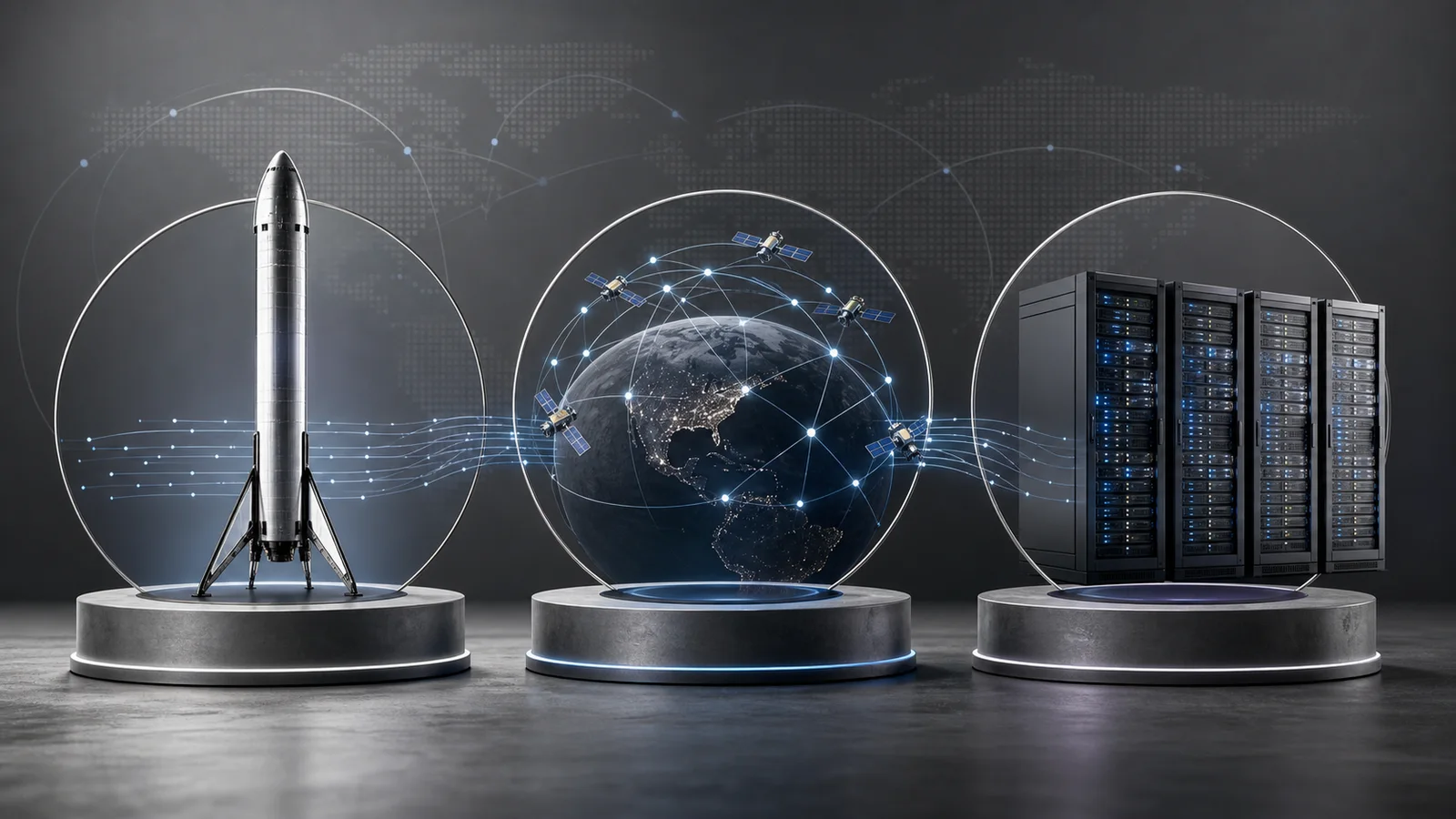
The simple version is that investors are not buying a pure rocket company. They are buying a business that now blends launch services, Starlink broadband, and the AI assets SpaceX folded in through its February acquisition of xAI. That makes the stock more exciting, but also much harder to value cleanly.
The right question is not whether SpaceX is an important company. It is whether the public stock price already gives the company credit for too much of its long-term plan before the financial proof arrives.
The business case
The strongest near-term pillar is Starlink. In its SEC Form S-1, SpaceX said its Connectivity segment, primarily Starlink, generated $11.39 billion of revenue in 2025, operating income of $4.42 billion and segment adjusted EBITDA of $7.17 billion. That is the part of the company that most resembles a scaling communications platform rather than a moonshot.
The Space segment is more complicated. SpaceX disclosed $4.09 billion of 2025 Space segment revenue, a $657 million operating loss and $653 million of segment adjusted EBITDA, while also funding $3.00 billion of research and development expense for Starship. Starship is central to the bull case because lower launch costs and higher launch cadence could reinforce Starlink, defense work and future orbital infrastructure. But it is also a major execution and capital-spending risk.
Then there is AI. SpaceX's S-1 says the newly acquired AI segment produced $3.20 billion of 2025 revenue but a $6.36 billion operating loss. Capital expenditures in that segment were $12.73 billion in 2025 and $7.72 billion in the first quarter of 2026 alone. That spending may build a valuable compute business, but it also means the stock is partly a bet on financing discipline and future demand for AI infrastructure.
Why analysts disagree
Wall Street's early coverage shows the tension. Investopedia reported that recent bullish notes have pointed to Starship, Starlink and AI infrastructure as connected growth drivers, while also flagging cash burn and aggressive assumptions as central risks. Benzinga's analyst page listed a consensus price target near $180 based on eight analysts, with recent calls including Daiwa Capital's July 2 neutral rating and $175 target.
That spread matters. At $162, the stock is above the IPO price but far below the intraday high of $225.64 reached on June 16, according to Investing.com data. A stock can be both a great company and a poor entry point if investors pay for years of flawless execution upfront.
The bull case says SpaceX owns scarce infrastructure. Reusable launch capacity is difficult to replicate, Starlink has global distribution, and AI demand could make compute and connectivity assets more valuable together. If Starship works at scale, the company could have a cost advantage that compounds across multiple markets.
The bear case says the market is capitalizing ambitions that are still unevenly proven. Starlink is generating meaningful profit, but the AI segment is burning heavily. Starship could unlock a larger market, but public shareholders are taking on timeline risk, regulatory risk, technical risk and governance risk. SpaceX also disclosed a dual-class structure in which Class B shares carry 10 votes each, leaving ordinary Class A holders with limited control compared with Elon Musk and insiders.
What investors should watch next
The next useful checkpoints are not slogans about Mars or AI. They are quarterly evidence. Investors should watch whether Starlink revenue keeps expanding without margin pressure, whether Starship development spending begins to produce higher launch throughput, and whether AI capital expenditures translate into contracted revenue rather than simply larger losses.
Cash flow will matter more than headlines. SpaceX's S-1 shows a company with enormous strategic assets, but also a company willing to spend at a scale few public investors have had to model in a newly listed stock. That can produce outsize upside if the pieces connect. It can also punish late buyers if the market starts demanding proof faster than the business can deliver it.
For now, SpaceX stock looks less like a conventional aerospace trade and more like a bundled wager on communications, launch infrastructure and AI compute. The stock may deserve a premium. The hard part is deciding how much of that premium has already been spent.
This article is market analysis, not individualized investment advice.


