
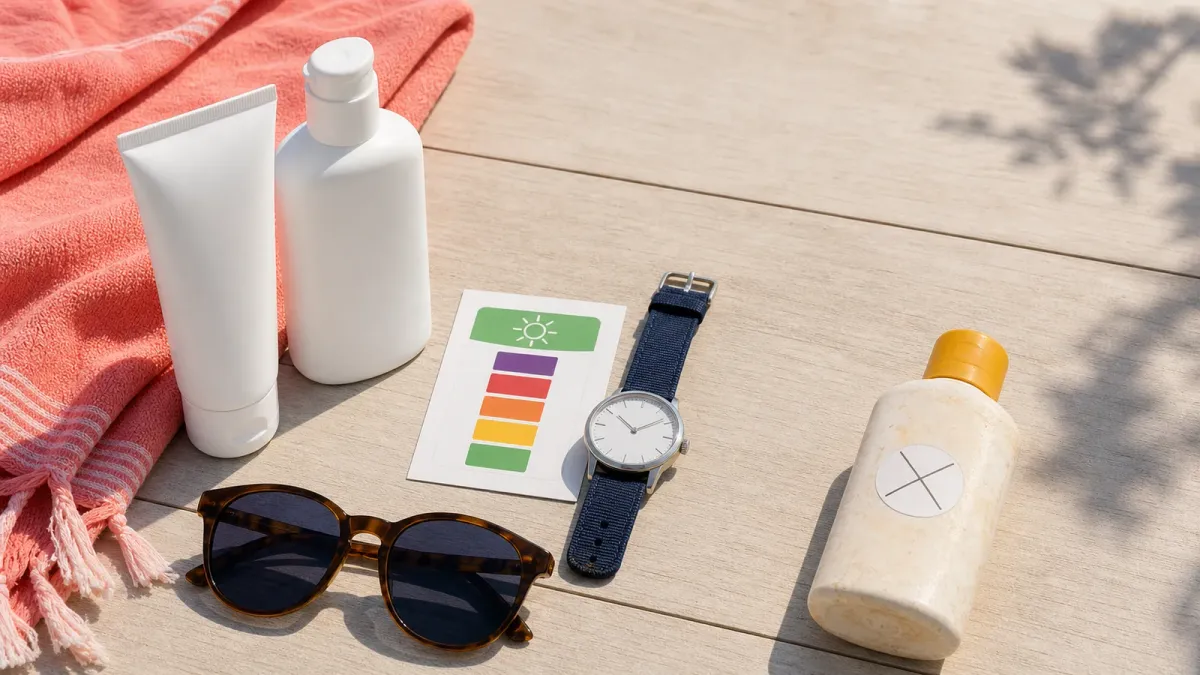
Search interest around summer habits is high again, and sunscreen questions are part of the seasonal rush. Google’s June 23, 2026 Summergeist report said U.S. searches for summer trends are at record highs, while the FDA updated its sunscreen information on June 9 after adding a new permitted active ingredient for the first time in decades.
The practical takeaway is simpler than the sunscreen aisle: choose a broad-spectrum product you will actually use, check whether the bottle is still good, and reapply before the protection wears thin.
The short answer
For most adults, SPF 30 is the baseline dermatologists recommend because it blocks about 97% of UVB rays when used correctly. SPF 50 can add a margin of protection, especially because many people apply too little, but it does not let you stay outside longer without reapplying.
Broad spectrum matters because SPF mainly measures sunburn protection from UVB rays. The FDA says broad-spectrum sunscreen helps protect against both UVA and UVB radiation, which is why the label is worth checking before the SPF number.
Do this first
- Check the expiration date. If there is no date and you cannot confirm the bottle was bought within the last three years, replace it.
- Look for changes in color, smell or texture, especially if the bottle sat in a hot car or direct sun.
- Use enough product. The American Academy of Dermatology says most adults need about 1 ounce to cover exposed skin, plus at least 1 teaspoon for the face.
- Reapply about every two hours outdoors, and sooner after swimming, sweating or toweling off.
Check these details
Water-resistant does not mean waterproof. If a label says the product is water resistant, use the reapplication timing on that label after swimming or sweating. Sprays also need extra care: the FDA tells consumers not to spray sunscreen directly onto the face and warns that some spray products can be flammable near open flames, grilling or cigarettes.
Use the UV Index
The CDC says UV rays can reach skin on cloudy and cool days and reflect off water, sand, cement and snow. It recommends protection when the local UV Index is 3 or higher. The EPA scale treats 3 to 7 as moderate to high, and 8 or above as very high to extreme, when shade, protective clothing, sunglasses and sunscreen become more important.
A quick shadow check can help when you do not have the number handy: if your shadow is shorter than you are, UV exposure is likely higher and shade is a smarter choice.
What to watch
The FDA’s June 9, 2026 action added bemotrizinol to the permitted list of sunscreen active ingredients, but products will reach shelves on manufacturer timelines. That change does not alter the basic summer checklist today: broad spectrum, enough product, regular reapplication and a bottle that has not expired.
For babies younger than 6 months, the FDA and CDC advise shade and protective clothing rather than routine sunscreen use. For anyone with sensitive skin, a history of skin cancer, medication-related sun sensitivity or severe sunburn symptoms, use official guidance as a starting point and ask a clinician for individual advice.


