
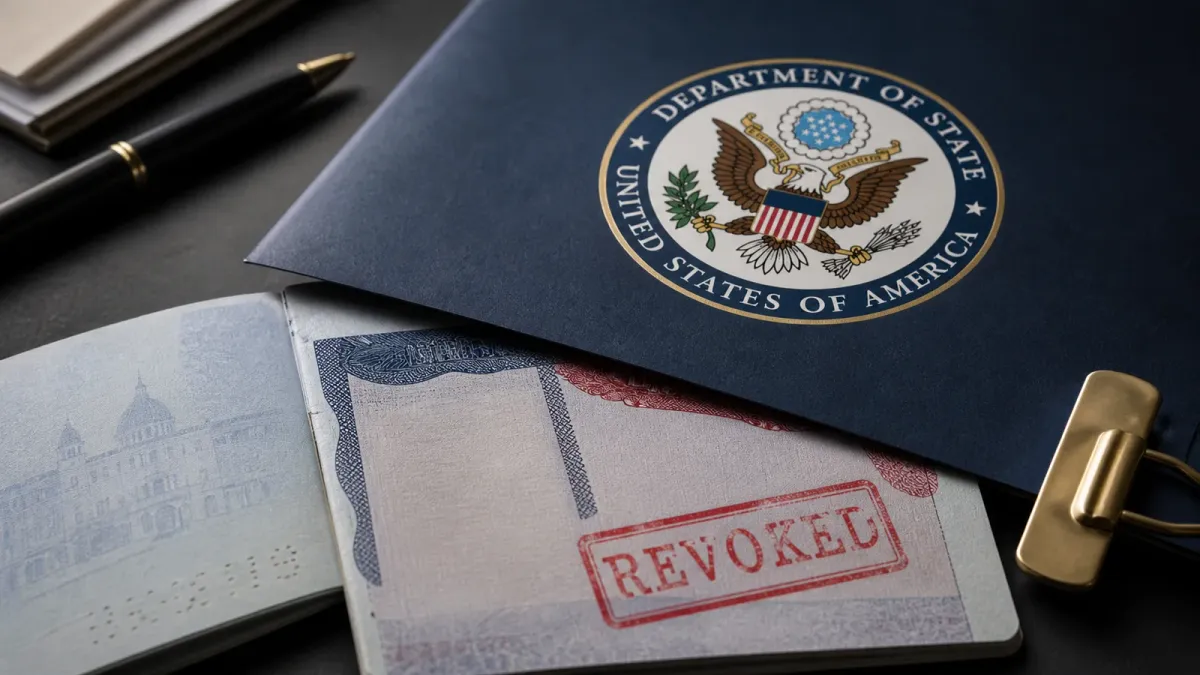
The U.S. Department of State says it has revoked more than 175,000 visas since President Donald Trump returned to office in January 2025, turning a once lower-profile enforcement tool into a major immigration-policy test.
The department said Monday, August 10, 2026, that most cancellations stemmed from law-enforcement encounters, visa violations, fraud, calls for violence, or national security concerns. Reporting from Fox News, The Washington Post, and Al Jazeera's Reuters-backed account all cited the same 175,000-plus figure.
The immediate impact is simple: a visa that was already issued can still be canceled, and holding one does not guarantee admission at a U.S. airport or border crossing. That makes the announcement relevant beyond politics: it affects people planning trips, schools trying to keep international students enrolled, and companies that rely on temporary workers or overseas visitors.
What changed
The new number is larger than the State Department's January benchmark, when officials said more than 100,000 visas had been revoked. The latest total suggests the pace of cancellations has accelerated during the administration's broader immigration crackdown.
The department described the effort as continuous vetting, meaning the government can keep reviewing a visa holder after approval. Officials cited categories including assault, driving under the influence, theft, drug offenses, embezzlement, visa fraud, and activity the government says threatens U.S. safety or foreign-policy interests. The department has not published a full public table showing how many revocations fall into each category.
Some reported revocations involved people accused of celebrating political violence, including the killing of conservative activist Charlie Kirk. That part of the policy is likely to draw close scrutiny because it sits near the boundary between national-security enforcement and speech-based punishment.
Why it matters
For travelers, students, workers and families, the practical lesson is that visa status is not static. A revoked visa can block travel plans, disrupt school or work, and force people to seek legal help quickly, even when they believed their paperwork was settled.
For employers and universities, the policy adds another risk check. International hiring, student enrollment, conferences, and temporary work assignments may need more verification before travel, especially when a worker or student has not entered the United States yet. A valid document may still need a fresh check against official guidance before a flight, semester, conference, or start date.
For the administration, the 175,000 figure is meant to show aggressive enforcement. For critics, the same number raises questions about due process, consistency, and whether some revocations are tied to allegations or protected expression rather than final findings.
What to watch next
The key test is whether the State Department releases more detailed category-by-category numbers. Without that breakdown, the public cannot easily separate revocations tied to serious criminal charges from those tied to political speech, immigration paperwork, or broad security judgments.
Travelers with a U.S. visa should check official State Department and consular guidance before booking major trips, especially if their circumstances have changed. Anyone who receives a revocation notice should treat it as a legal matter, not as routine travel paperwork.


