
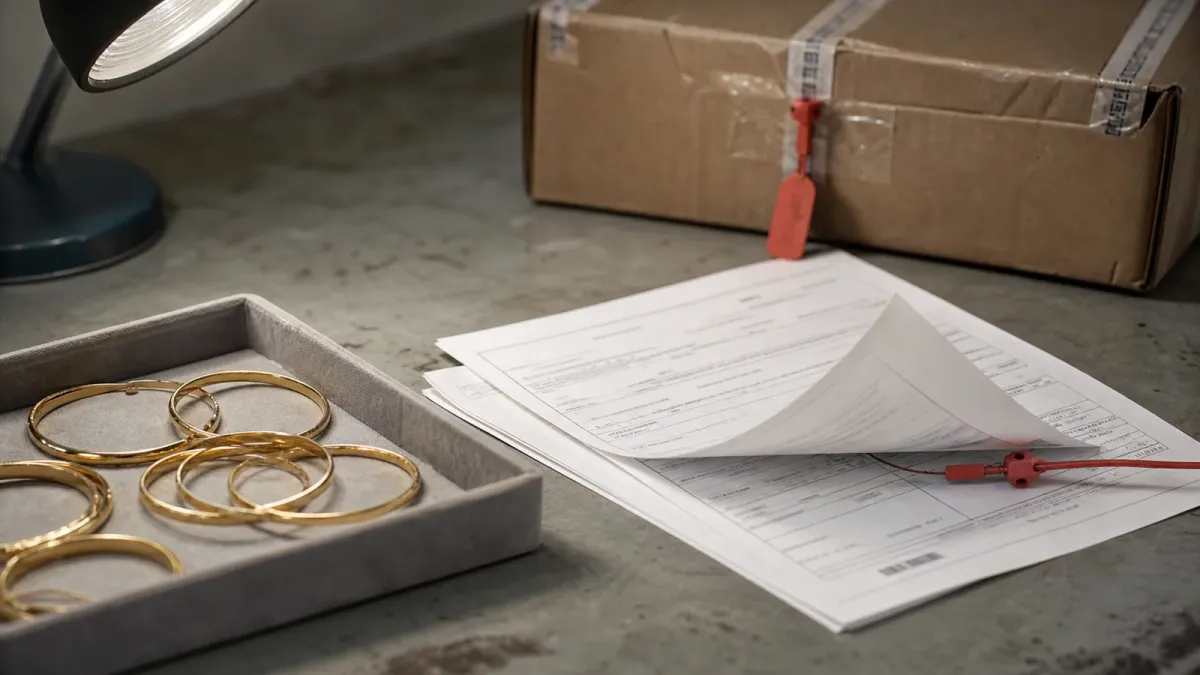
The federal government's new $1 billion trade-fraud tally is not merely a collection of paperwork errors at the border. The cases behind it describe a repeatable business strategy: change where a product appears to come from, alter how it is classified or valued, route it through another country or warehouse, and rely on distance between importer, distributor and buyer to blur who knew what.
On July 14, 2026, the Justice Department said its Trade Fraud Task Force had surpassed $1 billion in civil and criminal recoveries, penalties, forfeitures and publicly charged losses since launching in August 2025. That phrasing matters. The total mixes money recovered with penalties and alleged losses in cases that may not yet be resolved; it should not be read as $1 billion already returned to the Treasury or as proof that every charge has been established.
Even with that caveat, the public record exposes a pattern with consequences beyond customs offices. When one company pays the lawful duty and another allegedly avoids it, they do not compete on the same landed cost. The result can be a two-tier market: higher prices for businesses that follow the rules and an artificial advantage for firms willing to ignore suspicious paperwork or unusually cheap imports.
The latest gold cases show how origin can become a fiction
The clearest illustration came with two criminal cases announced in Chicago alongside the task force milestone. Prosecutors charged Raj Kohli and Veena Kohli, operators of Surya International, with falsely declaring that gold jewelry originated in Singapore rather than India and the United Arab Emirates. The government alleges that 563 entries worth more than $693 million avoided more than $38 million in duties between August 2020 and May 2024.
In a separate case, prosecutors charged Narain Gulabani, owner of Barkha Wholesale, with falsely declaring that jewelry came from Oman or Singapore. That indictment alleges 242 entries valued at more than $240 million and approximately $13.6 million in avoided duties. These are allegations, not findings of guilt, and the defendants are presumed innocent unless proven guilty.
The alleged mechanism is simple enough to fit on one customs form. Country of origin can determine whether an import faces a special tariff, an antidumping duty or no additional duty at all. The United States International Trade Commission publishes the Harmonized Tariff Schedule, while Customs and Border Protection administers and enforces it. Change the origin or classification on the entry summary, and the apparent amount due can change dramatically.
The playbook has more than one move
The Justice Department and Homeland Security describe three recurring tools: transshipment, mislabeling and false declarations. In practice, the enforcement cases show several variations.
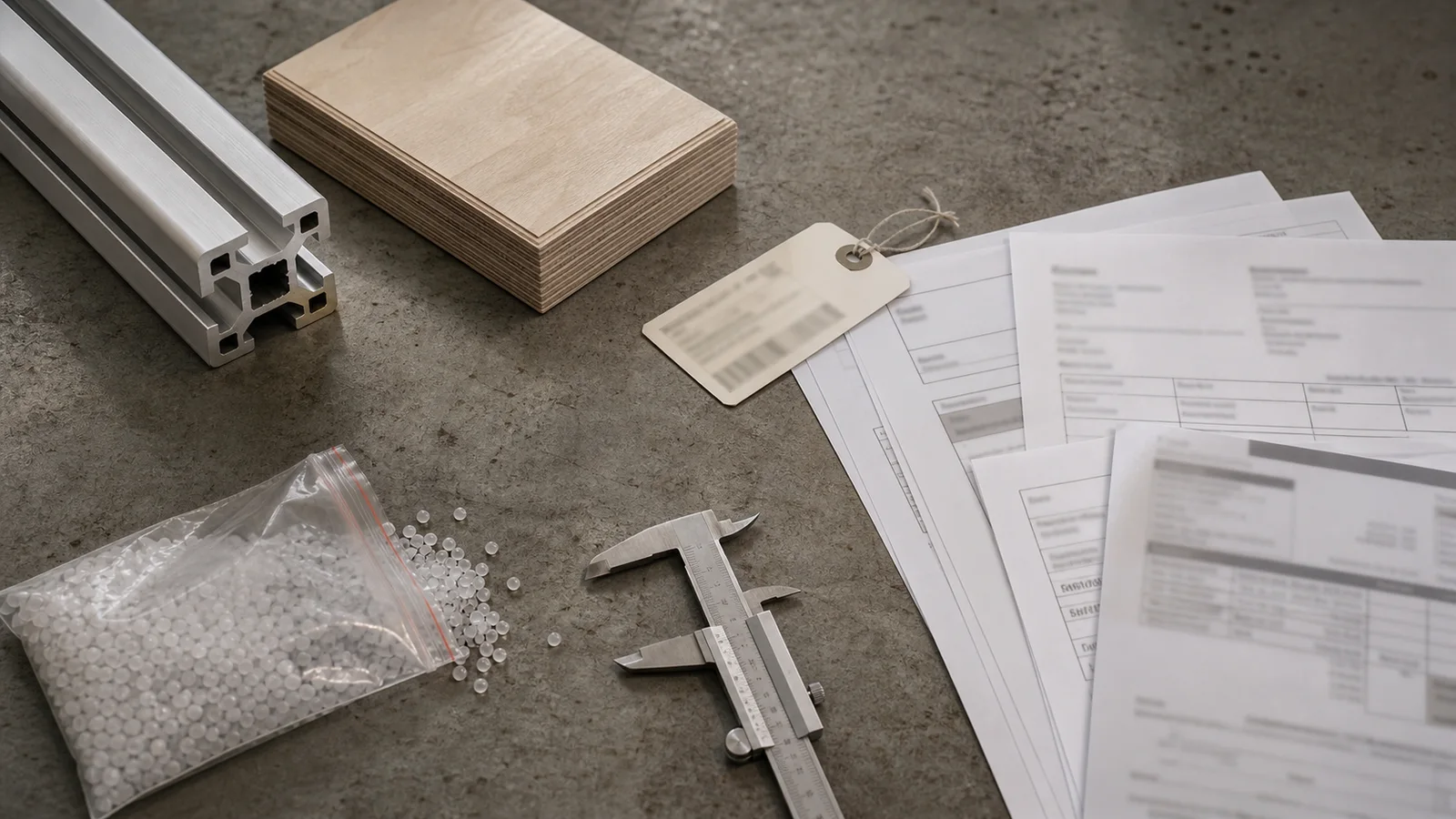
- Origin laundering: Goods made in a high-duty country are documented as products of a lower-duty country.
- Classification games: An unfinished or tariff-covered product is declared under a category carrying a lower rate.
- False valuation: Invoices or payment records understate what imported goods are worth, reducing the duty calculated from that value.
- Strategic ignorance: A downstream buyer treats implausible prices, conflicting documents or a supplier investigation as someone else's compliance problem.
The last move is the most important for ordinary businesses. The task force says its mandate reaches importers, brokers, distributors and commercial end users that knowingly profit from illegally entered goods. The port is the start of the inquiry, not necessarily the end.
Boise Cascade shows what willful blindness can cost
Unlike the pending gold cases, the Boise Cascade matter ended in a guilty plea. In April, the building-materials company pleaded guilty to a felony Lacey Act violation tied to illegally imported birch plywood and was ordered to pay a $6.382 million fine, serve five years of probation and implement a compliance plan.
According to the Justice Department, Boise Cascade knew federal agents had searched its supplier's warehouse in January 2021, yet placed at least 10 additional orders in the next two weeks. The fine represented twice the gross profit attributed to the illegal wood. The case turns a familiar corporate defense—reliance on a supplier—into a warning: once red flags become specific, continuing to buy can become evidence rather than insulation.
The biggest settlement reveals the economics
More than half of the task force's headline total comes from one civil resolution. Perfectus Aluminum and related companies agreed in May to pay $549.5 million to resolve False Claims Act allegations that they evaded antidumping and countervailing duties on Chinese aluminum extrusions. The government alleged that false statements on customs entry summaries were used to avoid duties.
A settlement of civil allegations is not the same as a criminal conviction, and the mixed $1 billion tally can obscure that distinction. Still, the Perfectus case shows why tariff fraud can be tempting: duties high enough to protect a domestic industry also create a large payoff for anyone who can make covered goods look like something else on paper.
It also shows how insiders can change the risk calculation. The False Claims Act allows private whistleblowers to sue on the government's behalf and potentially share in a recovery. The Justice Department is now openly inviting trade-fraud tips through both that law and its corporate whistleblower program.
What honest businesses should check now
The crackdown does not mean every origin dispute is fraud. Global supply chains are complicated, tariff classifications can be technical, and prosecutors still must prove knowledge where criminal intent is required. But the enforcement direction is clear: federal authorities are looking past the importer of record and farther down the chain.
Companies buying imported goods should ask three questions before accepting a price that seems too good to be true: Does the stated country of origin match where substantial manufacturing occurred? Do the invoice, tariff classification and shipping route tell the same story? And did the supplier's landed cost change in a way that makes economic sense after a new duty took effect?
The next test will be whether the government converts its new charges into convictions and collects the amounts embedded in its headline tally. For now, the cases already establish a more immediate business lesson: in a tariff-heavy economy, suspiciously cheap imports are not merely a procurement opportunity. They can be a liability moving downstream.
Sources: U.S. Department of Justice Trade Fraud Task Force announcement; Perfectus Aluminum settlement announcement; Boise Cascade guilty plea and sentence; and CBP guidance on the Harmonized Tariff Schedule.


