
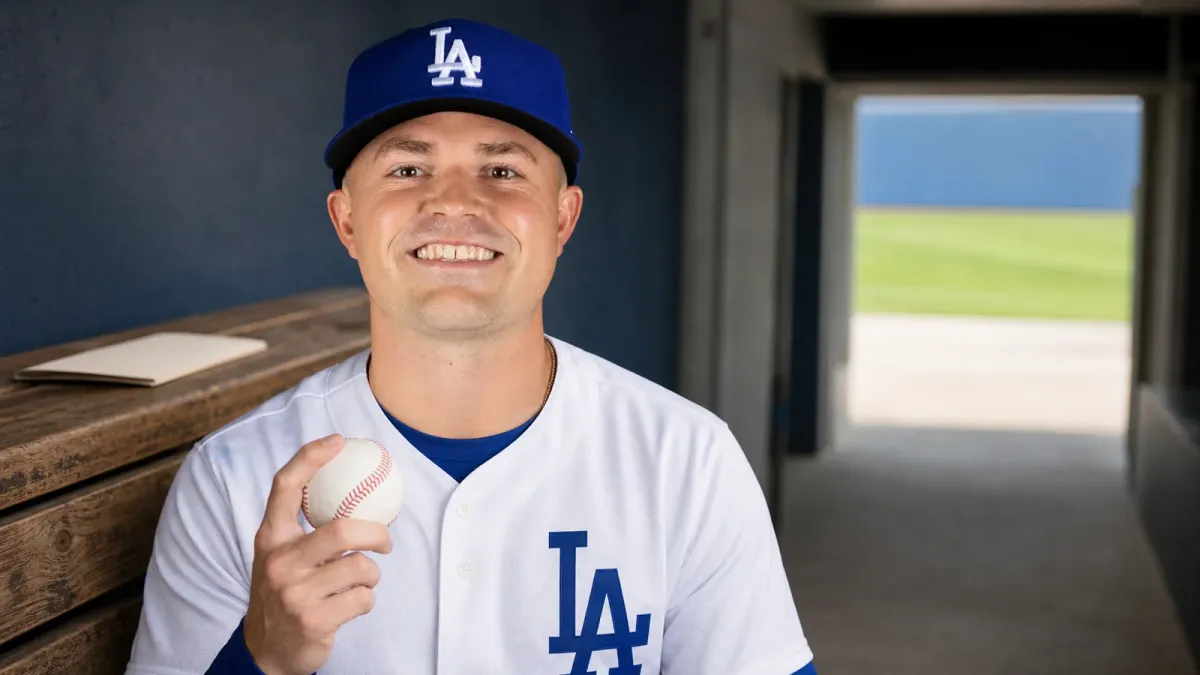
The Los Angeles Dodgers have acquired Tarik Skubal from the Detroit Tigers, adding the two-time reigning American League Cy Young Award winner to a rotation already built for October. The price was three prospects—outfielder Zyhir Hope and right-handers River Ryan and Brady Smith—but the real clock on the trade is Skubal's contract: he can become a free agent after the 2026 World Series.
That makes this more than another star joining baseball's richest contender. It is a concentrated bet that one elite left-hander can help the two-time defending champions win a third consecutive title before Los Angeles must decide whether to make an enormous long-term offer.
The trade was confirmed Saturday night, August 1, while Detroit was finishing an 8-6 victory over the Athletics. Skubal said he was excited to join the Dodgers and chase a third straight championship, while also describing the move away from the organization that drafted him in 2018 as emotional.
The short answer
Los Angeles traded future value for the best available upgrade to its present. Skubal joins a potential postseason rotation with Shohei Ohtani, Yoshinobu Yamamoto, Blake Snell and Tyler Glasnow. The Dodgers already led the majors with a 3.36 rotation ERA when the deal was reported; adding Skubal raises both their ceiling and their protection against the injuries and short-series volatility that can undo even a favorite.
The one-season part matters because the Dodgers did not acquire years of contractual control. Skubal is earning $32 million in 2026 after winning a record-setting arbitration case, and the Associated Press reported that Los Angeles will owe roughly $9.5 million for the remainder of the season. After the World Series, he can test a market in which elite starting pitchers command some of baseball's largest contracts.
Why Skubal changes October
Postseason series compress a season into a handful of games, and a frontline starter can influence several of them. An ace can open a series, return on normal rest later and reduce the number of innings a manager must entrust to the middle of a bullpen. Skubal gives manager Dave Roberts another pitcher capable of carrying that workload while also changing the look of a rotation that leans heavily right-handed when Ohtani, Yamamoto and Glasnow are lined up.
He also gives the Dodgers flexibility. They do not need every famous arm to be healthy and dominant at the same time. If one starter is limited, Los Angeles can still build a short playoff rotation without asking a depth option to cover the highest-leverage innings. If the group is healthy, the club can be more conservative with rest and matchups down the stretch.
None of that guarantees a championship. Starting pitching can be neutralized by poor defense, a quiet offense or a bullpen that cannot hold late leads. Skubal's value is that he improves the Dodgers' odds at the part of the game where a single dominant performance can swing a short series.
What Detroit received—and gave up
Detroit received Hope, Ryan and Smith, a package designed to move value from one expiring superstar into several younger players. The strategy is understandable: keeping Skubal through the deadline would have meant accepting the risk that he left in free agency for only draft compensation.
The cost is immediate and emotional. The Tigers moved the pitcher most identified with their recent success while they were still within reach of the American League wild-card race. Prospects offer years of possible control, but they do not offer certainty. Their development will determine whether the trade eventually looks like disciplined roster management or a missed chance to compete around a homegrown ace.
For the Dodgers, the inverse is true. They accepted the possibility that Hope, Ryan or Smith becomes a long-term contributor elsewhere because their championship window is open now. A third straight World Series title would make that exchange easy to defend. An early playoff exit would revive the familiar question around deadline blockbusters: how much future should a favorite spend to become only a little more favored?
The winter decision is already approaching
The trade does not settle where Skubal will pitch in 2027. The Dodgers can use the next several months to evaluate his fit, but free agency gives the pitcher leverage and invites every club capable of funding an ace-level contract into the conversation. Los Angeles may be uniquely comfortable with that price; it is not obligated to pay it simply because it made the trade.
That is why the best way to understand the deal is as two decisions, not one. The Dodgers decided that Skubal was worth three prospects for the 2026 pennant race. A separate decision—whether he is worth a long, record-chasing contract—comes after the season.
What to watch next
The first signal is how quickly Skubal enters the Dodgers' rotation and how the club spaces its other starters around him. The second is health: Los Angeles has assembled extraordinary names, but its postseason advantage depends on which pitchers are actually available in October. The third is contract language from both sides. Any extension talk would convert a short-term gamble into a longer partnership; silence would keep the winter auction intact.
For now, the transaction has a clean meaning. The Dodgers did not need Skubal to be a contender. They acquired him because a team chasing baseball history decided that being the favorite was not enough.


