
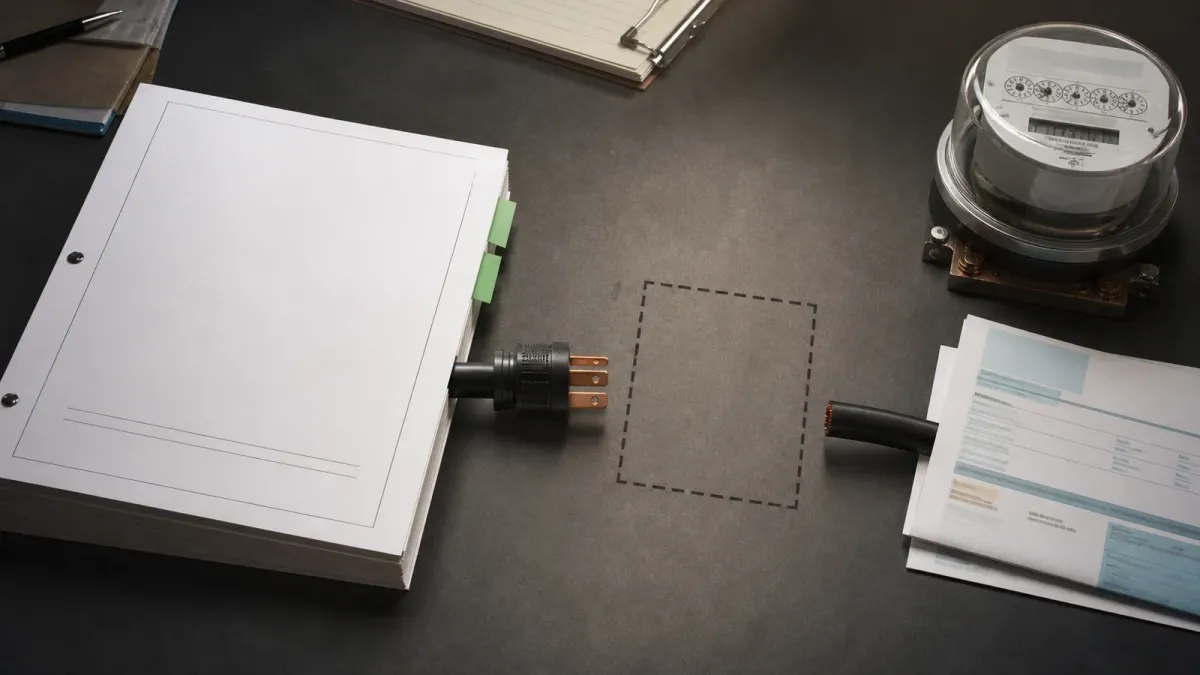
Texas has turned the AI data-center boom into a grid-cost test: proposed projects moving through the state's main power queue now have to clear a state audit before they can advance.
Gov. Greg Abbott directed the Public Utility Commission of Texas and the Electric Reliability Council of Texas to verify data-center projects in ERCOT's interconnection process, saying projects that do not meet state and regulator requirements should be denied connection to the grid.
The fight widened Thursday after Fox News reported a rare split between President Donald Trump, who has argued that data centers could become a larger economic prize than oil, and Abbott, who is trying to keep the cost of serving enormous new power loads from landing on Texas residents.
What changed
Abbott's August 3 directive says the PUCT and ERCOT must complete the audit before any data-center project moving through ERCOT's process can move forward. The review is not just a power-demand check. The governor asked regulators to collect details on public incentives, expected electricity use, on-site generation, water use, cooling systems, community impacts and project ownership.
The scale explains why the decision matters beyond Texas. Abbott's office said ERCOT was considering more than 474 gigawatts of requests to connect to the grid, more than five times ERCOT's record peak demand, and that about 90% of new power requests were from data centers.
That does not mean every proposed project will be built. CNN-distributed coverage and other national reporting have shown that data-center construction is running into power, equipment, labor and local-permit bottlenecks. But the Texas queue shows why state regulators are worried: even a fraction of the proposed load could force expensive grid planning decisions.
Why readers should care
Data centers are no longer only a technology story. They are becoming a household-cost, local-government and infrastructure story because the facilities need land, transmission capacity, water systems, backup power and utility planning long before the public sees any direct benefit from the AI tools they support.
The central question is who pays for the upgrades. Fox News reported that Abbott has pushed regulators to make data centers cover the infrastructure costs needed to serve them and has called on developers to add their own power generation instead of shifting costs to residents. Trump has criticized that posture as a mistake, arguing that the economic investment is too large for states to discourage.
For residents outside Texas, the useful signal is the policy model. If one of the country's most aggressive business-growth states is pausing projects for verification, other states and cities may use similar tests when residents ask whether a proposed facility will raise utility bills, strain water systems, add noise or require public subsidies.
The numbers to watch
The most important number is not the headline investment value of a campus. It is the load a developer wants to put on the grid, whether that load arrives all at once, and who funds the transmission, generation and reliability upgrades needed to serve it.

The Texas Tribune reported that state officials and lawmakers have been trying to get clearer information about water use, cooling systems, power demand and tax incentives. It also reported that PUCT staff had notified 377 companies about a water-and-power survey and received 28 responses, a low participation rate that helps explain why Abbott moved to a broader audit.
On-site power is another watch point. Some developers are trying to build generation next to data centers so they can avoid waiting years for grid capacity. That can reduce one kind of bottleneck, but it also raises questions about fuel supply, emissions, backup arrangements and whether nearby communities still absorb other costs.
What happens next
The immediate next step is regulatory: PUCT and ERCOT have to define how the audit works, how long it will take, and which projects can proceed. The Texas Tribune reported that ERCOT put an existing review process known as batch zero on pause after Abbott's directive, but questions remained about the full scope of the audit.
The political next step may be harder. Data-center opposition has crossed party lines in several states because voters are reacting to visible local costs, not only to abstract views about artificial intelligence. Texas now has to balance three pressures at once: keeping AI investment, protecting grid reliability and convincing residents that they will not be left with the bill.
The bottom line is that the AI buildout is moving from promise to plumbing. The companies that can show credible power plans, transparent water use and real cost responsibility will have an easier case to make. The projects that cannot may find that the grid, not demand for AI, becomes the real limit.


