
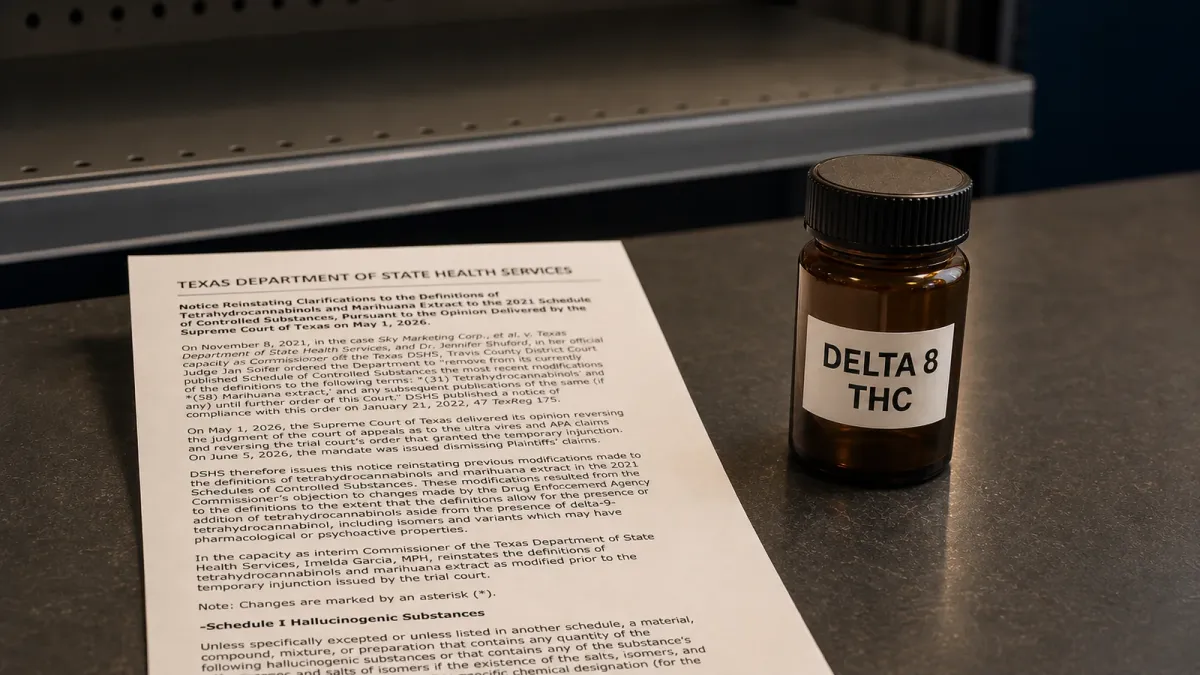
Texas’ reinstated controlled-substance definitions took effect July 31, 2026, putting manufactured delta-8 THC and other covered THC isomers back in Schedule I. Retailers may no longer legally sell those products, and consumers carrying them can face criminal enforcement.
The change does not outlaw every hemp-derived THC product. Hemp products containing no more than 0.3% delta-9 THC by dry weight remain outside the reinstated Schedule I definition, although separate Texas rules may still restrict how a product is made or sold.
The practical rule for consumers is simple: do not assume a package is legal because it says “hemp-derived.” Check the cannabinoid list and certificate of analysis for delta-8, delta-10, THCP or other converted THC variants before buying, carrying or ordering a product into Texas.
What changed on July 31
The Texas Department of State Health Services formally reinstated clarifications first adopted in 2021 after years of litigation kept them from being enforced. The agency published the notice in the July 10 Texas Register and set July 31 as the effective date.
The reinstated language treats THC naturally contained in cannabis as controlled, except for up to 0.3% delta-9 THC in legally defined hemp. It also covers synthetic equivalents, derivatives and isomers with similar chemical structure and pharmacological activity. Commercial delta-8 is typically made by chemically converting hemp-derived CBD into concentrations far above the trace amount found naturally in the plant.
Why the court ruling mattered
On May 1, the Supreme Court of Texas ruled that the state health commissioner retained authority to include manufactured delta-8 in the controlled-substance schedule. The justices reversed a temporary injunction that had shielded retailers while the lawsuit proceeded.
The court drew a narrow distinction: trace delta-8 that occurs naturally in hemp was decontrolled by the 2019 Texas Farm Bill, but the law did not automatically legalize potent, manufactured delta-8 products. Final adjudication followed on June 5, clearing DSHS to restore the definitions.
What remains legal
Qualifying delta-9 edibles, drinks and tinctures can remain legal if they stay within the 0.3% dry-weight limit and satisfy other state requirements. Delta-9 smokable hemp is governed by separate litigation, and Texas already restricts the sale of cannabinoid vape products. A legal delta-9 exception should not be read as permission for every product format.
The Texas Tribune reported that some retailers expected to remove more than half their THC inventory. The state lists roughly 14,000 registered retail locations in its consumable-hemp program, so the change reaches far beyond specialty dispensaries.
What consumers should do now
- Do not carry or use a product labeled delta-8, delta-10, THCP or another converted THC variant in Texas.
- Check the full label and a current laboratory certificate; a generic “hemp” claim is not enough.
- Do not assume an online seller can lawfully ship a newly controlled product into the state.
- If police have seized a product or issued a citation, speak with a qualified Texas criminal-defense lawyer.
Possession penalties can depend on the substance, product form, aggregate weight and charging decision. The health department sets the schedule, but police and prosecutors handle criminal enforcement. This article provides general information, not legal advice.


