
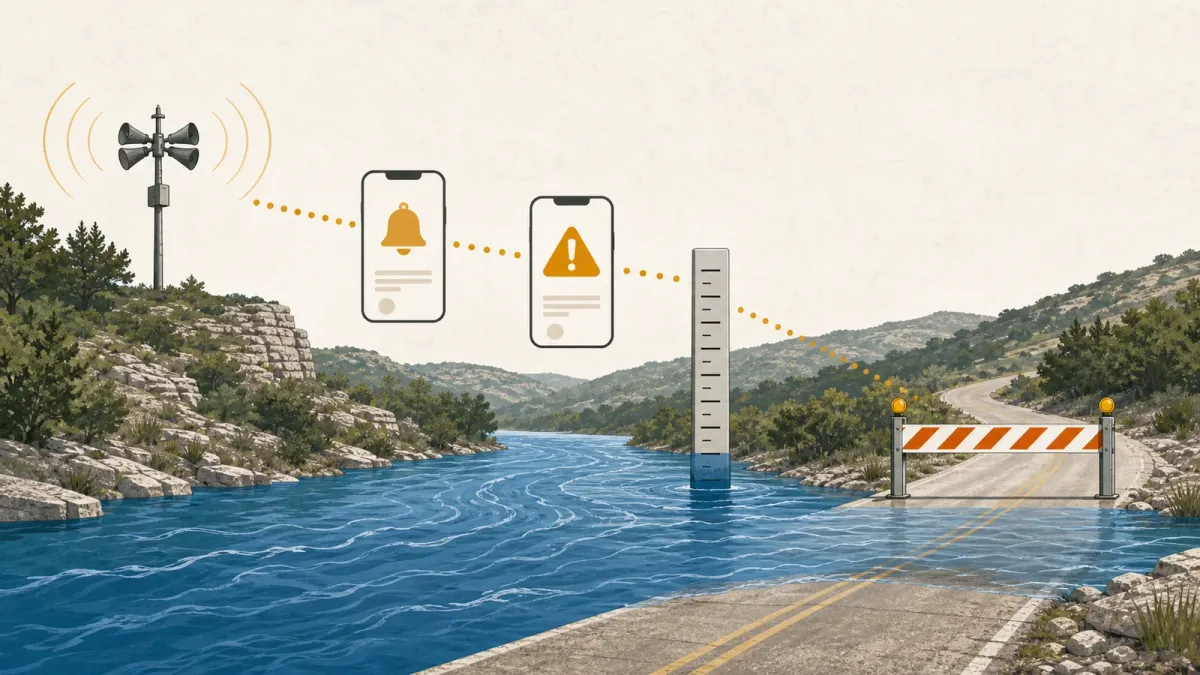
Texas’ latest flooding is becoming a real-time test of the warning systems installed after last year’s deadly Hill Country disaster.
The state said on July 17, 2026, that more than 2,700 personnel and 1,500 vehicles, aircraft and other assets had been deployed after severe weather and flooding hit communities across Texas. Gov. Greg Abbott requested a presidential disaster declaration for 28 counties and said Texas had rescued more than 270 people since response efforts began.
The short version: sirens, phone alerts and earlier evacuations appear to have helped in some places, but the system still has gaps. The Associated Press reported that some residents praised better communication after new warnings went out, while others said they relied on calls from friends or family before they knew water was rising.
What changed
After the 2025 Hill Country floods, Texas and local officials moved to add or improve early-warning tools, including sirens, mobile alerts, river monitoring and better coordination among emergency agencies. Those tools mattered this week because flash flooding can move faster than a normal storm update cycle, especially near steep terrain, low-water crossings and river communities.
The National Weather Service still had flood warnings active early Sunday, July 19, including moderate flooding forecast on the Rio Grande at Laredo and Columbia Bridge. The weather service also warned that the San Antonio River near Runge was above flood stage and urged people not to drive around barricades or through flooded roads.
What the warnings cannot do
A warning system only works if people receive it, understand it and have time to move. Rural cell coverage, nighttime storms, fast-rising creeks and language or access barriers can all weaken the chain. Sirens can also be missed indoors, and mobile alerts may not reach visitors who are unfamiliar with local flood zones.
That is why the practical advice remains simple: avoid low-water crossings, do not drive through water, keep emergency alerts enabled, and check local river and road updates before traveling in flood-hit counties. The National Weather Service says most flood deaths happen in vehicles, and even shallow fast-moving water can knock a person down or move a car.
What to watch next
The next test is recovery. Texas officials said more counties could be added to the disaster request as damage assessments continue. For residents, the key near-term questions are whether flood warnings are still active, whether roads and bridges are open, and whether local officials are asking neighborhoods to stay out of waterways even after rain has stopped.


