
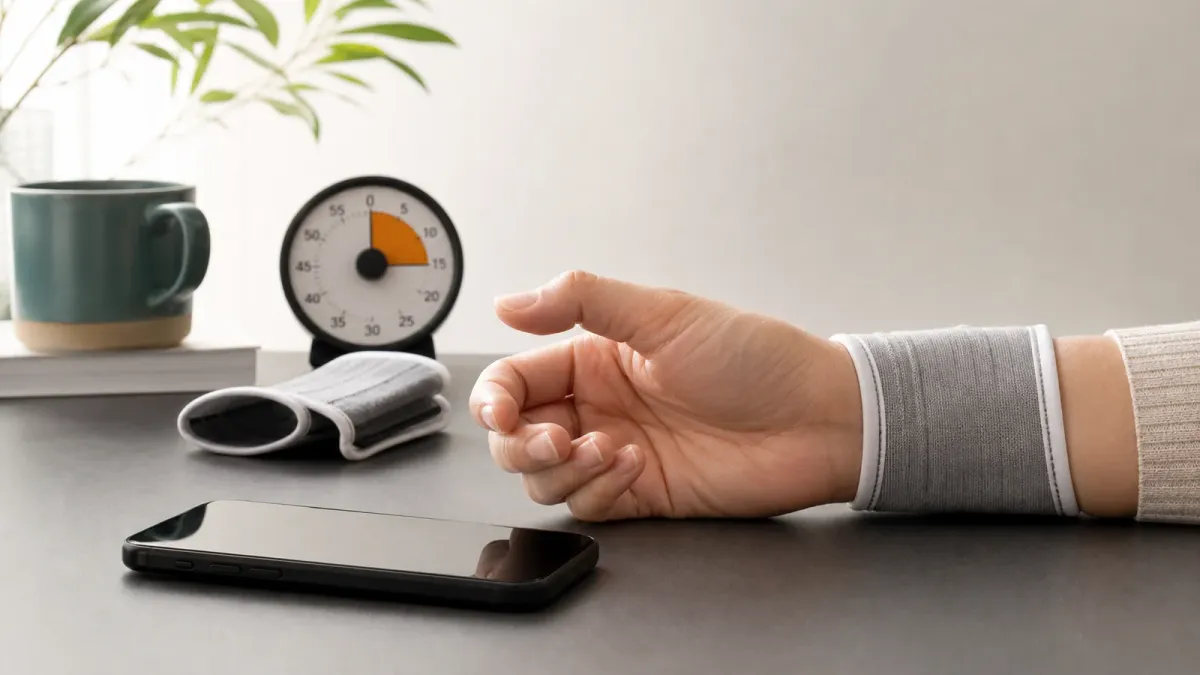
If your thumb aches after a long run of texting, scrolling or gaming, the useful first question is not whether you have a named injury. It is whether your phone habits are repeatedly loading the same small tendons and joints in the same way.
The nickname "texting thumb" can describe several kinds of phone-related pain, from temporary soreness to irritation around the tendons on the thumb side of the wrist. Mayo Clinic describes de Quervain tenosynovitis as pain involving those tendons, often felt when gripping, turning the wrist or making a fist.
The short answer
Do not try to push through thumb or wrist pain just because the motion feels small. Start by giving the sore area fewer repeated jobs: switch hands, use voice dictation, type with an index finger, prop the phone instead of pinching it, and take real breaks before the pain escalates.
That does not mean every sore thumb is serious. It does mean persistent pain, swelling, numbness, weakness, clicking, locking or symptoms that return quickly after rest deserve attention from a clinician, especially if the pain changes how you work, drive, cook, lift or sleep.
Do this first
- Change the job your thumb is doing. Hold the phone in one hand and tap or swipe with the other index finger for a while, or use both hands so one thumb is not doing all the motion.
- Use dictation for long messages. Voice-to-text can reduce repeated thumb flexing during emails, group chats and search sessions.
- Support the phone. A stand, pop grip or table edge can reduce the pinching force needed to hold a large phone.
- Take short breaks before pain builds. Break up long scrolling sessions and give your hand a different posture instead of waiting until the thumb throbs.
- Stop the motion that clearly triggers pain. If side-to-side wrist movement, gripping or pinching makes symptoms worse, back off and consider a brace only if a health professional recommends one.
How it works
The thumb is built for many movements, but phone use can concentrate thousands of tiny swipes, taps and grips into one repeated pattern. Mayo Clinic says repeated hand movements such as lifting, gripping or twisting can irritate the protective covering around tendons; when that covering is irritated, the tendons can swell and move less smoothly.

That is why the best first steps are mechanical. Kaiser Permanente advises breaks, switching hands, using voice dictation and changing how the device is held. Cleveland Clinic and Mayo Clinic both describe rest, bracing when appropriate, ice and care from a provider as common parts of treatment for tendon irritation, but the right plan depends on the cause and severity of symptoms.
Check these details
Pay attention to where the pain is. Soreness at the base of the thumb, pain on the thumb side of the wrist, swelling near the wrist, clicking, or pain when you grip or twist are more concerning than mild fatigue that disappears after rest.
Also watch for numbness, tingling or weakness. Those symptoms can point to nerve irritation or another condition, not just ordinary overuse. If symptoms are spreading, waking you at night or making you drop objects, treat that as a reason to get medical advice rather than another prompt to stretch harder.
Common mistakes
The biggest mistake is replacing one painful habit with the same strain in a new form. If you switch hands but keep gripping tightly for hours, the other side may start hurting. If you increase text size but keep the phone high and wrist bent, your neck or wrist may still complain.
Another mistake is turning stretches into a pain test. Gentle movement may help some people, but sharp pain, worsening swelling or symptoms that intensify after stretching are signals to stop and ask for guidance.
When to get help
Make an appointment if hand or wrist pain does not improve after you avoid the activities that make it worse. Mayo Clinic says a health professional may press on the thumb side of the wrist, review activities that trigger symptoms and recommend steps such as rest, a splint, therapy, medicine or other treatment depending on the diagnosis.
Seek more urgent care if pain follows a fall or direct injury, if the hand becomes weak or numb, if swelling is significant, or if you cannot use the thumb or wrist normally. Phone habits are common, but they should not be used to explain away symptoms that are new, severe or getting worse.


