
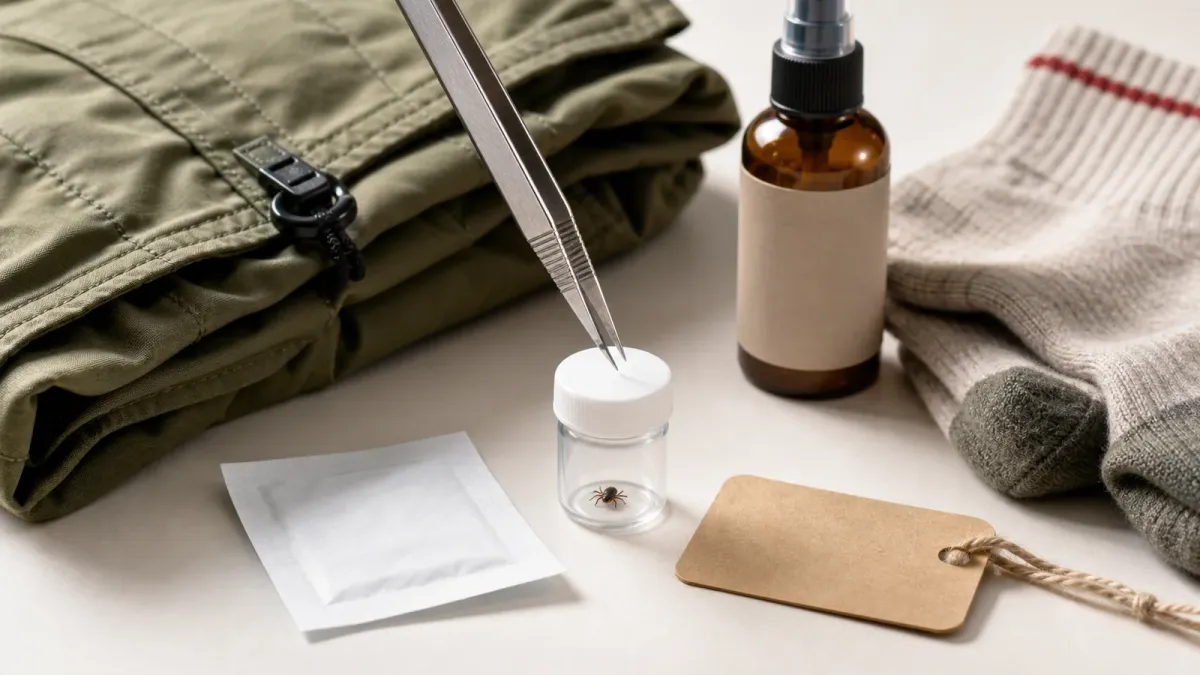
Tick season is still a live summer issue. The CDC said on April 23, 2026, that emergency room visits for tick bites were higher than normal in many parts of the country, with weekly rates in every region except the South Central U.S. at their highest level for this time of year since 2017.
That does not mean every bite is an emergency. It does mean the first 24 hours matter, especially if you have been hiking, gardening, camping, walking through tall grass, or checking a pet after time outdoors.
The short version: remove an attached tick as soon as you find it, clean the area, skip home remedies, and monitor your symptoms for the next several weeks.
Do this first
- Use tweezers. The CDC says a plain set of fine-tipped tweezers works well. Grasp the tick close to the skin, then pull upward with steady, even pressure.
- Do not twist, burn, paint, or smother it. CDC guidance warns against using petroleum jelly, heat, nail polish, or other substances to make the tick detach.
- Clean the bite. After removal, wash the bite area and your hands with soap and water, rubbing alcohol, or hand sanitizer.
- Check again. If one tick made it indoors on clothing, gear, hair, or a pet, others may have come along too.
What to watch next
Call a health care provider if you develop a rash or fever within several days to weeks after removing a tick. Tell the provider when the bite happened and where you most likely picked up the tick. That location matters because different tickborne diseases are more common in different regions.
Do not rely on commercial tick testing to decide whether you need care. The CDC says results from tick testing should not be used for treatment decisions, and a negative result can create false reassurance if another tick bite went unnoticed.
Common mistakes
Do not squeeze the tick's body if you can avoid it, because the goal is to remove it cleanly from close to the skin. Do not wait for a clinic visit just to have someone else pull it out. The CDC says delaying removal can increase the risk of disease spread by tick bites.
Also avoid turning one bite into a vague memory. A quick note in your phone with the date, the body area, and the likely location can help later if symptoms appear and a clinician asks when and where exposure happened.
Before you go back outside
For prevention, the CDC recommends avoiding brushy areas with high grass and leaf litter, walking in the center of trails, checking your body after outdoor time, and showering soon after coming indoors. Clothes that are dry can go in a dryer on high heat for 10 minutes to kill ticks that may be riding on fabric.
For repellent, look for EPA-registered products and follow the label. The EPA repellent finder can filter by ticks, mosquitoes, active ingredient, and protection time. The CDC also says products containing 0.5% permethrin can be used on boots, clothing, and camping gear, or you can buy permethrin-treated gear.
The bottom line is not to panic over every bite. Treat the first few minutes as a checklist: remove, clean, check the rest of your body, write down when and where it happened, and get medical advice promptly if symptoms show up.


