
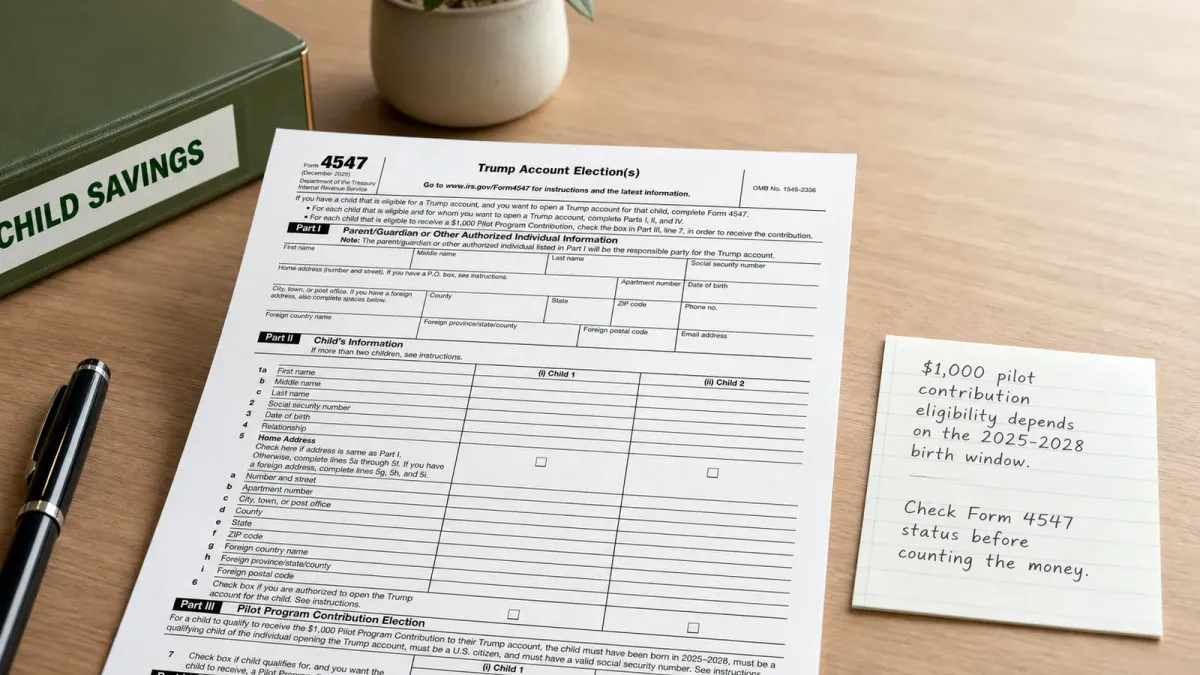
Parents who are opening a Trump Account for a child should treat the process as a checklist, not as a finished deposit. The IRS says more than 4 million children had been signed up by March 31, 2026, and contributions opened on July 4, 2026, but the $1,000 federal pilot contribution is only for a narrower group of children and still depends on a completed election.
The short answer: a Trump Account can be established for an eligible minor with a valid Social Security number, while the one-time $1,000 Treasury contribution is limited to U.S. citizen children born from January 1, 2025, through December 31, 2028, who also have a valid Social Security number. Parents, guardians or other authorized individuals use IRS Form 4547 to request the account and, when eligible, elect the pilot contribution.
That makes the account newly relevant for families filing, checking an IRS Individual Account or downloading the official app. It also creates room for mistakes: assuming every child gets the $1,000, missing a status issue, double-counting contribution limits, or treating a long-term investment account like a short-term savings account.
Do this first
Start with eligibility. The IRS says a Trump Account can be requested for a child who has not turned 18 before the end of the calendar year in which the election is made and who has a valid Social Security number. That is broader than the pilot contribution. The $1,000 federal seed money applies only to children born from January 1, 2025, through December 31, 2028, who are U.S. citizens with valid Social Security numbers.
Next, check whether Form 4547 has actually been submitted. The IRS said on May 28, 2026, that taxpayers can submit Form 4547 electronically and view the latest submission status through their IRS Individual Account. The agency says the online process asks for an IRS account with ID.me, the child's Social Security number, date of birth and address.
Then separate opening the account from funding it. The IRS says contributions to Trump Accounts could begin July 4, 2026. The official Trump Accounts site says families can add up to $5,000 per year for each child, but parents should verify how employer, government, charitable or philanthropic contributions are treated before assuming there is still room under a limit.
Check these rules before adding money
First, the $1,000 pilot contribution is not a universal child benefit. If the child was born outside the 2025 through 2028 window, the account may still be available, but the federal seed contribution is not the same question. That distinction matters for older children and for families who heard only the headline number.
Second, the account belongs to the child. The official Trump Accounts site says the account is in the child's name and the parent or authorized adult is the custodian until the child turns 18. That makes it different from simply keeping money in a parent's brokerage or savings account. Families should understand who controls the account now, who controls it later and what tax rules may apply when money is withdrawn.
Third, this is investment money, not emergency cash. Treasury frames the accounts around long-term uses such as education, entrepreneurship, homeownership and retirement. The official site also warns that growth examples are estimates based on historical market averages and that actual results are not guaranteed. Parents should not put money in if they may need it soon for rent, medical bills, child care or other immediate expenses.
Fourth, employer contributions may be available, but they are not automatic. Treasury said more than 50 companies had committed to offer Trump Account contributions for employees' children. That still leaves each worker needing to ask whether their employer participates, how the benefit is documented and whether it affects the family's own contribution planning.
What not to assume
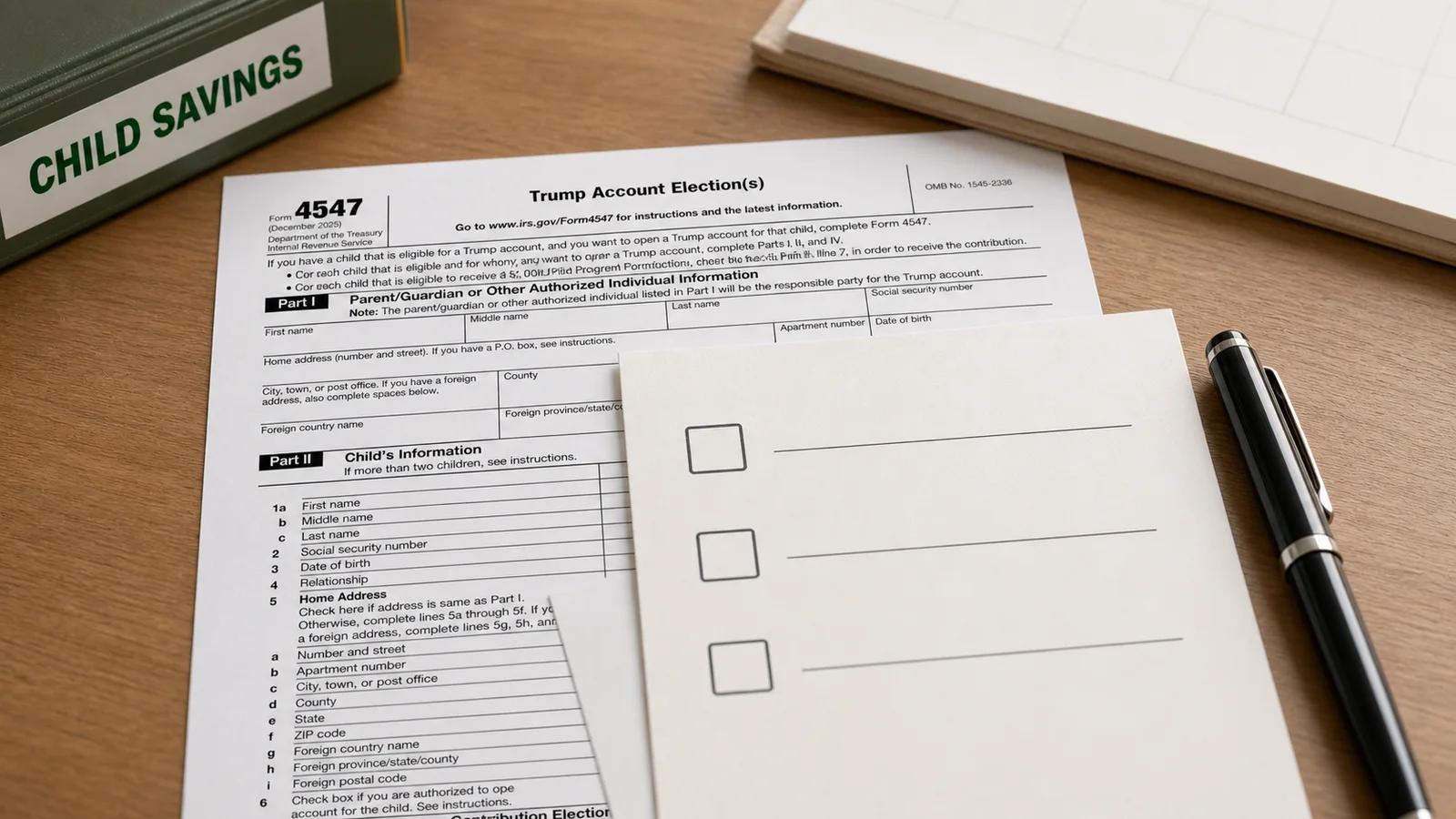
Do not assume an app screen, a submitted tax return or a family member's promise means the $1,000 has arrived. The IRS data it cited in March was based on Form 4547 submissions with individual tax returns, not on every possible eligible child in the country. Recent news coverage has also focused on parents waiting to see when the government contribution appears.
Do not assume the account is the best first move if the household has high-interest debt or no cash buffer. A child investment account can be useful, but it does not replace paying urgent bills, keeping insurance active or avoiding expensive credit-card interest. For many families, the first question is not whether the account is attractive; it is whether the next dollar has a more urgent job.
Do not treat social-media instructions as official guidance. Use IRS.gov, TrumpAccounts.gov, the IRS Individual Account and any written employer benefit material. If a message asks for payment, account credentials or unusual identity information outside the official process, stop and verify the site before continuing.
What to watch next
The practical next step is simple: confirm the child's eligibility, sign in through the official IRS path, check Form 4547 status and write down any contribution already made by parents, relatives, an employer or another organization. If the child qualifies for the $1,000 pilot contribution, track the election status before building plans around the deposit.
This article is general information, not tax, legal or investment advice. Families with complex custody questions, immigration status questions, employer benefit questions or tax concerns should use the official IRS instructions and, when needed, ask a qualified professional before making contributions they cannot easily unwind.


