
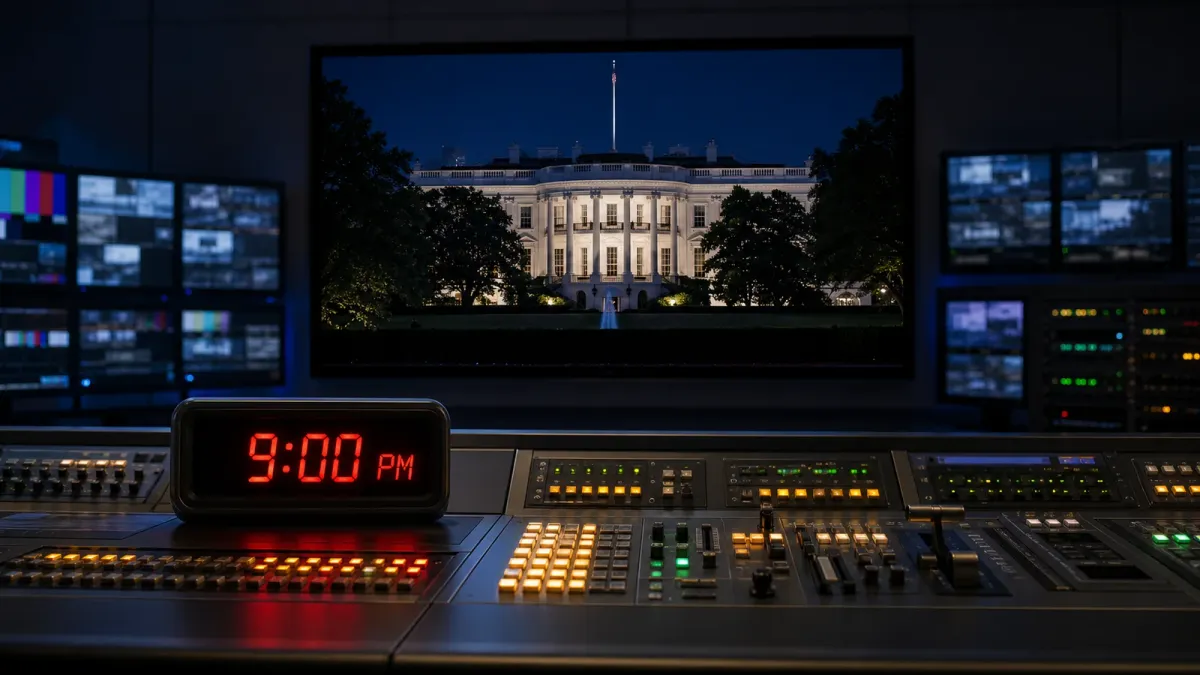
President Donald Trump is scheduled to deliver a prime-time address at 9 p.m. ET on Thursday, July 16, with election integrity and Iran expected to be among the subjects. The planned speech is drawing unusual attention because it is a national address from the White House rather than a campaign rally, news conference, or routine interview.
The most useful way to follow it is to separate what is confirmed from what is still uncertain. Axios reported that a senior adviser described the speech as a broad mix of topics, while the Associated Press reported that Trump is expected to revisit voting machines, election administration, and claims tied to the 2020 election.
What is confirmed
When: The address is scheduled for Thursday, July 16, at 9 p.m. ET. That timing could still shift if the White House changes the live schedule.
Where to check: The White House live page is the primary place to watch for an official stream or schedule update. Major networks may decide separately whether to carry the address live, in part because the expected subject matter is politically charged.
The expected topics: Reporting from Axios and AP points to election integrity, voting machines, and Iran as likely subjects. The exact order, length, and claims have not been confirmed before the speech.
Why the election focus matters
Election administration is mostly handled by states and local officials, while federal agencies can set certain security, funding, civil rights, and enforcement priorities. That split matters if the speech includes proposals for new federal rules, pressure on Congress, or criticism of state-run election systems.
It also matters because Trump has repeatedly made false or unsupported claims about the 2020 election. Courts, audits, election officials, and federal cybersecurity officials found no evidence of widespread fraud that changed the outcome. If those claims return in the speech, the key question is whether the White House presents new, verifiable evidence or mainly repeats previously rejected allegations.
What to watch during the speech
First, listen for a concrete action. A speech can announce an executive order, a legislative push, a declassification move, a federal investigation, or simply a political message. Those are very different outcomes.
Second, note whether Iran is a headline topic or a side topic. Recent U.S. strikes and maritime tensions around the Strait of Hormuz have already made Iran a major national-security story. Any new military, diplomatic, or shipping-security claim should be checked against official statements and market reaction after the speech.
Third, watch how networks and officials respond. If the address makes claims about voting technology or foreign interference, election administrators, Congress, courts, intelligence officials, and fact-checkers may all become part of the next news cycle.
What happens next
The first test will be whether the White House posts a transcript, fact sheet, or follow-up order after the address. The second will be whether Congress, state election officials, or federal agencies treat the speech as a policy directive or as political messaging.
For readers, the practical takeaway is simple: treat the address as a live developing event, but do not assume every claim is settled when it is said. The important details will be the documents, deadlines, legal authority, and independent verification that follow.


