
President Donald Trump has threatened economic consequences for any country that gives Iran a financial or commercial lifeline, widening Washington’s pressure campaign beyond Tehran while shipping through the Strait of Hormuz remains severely restricted.
The warning could expose foreign banks, companies, airports and government entities to U.S. penalties, but the White House has not yet detailed the legal tools, timetable or countries it intends to target. Iran rejected the threat Thursday, August 20, describing it as another failed pressure campaign.
The immediate global risk is the combination of uncertainty and scale. Governments and businesses must now consider possible U.S. action against trade with Iran at the same time that a critical route for oil and liquefied natural gas is operating far below its prewar level.
What changed
Trump announced the new phase in a social-media post Wednesday evening, promising economic isolation on what he called an unprecedented scale. Reuters reported that he warned countries against allowing their financial institutions, businesses, airports or government bodies to support Iran.
The language points toward pressure on third parties rather than sanctions aimed only at Iranian institutions. Measures of that kind can force governments and companies to choose between business with Iran and access to U.S. markets, financing or payment systems. The reach could therefore extend well beyond the countries directly involved in the war.
Trump provided few operational details. It is not yet clear whether the administration will rely primarily on secondary sanctions, tariffs, export restrictions, banking controls or a combination of measures. That uncertainty matters because companies may reduce exposure before formal rules arrive, especially when the potential cost of violating U.S. restrictions is high.
Iranian Foreign Minister Abbas Araghchi rejected the threat Thursday. Tehran has maintained that pressure will not force surrender, even as war damage, sanctions and interrupted trade weigh on its economy.
The numbers behind the risk
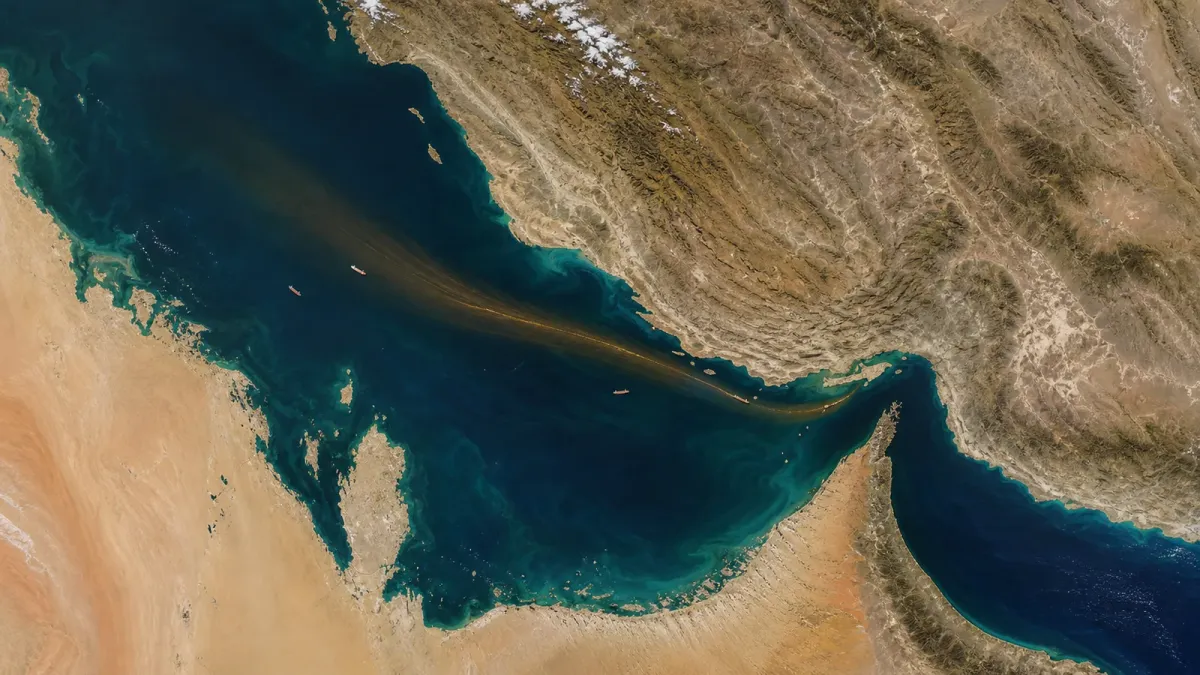
The Strait of Hormuz connects the Persian Gulf with the Gulf of Oman and the Arabian Sea. Before the conflict, it carried more oil than any other strategic maritime chokepoint.
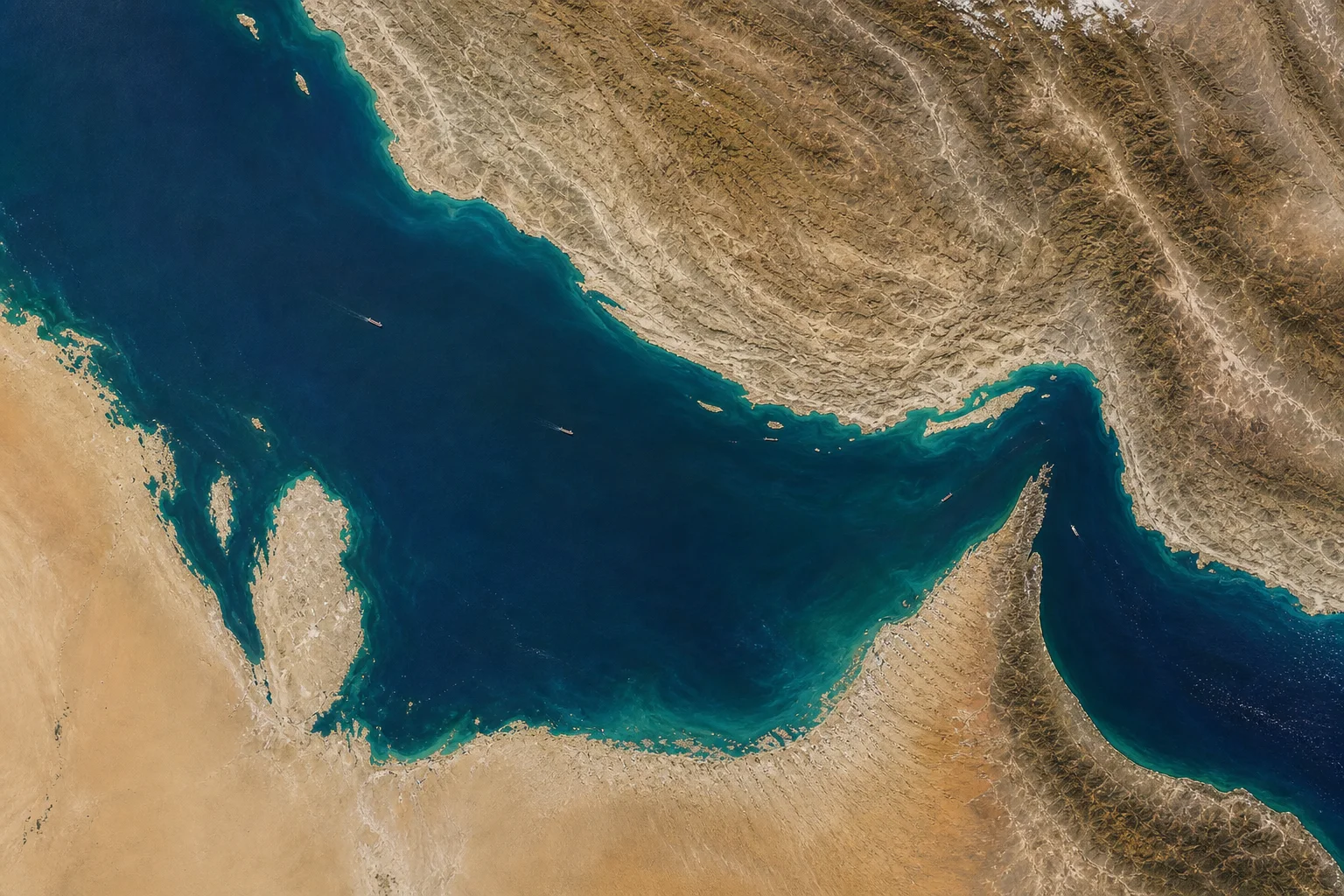
The U.S. Energy Information Administration estimates that oil flows through Hormuz fell from 21.6 million barrels a day in the fourth quarter of 2025 to 4.9 million barrels a day in the second quarter of 2026. Estimated liquefied natural gas flows fell from 10.5 billion cubic feet a day to 0.8 billion over the same periods.
Those figures are estimates, not a precise live count. The EIA cautions that ship-tracking signals around the strait have become especially unreliable since the conflict began. Even with that limitation, the direction and scale of the drop are clear.
The Associated Press reported that only 10 vessels crossed the strait Tuesday, fewer than one-tenth of the number that typically passed through before the war. Oil prices rose Thursday as investors weighed the new U.S. threat and the continuing supply risk, adding to concerns that higher energy costs could keep inflation and borrowing costs elevated.
Why third countries are now in the frame
The United Arab Emirates demonstrated the pressure facing Iran’s trading partners when it suspended trade and financial transactions with Iran on Wednesday after accusing Tehran of renewed missile fire. Iran denied launching the missiles.
The UAE had been one of Iran’s most important commercial gateways. World Trade Organization figures cited by the AP show that it supplied more than 30% of Iran’s imports in 2024, worth about $21 billion, and received nearly 13% of Iranian exports, worth about $7 billion.
Trump’s broader warning raises questions for other governments and firms that buy Iranian energy, handle payments, provide transport links or sell goods to Iranian customers. The risk is not limited to direct trade: re-export hubs, insurers, ports, airlines and banks may also have to assess whether ordinary transactions could be treated as support.
Asia is especially exposed to prolonged disruption in the strait. China, India, South Korea and other large energy buyers have historically depended on oil or LNG moving through Hormuz. Alternative pipelines and routes exist, but they cannot quickly replace the waterway’s full prewar capacity.
What we do not know yet
The announcement leaves four central questions unanswered: which countries or sectors will be targeted, what conduct will trigger penalties, when enforcement will begin, and whether humanitarian trade or other transactions will be exempt.
There is also no settled account of the diplomatic path. Oman has been working to reduce tensions and develop a shipping arrangement, while accounts from Washington and Tehran differ over how close those discussions are to producing a deal. Oman’s foreign minister said Thursday that lasting security in the strait requires regional peace and rejected further escalation.
Without specific rules, the announcement is best understood as a warning rather than a completed sanctions package. Markets and governments will watch what the Treasury Department, Commerce Department and White House issue next.
What happens next
The first test will be whether Washington names enforcement measures and whether major Iranian trading partners change policy in response. A second will be actual vessel traffic through Hormuz, not competing claims about who controls it.
For households and businesses far from the region, the practical signals are energy prices, shipping and insurance costs, and any renewed pressure on inflation. For diplomacy, the decisive question is whether economic escalation pushes Iran toward talks or gives both sides another reason to harden their positions.
The global consequence is already larger than a bilateral sanctions dispute. A U.S. threat aimed at third countries is colliding with a damaged energy corridor, turning the next enforcement decision—or the next diplomatic opening—into a test for trade, prices and regional stability.


