
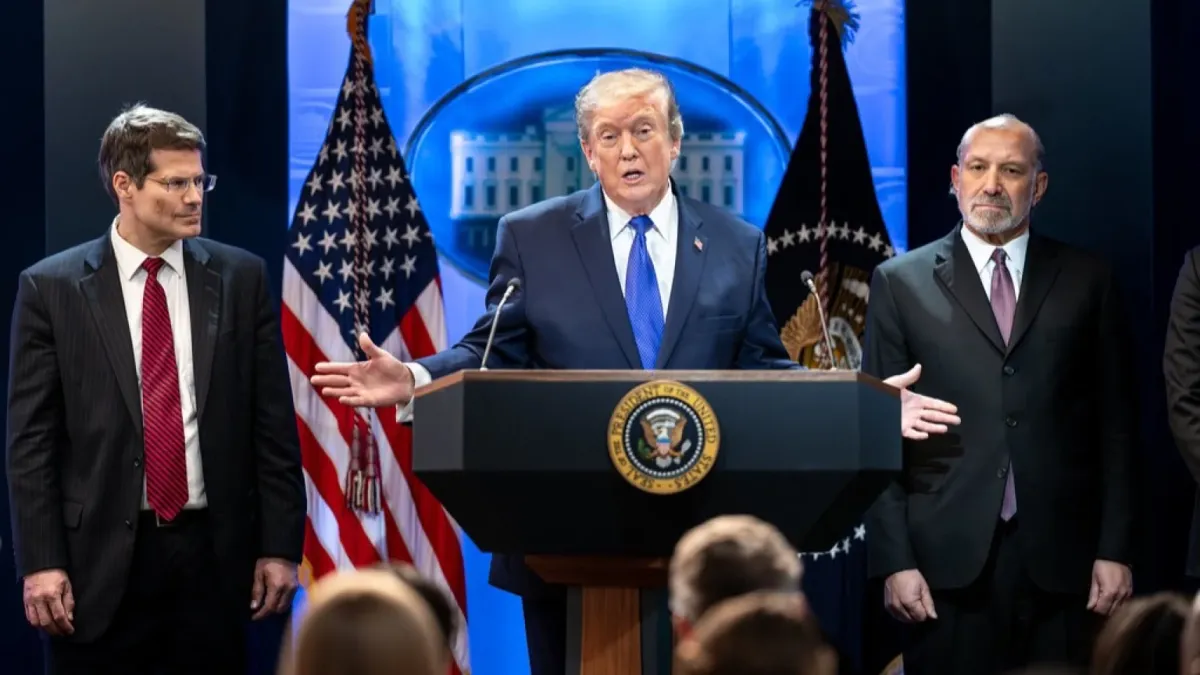
President Donald Trump directed the United States to impose new tariffs of 10% to 12.5% on products from 60 trading partners, with the duties taking effect at 12:01 a.m. Eastern on Friday, July 24. The action covers economies responsible for 99.4% of U.S. imports and uses Section 301 of the Trade Act of 1974, according to the Office of the U.S. Trade Representative.
The immediate consequence is a new tariff framework arriving as a temporary 10% worldwide surcharge expires. U.S. importers pay tariffs at the border and may absorb the cost, renegotiate with suppliers or pass some of it to customers. The exact effect will depend on the exporting economy, the product’s existing duty and whether an exemption applies.
What changed
USTR said the tariffs respond to findings that the 60 economies failed to impose or effectively enforce bans on imports made with forced labor. The agency said its investigation included consultations with more than 45 governments, two rounds of hearings and more than 2,100 public comments.
A 10% Section 301 rate applies to goods from Argentina, Bangladesh, Cambodia, Canada, Ecuador, El Salvador, Guatemala, Honduras, India, Indonesia, Jordan, Malaysia, Mexico, Pakistan, Sri Lanka, Trinidad and Tobago, and the United Kingdom, unless a product is exempt.
The European Union and Taiwan receive a different calculation: their existing most-favored-nation duty and the new Section 301 duty generally add up to 10%, with no additional Section 301 charge when the existing rate is already at least 10%. Japan, South Korea and Switzerland receive the same kind of cap at 12.5%. Most other investigated economies face a 12.5% Section 301 tariff on covered goods.
What is exempt
The action is broad but not universal. The pre-publication Federal Register notice exempts goods already subject to Section 232 tariffs and hundreds of specified products. USTR said exemptions cover some raw materials that could become unavailable domestically, products whose inclusion could cause economy-wide disruption, and goods the United States cannot produce in sufficient quantities or obtain reasonably elsewhere.
The Associated Press reported that oil, gas and fertilizer are among the exempt products. It also reported that goods qualifying for duty-free treatment under the U.S.-Mexico-Canada Agreement are spared.
What happens next
The tariffs apply to products entered for U.S. consumption, or withdrawn from a warehouse for consumption, at or after 12:01 a.m. Eastern on July 24. A narrow transit exception covers goods already loaded and on their final mode of transport before that deadline if they enter before 12:01 a.m. Eastern on July 28.
Importers will now have to match each shipment against the country rate, its existing most-favored-nation duty and the detailed exemption annexes. USTR also plans future tariff-rate quotas for some textile and apparel imports from Bangladesh, Cambodia, Indonesia and Malaysia, but those quotas will begin only after the agency says they are feasible and publishes an effective date.
The forced-labor rationale is likely to face political and legal scrutiny, while trading partners weigh whether to change their import-ban rules, negotiate exemptions or retaliate. For consumers and businesses, the first practical signal will be whether importers announce price changes, sourcing shifts or new contract terms after the duties begin Friday.


