
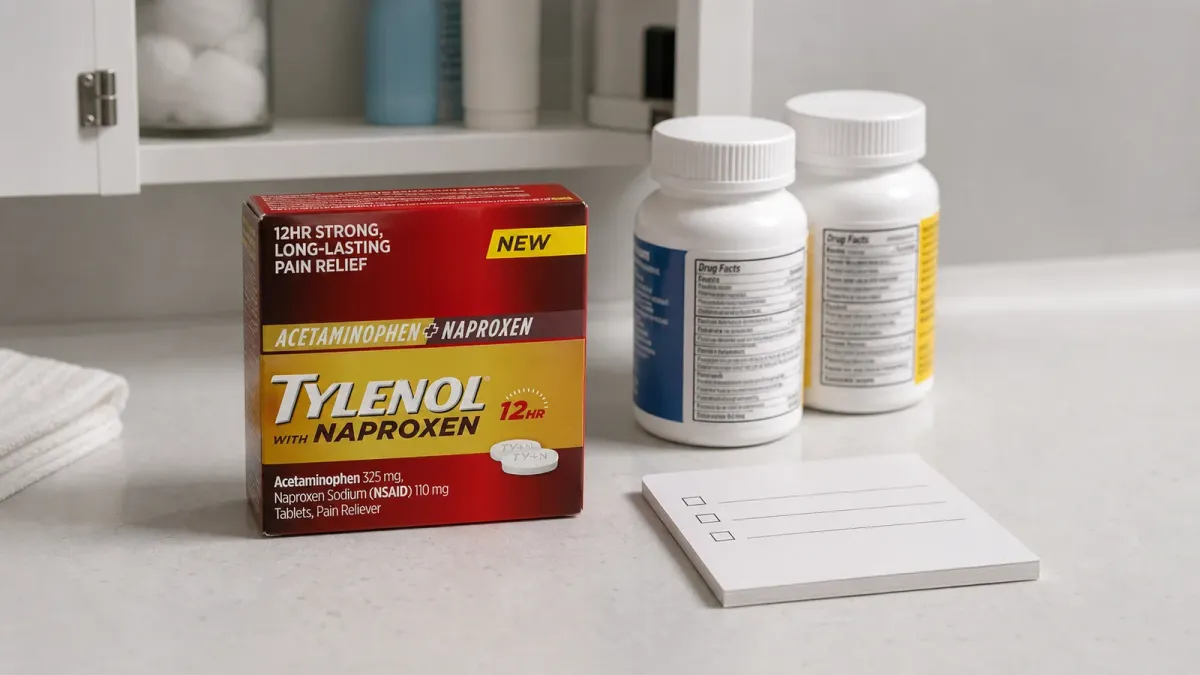
FDA approved Tylenol with Naproxen on July 24, 2026, creating the first nonprescription tablet in the United States that combines acetaminophen with naproxen sodium for up to 12 hours of temporary pain relief.
The approval gives shoppers another over-the-counter option for minor aches and pains. It also makes label reading more important, because the product combines two ingredients people often buy separately.
The Short Answer
Do not treat the new product like regular Tylenol plus a separate bottle of Aleve. FDA says each tablet contains acetaminophen 325 mg and naproxen sodium 110 mg. Tylenol's product page describes one dose as acetaminophen 650 mg and naproxen sodium 220 mg, so shoppers should follow the Drug Facts label rather than guessing from older routines.
What FDA Approved
FDA said the medicine is intended for temporary relief of minor pain from headaches, backaches, muscle aches, toothaches, menstrual cramps and minor arthritis pain in adults and children 12 and older. The agency said the product was supported by evidence on safety, effectiveness and the contribution of each ingredient to the combined effect.
Kenvue, which owns Tylenol, says the product is coming soon to major U.S. retailers nationwide. Its Tylenol page also says FDA granted the company a three-year exclusivity period for the new OTC formulation.
Where It Fits
The practical appeal is convenience: one labeled product can replace a do-it-yourself pairing of two separate bottles. The practical risk is the same fact in reverse. If someone adds the new medicine on top of another acetaminophen product or another NSAID, the overlap may not be obvious unless every label is checked first.
That makes the launch less about brand preference than about avoiding accidental duplication: the same active ingredient can hide in several nighttime, cold, flu and pain products.
Check These Details First
First, look for other medicines that contain acetaminophen. FDA warns that taking more than one acetaminophen-containing product can cause liver damage, which makes combination cold, flu, sleep and pain products worth checking before the first dose.
Second, treat naproxen as an NSAID, not as a harmless add-on. FDA says the label includes warnings for stomach bleeding and for higher risks of heart attack, heart failure and stroke, especially when NSAIDs are used more than directed or for longer than directed.
Third, pregnancy needs a separate check. FDA says people who are pregnant or breastfeeding should ask a health professional before use, and the Drug Facts label says not to use naproxen sodium at 20 weeks or later in pregnancy unless a doctor specifically directs it.
What to Watch
The next practical step is availability: the product has FDA approval, but shoppers may see it roll out at major retailers rather than appear everywhere at once. Until it is on shelves, the safest comparison is still the label on the product in your hand.
This article is general information, not medical advice. Anyone with liver disease, heart disease, stomach bleeding risk, kidney concerns, pregnancy questions, blood-thinner use or persistent pain should ask a qualified clinician or pharmacist before changing pain medicines.


