
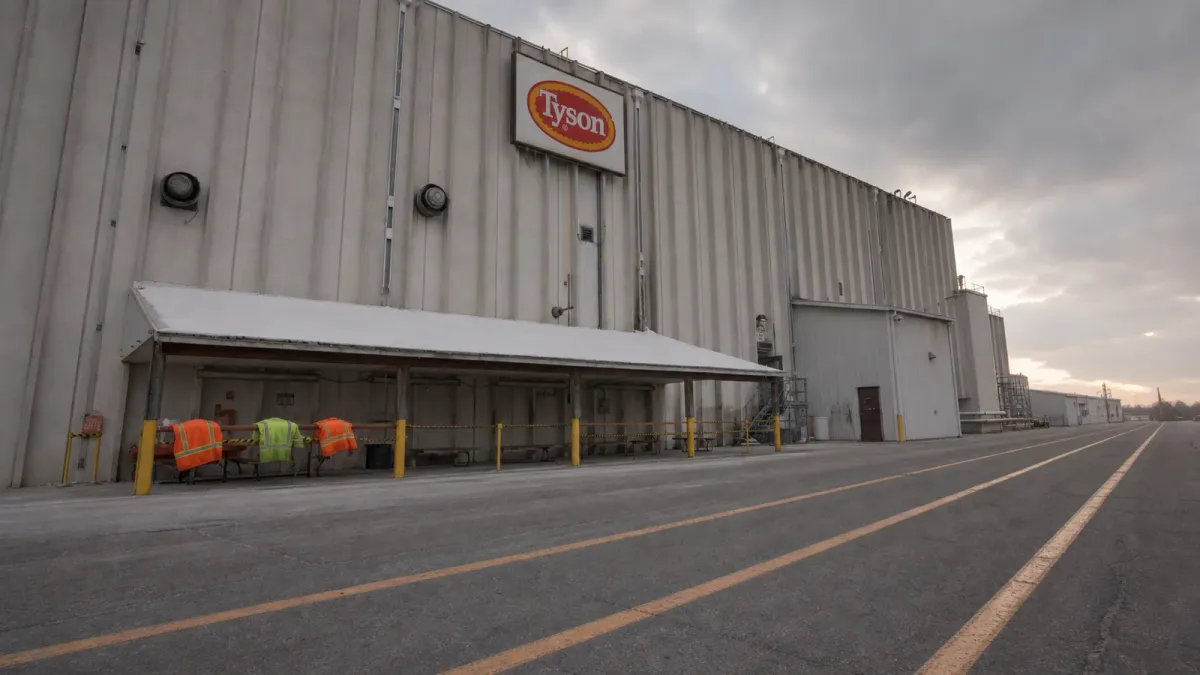
Tyson Foods said Thursday, August 13, that it will end operations at its Joslin, Illinois, beef plant and its Eagle Mountain, Utah, case-ready facility while seeking a buyer for its Pasco, Washington, beef operation. The company is concentrating its beef network around plants in Dakota City, Nebraska; Holcomb, Kansas; and Amarillo, Texas.
The immediate shock is clearest in northwest Illinois. WQAD reported that an employee letter said most duties at Joslin ended Thursday, with some in-process work continuing Friday, while affected employees would be paid through October 12. Illinois congressional leaders said about 2,500 union workers were affected.
Tyson called the changes a consolidation rather than a broad reduction in cattle processing. It said capacity from the two closing facilities will move elsewhere, the Amarillo plant will restore a second shift as cattle become available, and the reorganized network should maintain a similar level of cattle harvesting.
The cattle supply is still tight
The decision follows a long squeeze in the U.S. cattle cycle. The Agriculture Department reported on July 24 that the country had 28.5 million beef cows on July 1, down 1% from a year earlier. The estimated 2026 calf crop was 32.5 million head, down 2%, even as total cattle and calves edged up to 94.2 million.
Tyson said limited retention of heifers—young female cattle that can become breeding cows—suggests supply constraints will persist. In its May earnings discussion, the company said its beef footprint was already being aligned with lower cattle availability and described the cycle as a 75-year low.
What changes for workers and customers
Tyson said it will help affected employees apply for openings at other facilities. That option may not prevent a severe local impact: the Joslin plant has been one of the Quad Cities region's largest employers, and the announcement gave many workers little time to plan before their duties stopped.
The company did not disclose a combined job-loss figure for Joslin and Eagle Mountain in its release, nor did it say how many Pasco jobs would remain if a buyer is found. Those numbers, along with the timing of worker-support programs, are among the most important unresolved details.
For shoppers, the announcement does not by itself mean an immediate nationwide beef shortage. Tyson says it is moving production into plants with available capacity rather than planning a comparable cut in total cattle harvesting. Still, a smaller beef-cow herd and a smaller calf crop can keep processors competing for limited cattle, which may prolong cost pressure across the beef supply chain.
What happens next
The next tests are whether Tyson finds a buyer for Pasco, how quickly displaced workers can access assistance or transfer opportunities, and when cattle supplies support the renewed second shift in Amarillo. Future USDA cattle reports will show whether ranchers retain more heifers and begin rebuilding the breeding herd.
For now, Tyson's message is that fewer, more central plants can handle roughly the same cattle volume. For thousands of workers in Joslin and others at the affected sites, the practical question is whether that efficiency leaves a realistic path to another job.


