
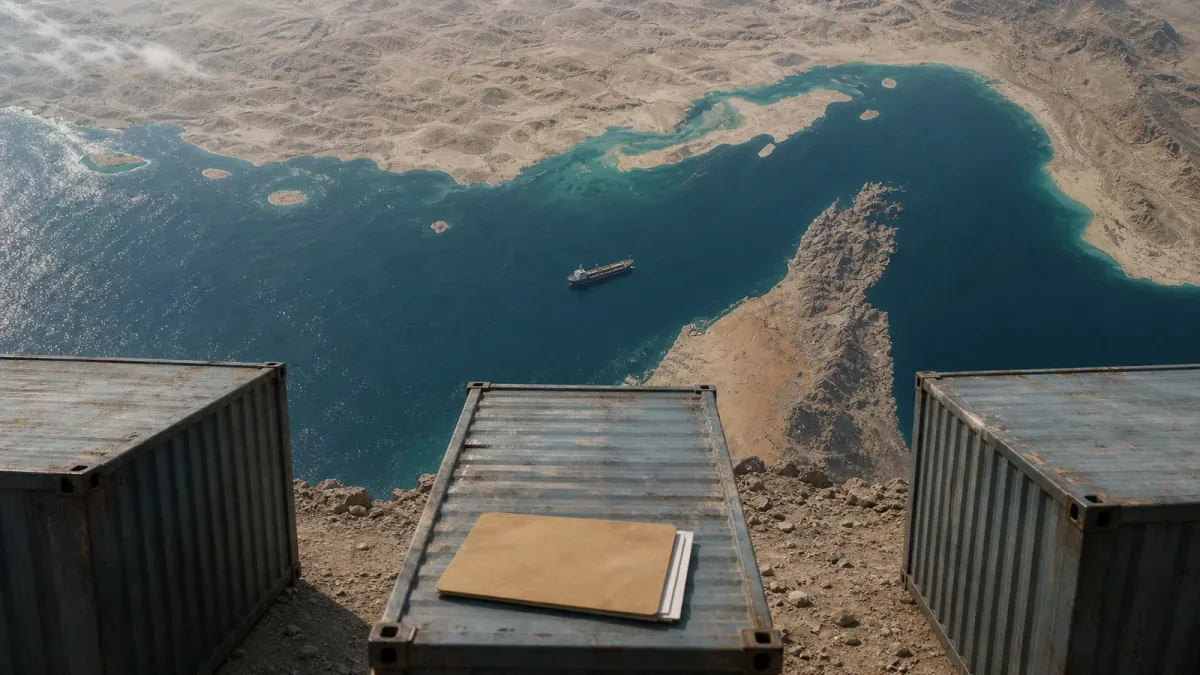
The United Arab Emirates suspended all trade, commercial exchanges and financial transactions with Iran on Wednesday, August 19, after saying two ballistic missiles launched from Iran targeted maritime navigation and fell into the Persian Gulf. Iran denied launching the missiles.
The decision turns a disputed military incident into a broader economic rupture. The UAE has long served as an important commercial and re-export gateway for Iran, making the cutoff potentially more consequential than a conventional diplomatic protest while Iran remains under U.S. sanctions and a maritime blockade.
The immediate global concern is the Strait of Hormuz. The narrow waterway carried about one-fifth of traded oil and natural gas in peacetime, and restrictions on shipping have already pushed energy costs higher and complicated supply routes.
What changed
Missile warnings sounded across the UAE on Tuesday night, the first such nationwide alert in weeks. Emirati officials said both missiles fell into the water and that assessments indicated maritime traffic was the target. No casualties were reported from the incident.
Tehran rejected the accusation. Iranian Foreign Ministry spokesperson Esmail Baghaei said Iran had not launched missiles toward the UAE and criticized the Emirati claim as damaging to regional trust.
The confrontation follows repeated attacks on UAE-linked shipping. The Associated Press reported that four tankers operated by the state-owned ADNOC group had been attacked in the Strait of Hormuz during the previous two weeks, without injuries in those incidents.
Why the trade cutoff matters
The UAE is more than a buyer and seller of Iranian goods. It is a logistics, banking and re-export center through which Iran can reach suppliers in other countries. According to 2024 World Trade Organization figures cited by the Associated Press, the UAE supplied more than 30% of Iran's imports, valued at roughly $21 billion, and received nearly 13% of its exports, worth about $7 billion.
Those figures predate the war, and commerce had already slowed sharply after hostilities began on February 28. Some maritime trade resumed as fighting eased in late June. The new suspension removes that opening and could make it harder for Iranian companies to obtain third-country goods or move money through established regional channels.
The practical effect will depend on how broadly the UAE enforces the order, whether humanitarian or other exemptions emerge, and how banks and shipping companies handle existing contracts. Officials said the halt would remain in place until further notice.
What remains disputed
The missile attribution is unresolved. The UAE says the weapons came from Iran and targeted maritime navigation; Iran says it did not fire them. That disagreement matters because a confirmed Iranian strike on Emirati waters would represent a renewed direct escalation after several quieter weeks.
There is also a widening gap between political claims and shipping data. U.S. President Donald Trump has said the strait is open and operating, but the Associated Press reported that only 10 vessels transited on Tuesday—less than one-tenth of the typical prewar traffic.
What happens next
The next signals will come from UAE implementation guidance, any Iranian economic response and ship movements through Hormuz. Gulf governments will also be watching whether the confrontation remains bilateral or prompts coordinated restrictions on Iran.
The central risk is now broader than another strike at sea. Military pressure, financial isolation and disrupted energy shipping are reinforcing one another, raising the cost of a failed diplomatic off-ramp for the region and the global economy.


