
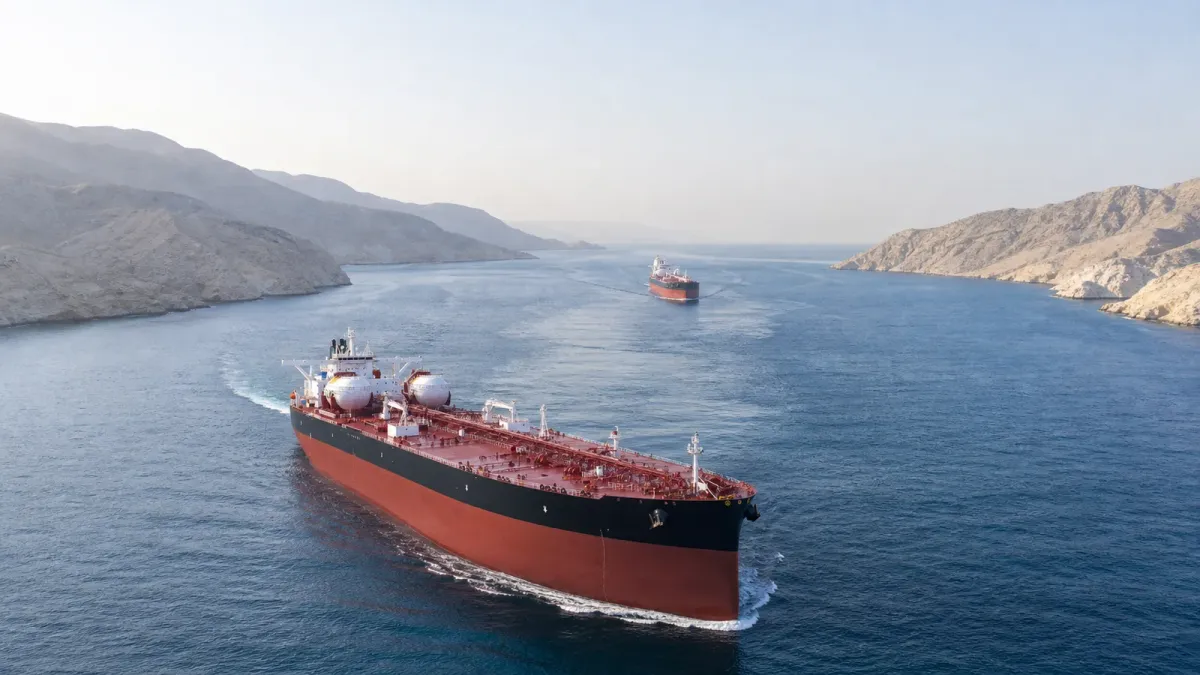
The United Arab Emirates said two oil tankers owned by state energy company ADNOC were attacked by Iranian drones while transiting the Strait of Hormuz on Thursday evening, August 13. ADNOC said no one was injured and that the situation was under control, according to The Associated Press.
The United Kingdom Maritime Trade Operations center posted two separate August 14 attack notices for the strait. Each notice said military authorities reported that an outbound tanker had been struck by an uncrewed aerial vehicle, causing minor damage. UKMTO said the crews were safe and accounted for and that no environmental impact had been reported.
The UAE Foreign Ministry blamed Iran and described the attacks as violations of freedom of navigation. Iran had not immediately responded to the accusation when the AP published its report. That attribution should remain clearly sourced to the UAE while the incidents are investigated.
What changed
The new incidents put two commercial tankers, not a naval vessel or port facility, at the center of the latest Hormuz escalation. They also produced a narrow set of confirmed facts: two outbound tankers were hit, the damage reported to UKMTO was minor, the crews were safe and no spill or other environmental impact had been reported.
UKMTO did not name the vessels in its notices. The AP reported that the two notices appeared to describe the ADNOC tankers, but the maritime center did not itself make that identification. No vessel names, cargo details or exact attack locations were publicly included in the notices reviewed Friday morning.
Why the strait matters
The Strait of Hormuz connects the Persian Gulf with the Gulf of Oman and the Arabian Sea. It is one of the world's most consequential energy routes: the U.S. Energy Information Administration estimates that 20.9 million barrels per day of oil moved through it in the first half of 2025, equal to about 20% of global petroleum-liquids consumption and one-quarter of maritime oil trade. More than 20% of global liquefied-natural-gas trade also passed through the strait in that period.
Those figures do not mean one incident will automatically change energy prices. They explain why even limited attacks matter to vessel operators, crews, insurers and governments: each transit requires a safety decision in a route with few substitutes capable of carrying comparable volumes.
What remains unknown
Authorities have not publicly detailed the drones' launch point, the precise damage to either tanker or whether both vessels continued to their next ports. The UAE's attribution to Iran has not been matched by a public Iranian response. UKMTO's notices reported the events and advised vessels to use caution; they did not assign responsibility.
What happens next
The immediate questions are whether maritime authorities update the two incident reports, whether ADNOC identifies the vessels or cargoes, and whether Iran responds to the UAE's allegation. Any assessment of wider shipping or energy consequences should follow verified transit data and official safety notices rather than assume that two limited-damage incidents establish a broader trend on their own.


