
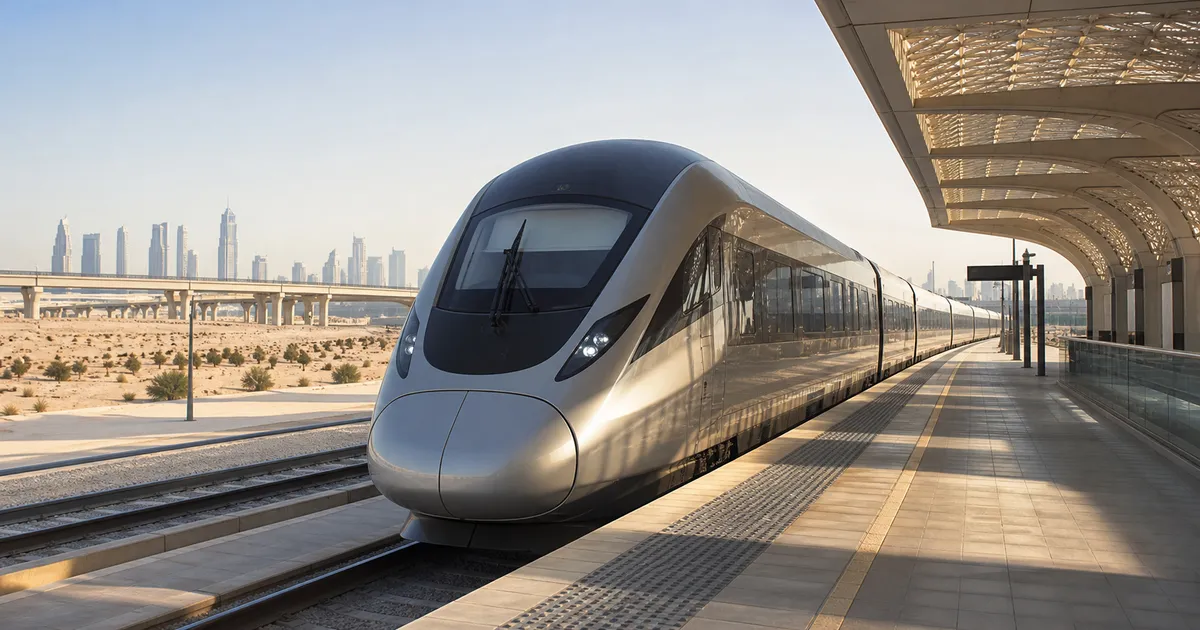
The United Arab Emirates has begun its first national passenger rail service, opening an introductory Etihad Rail route between Abu Dhabi and Fujairah and moving the country from freight-only rail toward regular intercity passenger travel.
The service began on June 30, 2026, according to Etihad Rail information and UAE state media reports. The initial route links Abu Dhabi with Fujairah, cutting the trip to about 1 hour and 45 minutes and giving travelers an alternative to long-distance road travel across the emirates.
The launch is deliberately phased rather than a full network opening on day one. Dubai Train Station and Al Dhaid Train Station are scheduled to open on September 30, 2026, followed by stations in Al Dhafra on December 30, 2026. Sharjah Train Station is scheduled to open on March 30, 2027.
Why it matters
For the UAE, passenger rail is a national infrastructure milestone. The country has spent years building a federal rail network that already carries freight, and the passenger rollout is meant to connect population centers, tourism destinations and business districts with a mode of travel that can scale beyond highways.
The practical change for travelers starts with the Abu Dhabi-Fujairah corridor. Fujairah sits on the UAE's eastern coast, separated from Abu Dhabi and Dubai by a trip that usually depends on cars, buses or private transfers. A scheduled rail option can make weekend tourism, work trips and airport connections easier if frequencies, pricing and last-mile transport prove convenient.
Etihad Rail has said fares on the Abu Dhabi-Fujairah route start at AED55 for Comfort Class and AED120 for Premium Class. The passenger fleet includes trains designed to carry up to 400 people each, and bookings are available through the Etihad Rail app and website.
The passenger launch also changes how the UAE can market short domestic trips. A train link gives hotels, event organizers and tourism authorities a more predictable way to package cross-emirate visits, especially for travelers who do not plan to rent cars or navigate intercity roads.
The bigger rollout
The larger test is whether the network becomes useful for everyday movement, not only ceremonial first trips. Stations will need smooth links to taxis, buses, metro lines, parking and local transport so that a fast train ride is not offset by difficult first-mile and last-mile travel.
The September 30 opening of Dubai and Al Dhaid is the next major date to watch because it broadens the system from a single introductory corridor into a more visible inter-emirate network. Al Dhafra's planned December opening would extend passenger rail deeper into the western region, while Sharjah's March 2027 target would add another major population center.
The rollout also has economic and environmental stakes. Better intercity connections can support domestic tourism, make commuting between emirates more plausible for some workers and reduce pressure on busy road corridors. The benefit will depend on actual schedules, station access, reliability and how competitive rail feels against driving.
For now, the UAE has crossed the threshold that matters most: passengers are boarding a national train service. The coming year will show whether Etihad Rail can turn that milestone into a daily habit for residents, visitors and businesses moving between major cities.


