
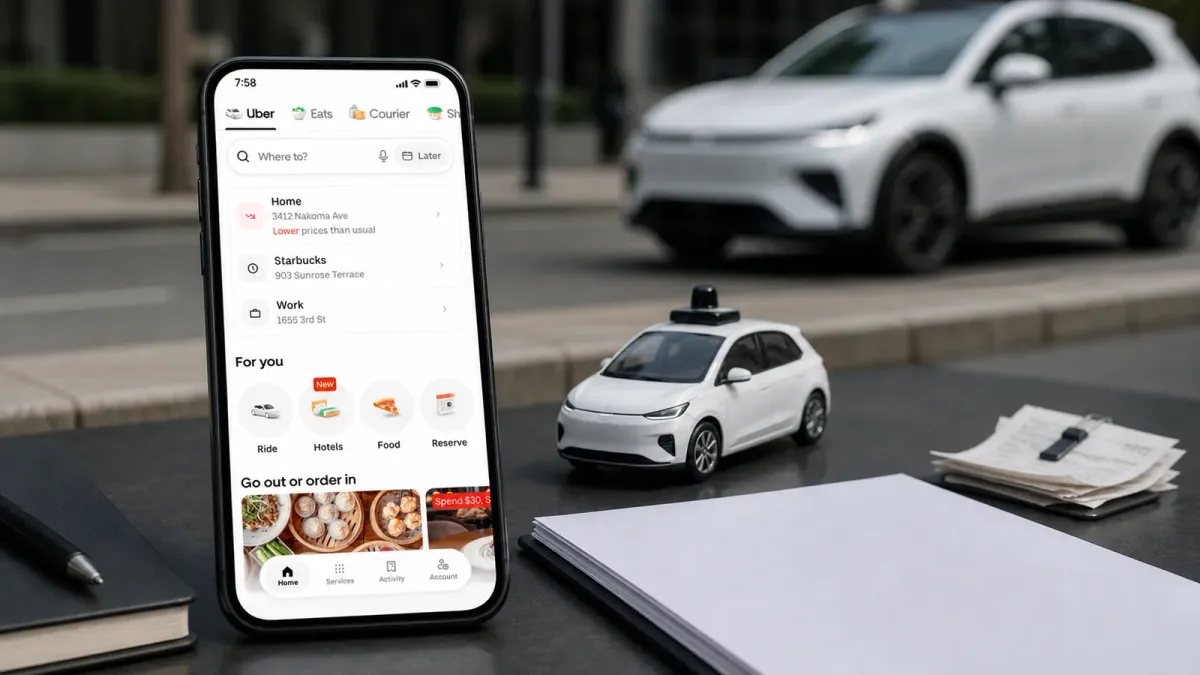
Uber delivered a solid second quarter on Wednesday, August 5, 2026. The harder question for investors was not whether people are still booking rides and delivery orders. It was whether Uber can turn that demand into a durable robotaxi advantage before autonomous-vehicle rivals define the market without it.
The company said trips rose 18% from a year earlier to 3.9 billion, gross bookings climbed 24% to $58.0 billion, and revenue increased 12% to $14.2 billion for the quarter ended June 30. Uber also reported $2.8 billion in free cash flow and said trailing 12-month free cash flow topped $10 billion for the first time.
Those numbers would normally make a clean growth story. Instead, same-day market reports focused on a stock decline after Uber's third-quarter outlook landed close to, or slightly below, some Wall Street expectations and after the company leaned again into its ambition to build a large autonomous-vehicle platform.
The numbers
Uber's core platform is still expanding. Monthly active platform consumers reached 208 million, up 16% from a year earlier. Gross bookings rose across mobility, delivery, and freight. Mobility bookings increased 22% to $29.0 billion, while delivery bookings rose 26% to $27.5 billion.
Revenue growth looked more uneven. Mobility revenue was nearly flat at $7.36 billion, while delivery revenue rose 28% to $5.25 billion. Uber said business-model changes reduced reported revenue growth by 8 percentage points, a reminder that headline revenue can move differently from trip volume, bookings, and platform demand.
The company forecast third-quarter gross bookings of $58.25 billion to $60.25 billion and non-GAAP earnings per share of 84 cents to 88 cents. That guidance still implies year-over-year growth, but it did not remove investor concern that Uber's strongest usage numbers may already be priced into expectations.
Why investors care about robotaxis now
The robotaxi issue matters because Uber is trying to be more than the app that dispatches human drivers. Chief Executive Dara Khosrowshahi framed Uber as a platform that can connect riders, delivery customers, and autonomous-vehicle partners at global scale. That is a powerful pitch if Uber becomes the demand layer for many self-driving fleets.
It is a tougher pitch if the largest autonomous operators build direct consumer relationships or treat Uber as only one distribution channel. The Verge reported from Uber's earnings call that Khosrowshahi said the company's relationship with Waymo remains strong in Austin and Atlanta, even after the companies ended a Phoenix partnership earlier this year. He also emphasized that Uber does not want to depend on one autonomous partner.
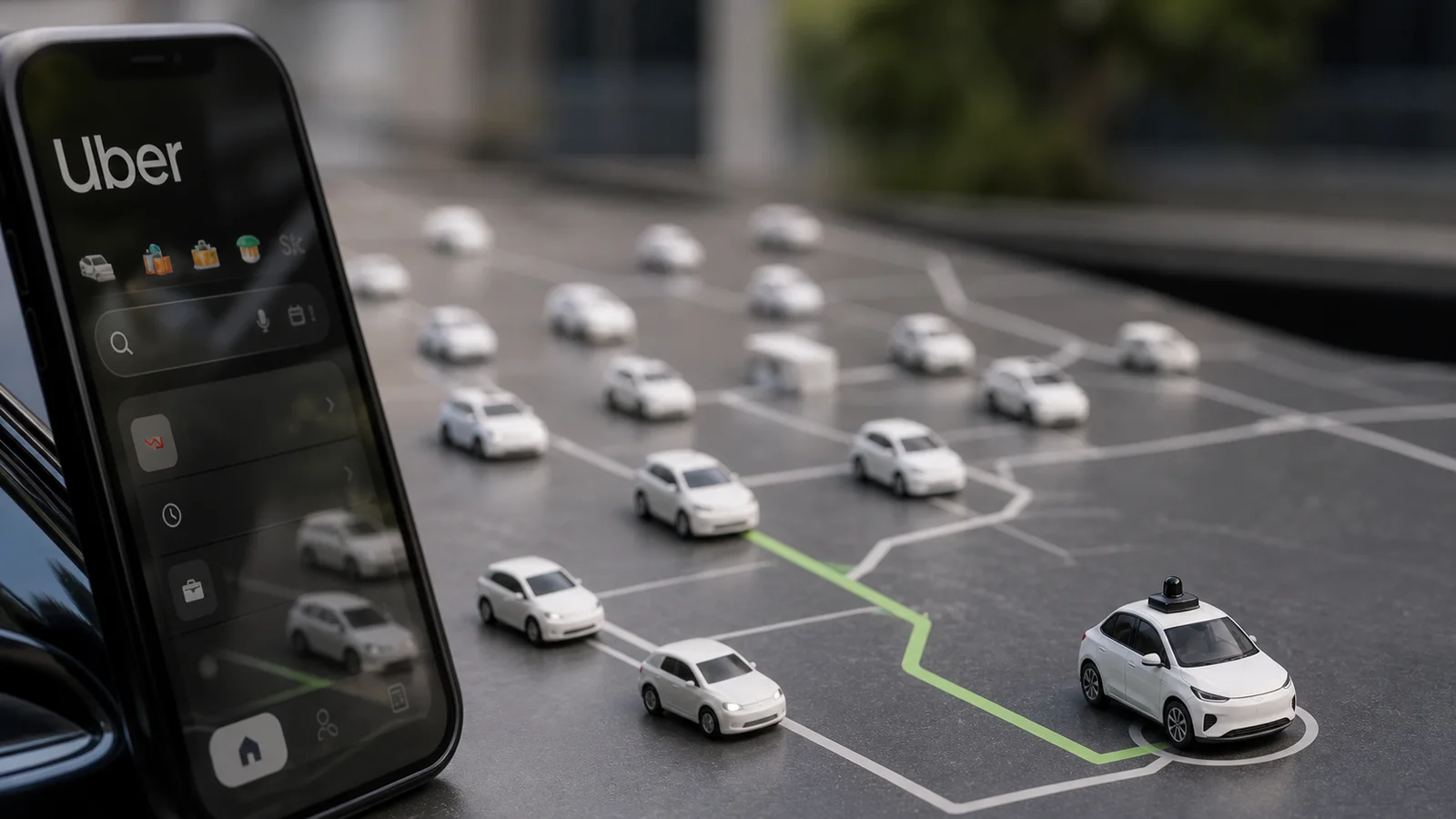
That distinction is central to the story. Uber can show broad consumer demand today, but robotaxi leverage depends on whether it can sign, scale, and keep enough vehicle partners to make autonomous rides feel like part of the normal Uber marketplace.
The reader consequence
For riders, the near-term takeaway is modest. Robotaxis are not about to replace most Uber trips overnight. Khosrowshahi said on the earnings call that robot-driven rides are less than 0.5% of overall trip volume, according to The Verge's report. That makes autonomy a strategic investment story more than an immediate change in the average rider's pickup screen.
For drivers, the same number cuts both ways. It suggests autonomous vehicles are still a small part of the platform today. It also shows why Uber is spending and partnering early: the company wants to shape the transition before robotaxi supply becomes large enough to change driver demand, pricing, and city-level competition.
For investors, the tradeoff is sharper. Uber is producing cash and growing usage, but public markets are asking how much of that cash should support autonomous expansion and whether Uber's partner-led model will produce enough control. A strong rides-and-delivery quarter does not fully answer that question.
What to watch next
The next signal is not just another earnings report. Watch whether Uber adds autonomous markets on schedule, whether Waymo and Uber deepen or narrow their joint operations, and whether other partners can move from pilots to meaningful trip volume. The company has the rider base; the open question is who owns the economics when the car no longer needs a driver.
Uber's August 5 report showed that its present business is not broken. The market reaction showed that investors are already judging the next one.


