
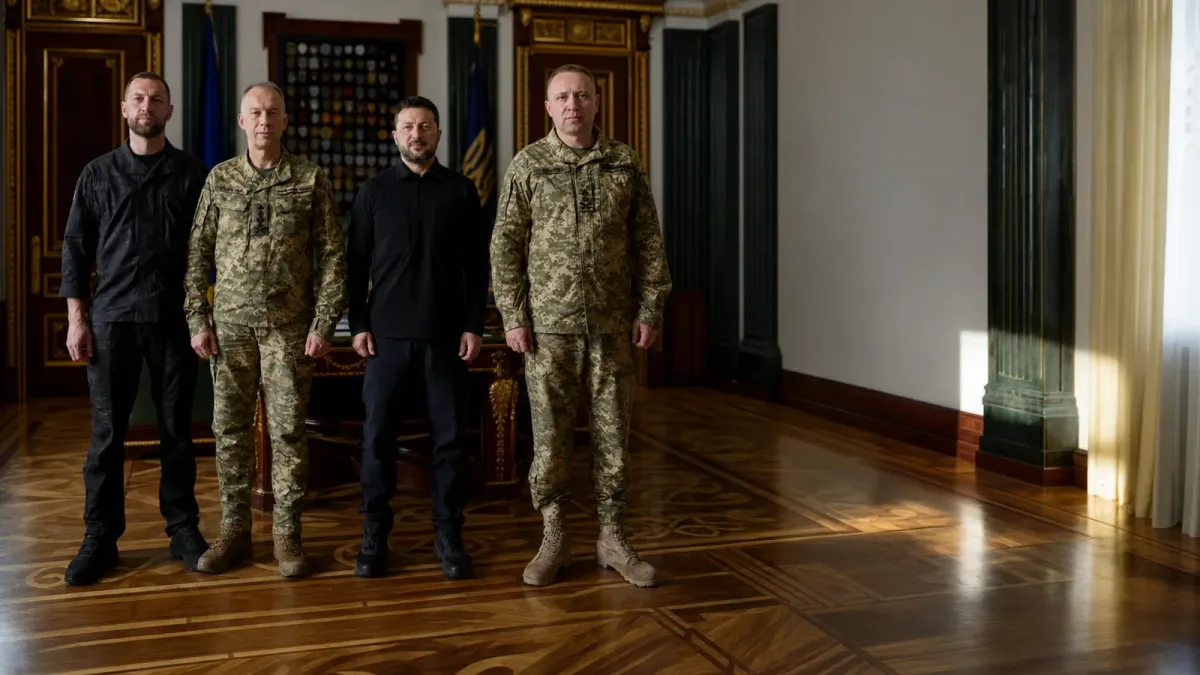
Ukraine's sudden military reset has not ended the political pressure on President Volodymyr Zelenskyy. After days of rare wartime protests over the dismissal of Defense Minister Mykhailo Fedorov, Zelenskyy replaced commander-in-chief Oleksandr Syrskyi with Maj. Gen. Mykhailo Drapatyi. Now Fedorov's refusal to accept another government job has kept the dispute alive.
The short version: Zelenskyy has changed the top battlefield command, but the protest demand has shifted from removing Syrskyi to restoring Fedorov, the tech-focused former minister many supporters credit with accelerating drone and procurement reforms.
What changed
Zelenskyy said in a July 21 address that Drapatyi would become commander-in-chief and that Ukraine's defense operations had to continue without disruption. The official move followed a week of backlash that began with Fedorov's dismissal and widened into criticism of older command habits inside Ukraine's military.
AP reported Thursday that the reshuffle replaced part of Ukraine's old guard with a younger commander who rose through the war years after Russia seized Crimea in 2014 and launched its full-scale invasion in 2022. The change was meant to calm concerns about morale and military modernization, but it did not answer the central question protesters are still raising: who has authority over the reform agenda?
Why Fedorov still matters
Fedorov is not simply another former minister in this dispute. Supporters see him as a symbol of Ukraine's push toward faster procurement, drone warfare, digital systems and cleaner defense management. Guardian live coverage on July 23, citing Reuters, reported that Fedorov rejected other roles and argued that only the defense minister's job carried enough power to complete the army's transformation.
That makes Drapatyi's appointment a partial answer rather than a full settlement. If the new commander and a future defense team move quickly on battlefield technology, air defense, mobilization and procurement, the reset could look like a correction. If reforms slow or the protesters keep returning, Zelenskyy may face a deeper legitimacy test at home while Russia continues attacks abroad.
What to watch next
The next signal is whether Fedorov's supporters pause or expand demonstrations after his refusal. The second is whether Drapatyi names priorities that show real continuity with the modernization program that made Fedorov popular.
For Ukraine's partners, the practical issue is unity. Kyiv is asking allies for weapons, air defenses and diplomatic support while also showing that wartime democratic pressure can still force changes at the top. That tension is why this is more than a personnel story: it is a test of whether Ukraine can modernize its command structure without turning a reform dispute into a prolonged political crisis.


