
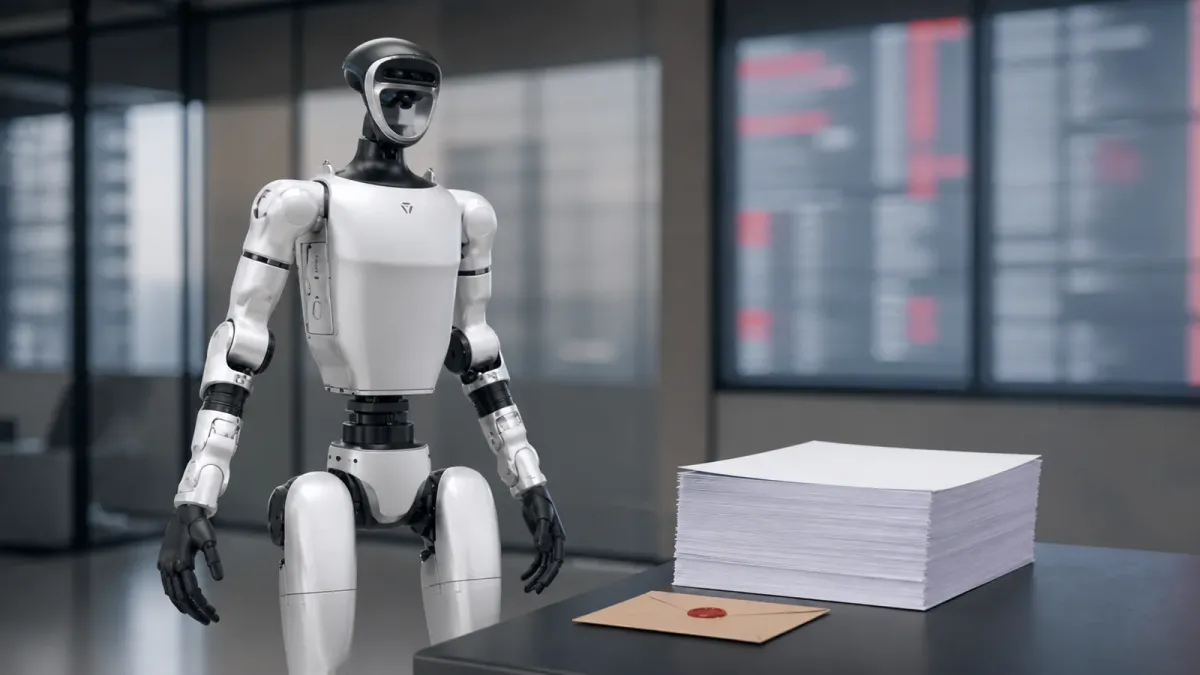
Unitree Robotics has priced its Shanghai initial public offering at 150.80 yuan a share, valuing the Hangzhou-based maker of humanoid and four-legged robots at about 61 billion yuan, or $9.04 billion, according to Reuters reporting on the company's Shanghai Stock Exchange filing.
The listing matters because it gives investors a rare public-market benchmark for a robot company that is not only selling a future AI story, but also reporting real revenue from machines that can walk, run and perform industrial or educational tasks.
Unitree is selling 40.45 million new shares, equal to 10% of its enlarged share capital, on Shanghai's STAR Market. The deal is expected to raise about 6.1 billion yuan, with IPO subscriptions due to open on August 10, 2026. The company says proceeds will support robot software and hardware development, new products and a manufacturing base.
The numbers
Reuters reported that Unitree's revenue more than quadrupled to 1.7 billion yuan in 2025, with humanoid robots generating 867.8 million yuan and overtaking four-legged robots as the company's largest business. The company's first-quarter revenue rose 68.5% to 422.8 million yuan, while profit excluding one-time items fell 52.6% to 40.3 million yuan as Unitree spent more on research and marketing.
That mix is the core investor question. Humanoid robots are attracting attention because AI models are improving, factories are looking for automation, and viral robot demos have made the category easier to understand. But a public listing forces a tougher question: whether sales can grow fast enough to justify the valuation while research costs, competition and manufacturing demands rise.
The public-market comparison also matters for people who are not buying shares. If Unitree can show durable demand, suppliers of motors, sensors, batteries and control software may get a clearer signal that humanoid robots are becoming a real industrial chain. If growth slows, the listing could instead cool expectations for companies still valued mostly on prototypes and pilot programs.
Why DeepSeek matters
Chinese AI company DeepSeek is among the strategic investors in Unitree's IPO, according to the Reuters account of Thursday's filing. That connection gives the deal a second layer: Unitree is not just a hardware listing, but part of China's broader bet on embodied AI, the idea that software models become more valuable when they can perceive and act in the physical world.
For readers outside China, the listing is also a trade-policy story. Reuters reported that U.S. sales accounted for 13.3% of Unitree's revenue last year and that the company's prospectus warned tariffs, government-purchase limits, export controls or loss of approvals could hurt overseas growth and disrupt imported parts.
What to watch next
The first test is demand for the IPO when subscriptions open on August 10. The bigger test comes after listing, when investors can compare Unitree's reported robot revenue, margins and research spending with the much larger private valuations attached to U.S. humanoid robot startups.
The practical takeaway is not that humanoid robots are suddenly a sure business. It is that one of the category's most visible companies is moving from demo videos and private financing into a market where quarterly numbers will matter. That should make the robot race easier to measure, and harder to hype without evidence.


