
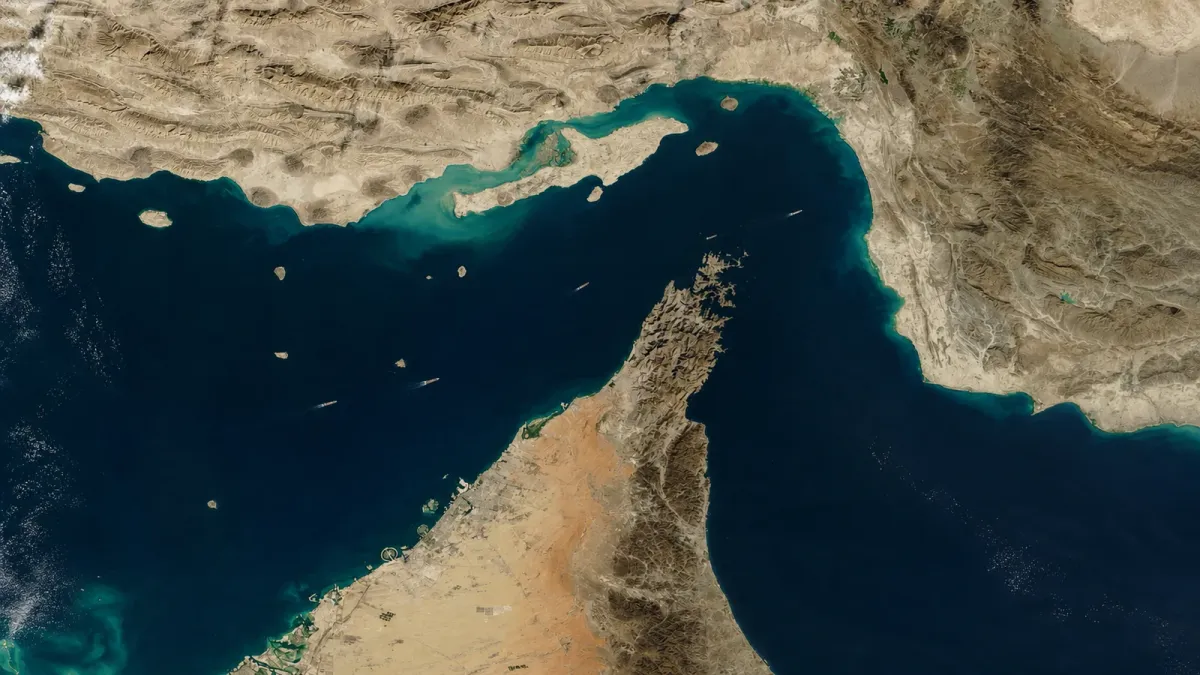
The United States and Iran paused attacks for a second straight day on Sunday, July 26, while mediators tried to pull both sides back toward an interim ceasefire and a safer route through the Strait of Hormuz.
The short answer: the pause lowers the immediate risk of another overnight strike cycle, but it is not a settled ceasefire. The blockade, the shipping dispute and the threat of renewed military action remain in place.
The Associated Press reported that the Pentagon did not explain the U.S. pause on Sunday. Iran's army spokesperson told state television that Tehran had also halted attacks while talks continued. U.S. Ambassador to the United Nations Mike Waltz said on CBS News that President Donald Trump was giving diplomacy time, while keeping military options open.
What changed
The important new fact is the second straight day without U.S. attacks and the matching pause from Iran. That creates a narrow diplomatic window after nearly two weeks of strikes and counterattacks tied to control of the Strait of Hormuz.
It does not mean ships are moving normally. AP reported that commercial shipping traffic through Hormuz was at a three-week low, citing a maritime body overseen by the U.S. Navy, and that no new attacks had been confirmed in the previous 72 hours. The U.S. military also said Saturday that its reimposed blockade continued, with a dozen commercial ships redirected, two disabled and two boarded.
Axios reported Sunday that Adm. Brad Cooper, the head of U.S. Central Command, had advised halting the Hormuz bombing campaign because the strikes had reached the limit of their effectiveness, according to sources familiar with his position. Axios also reported that U.S. and U.K. officials were still discussing a possible international effort to protect and clear mines from the strait.
Why it matters
Hormuz is one of the world's most sensitive energy and shipping chokepoints. Even a pause can matter if it lets diplomats define where commercial vessels may travel, who manages transit and what each side treats as a violation.
For readers outside the region, the practical stakes are oil prices, gasoline costs, shipping insurance, military escalation risk and the possibility that a local waterway dispute again becomes a broader war. A quiet weekend can calm markets only if it turns into clearer rules for ships and fewer threats to U.S. forces and allies.
What remains unknown
The largest uncertainty is whether the United States, Iran and Oman can agree on transit terms that each side will actually respect. AP reported that Iranian Foreign Ministry spokesperson Esmail Baghaei said talks with Oman had made progress, but Tehran also said the strait's status remained unchanged.
Another question is how long Trump will let the pause run. Waltz told CBS that conversations were continuing from senior levels down to technical levels, but he would not say how long bombing would remain halted.
Watch the next 48 hours for three signals: whether commercial traffic through Hormuz rises, whether either side reports a new attack, and whether Tuesday's planned meeting between Trump and Israeli Prime Minister Benjamin Netanyahu produces a harder or softer line on Iran. Until those signals point the same way, this is a pause, not peace.


