
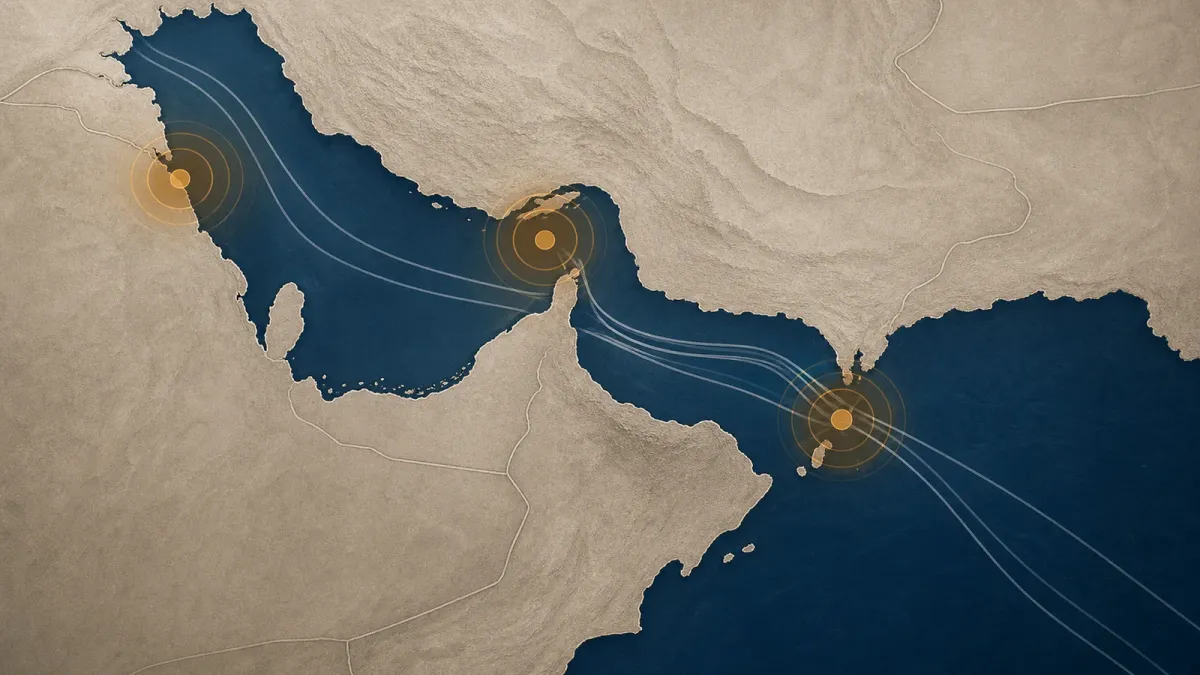
The U.S.-Iran conflict widened again on Monday, July 20, as the United States launched another round of strikes after new American service-member deaths and Iran answered with attacks that drew Bahrain and Kuwait deeper into the crisis, according to the Associated Press.
The practical concern is that the fighting is no longer limited to isolated strike sites. It is pressing on U.S. bases, Gulf allies, commercial shipping near the Strait of Hormuz and energy markets that already have been reacting to the conflict.
What changed
U.S. Central Command said on July 19 that two U.S. service members had died and one was missing in Jordan after an Iranian attack on July 17. CENTCOM also said unidentified remains were found at the location and were still being examined. Separately, it said a U.S. service member in northern Iraq was killed on July 18 during a controlled detonation of unexploded ordnance from a downed Iranian one-way attack drone.
In a separate July 18 release, CENTCOM said U.S. forces hit Iranian coastal surveillance, air defense, maritime, missile and drone-storage targets during an eighth consecutive night of strikes. The command said more than 50,000 U.S. personnel were operating across the Middle East.
AP reported Monday that the latest U.S. strikes included targets near a northwestern Iranian city believed to have underground missile bases. AP also reported that Iran responded with attacks on Bahrain, home to the U.S. Navy's 5th Fleet, and Kuwait. A separate report from Gulf News, citing the United Kingdom Maritime Trade Operations agency, said a vessel was on fire near the Strait of Hormuz after an incident northwest of Kumzar, Oman.
What remains unclear
The confirmed damage from the latest Iranian retaliation, the status of the unidentified remains in Jordan and the full effect on commercial shipping were not all settled as of Monday afternoon. That matters because early claims in a fast-moving conflict can change as militaries, Gulf governments and maritime authorities release more detailed assessments.
What happens next
The next signals to watch are CENTCOM casualty and strike updates, statements from Bahrain and Kuwait, UKMTO maritime alerts and any renewed mediation effort. Oil and fuel prices may also remain sensitive to signs that shipping through or around the Strait of Hormuz is slowing further.


