
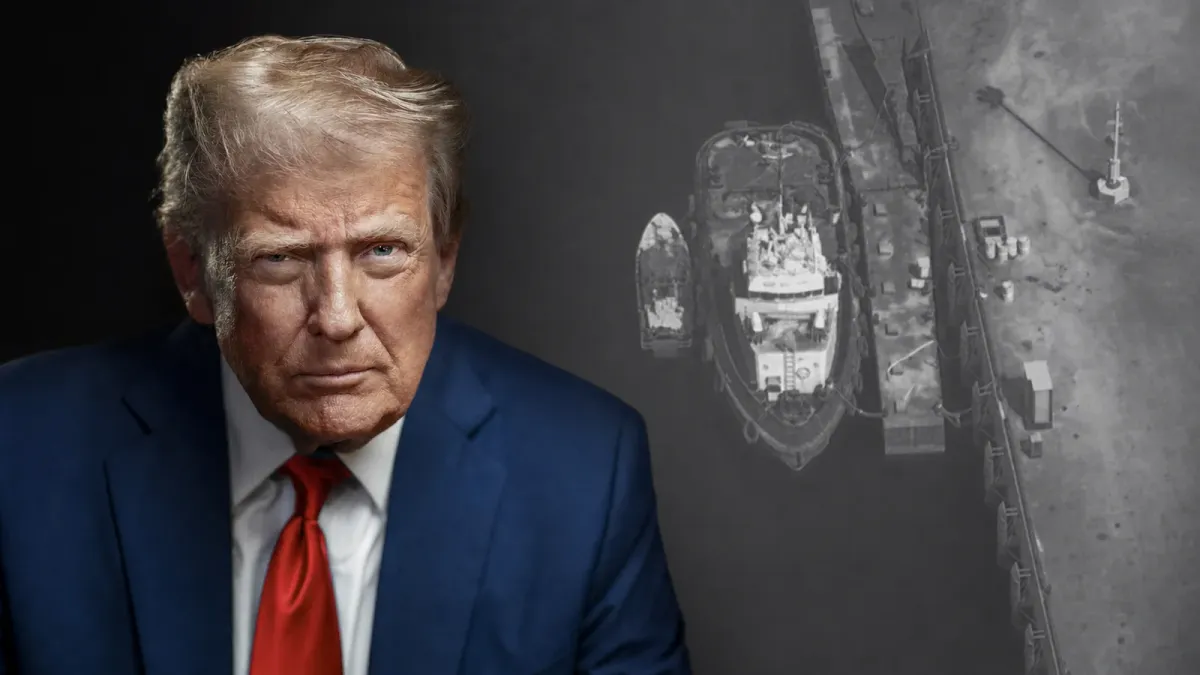
The United States completed a 13th consecutive night of strikes on Iran late Thursday as President Donald Trump said he was close to deciding whether to launch a much larger attack. The new escalation unfolded alongside Iranian and allied attacks across the Gulf and Red Sea, widening a conflict that has already disrupted one of the world’s most important energy corridors.
Trump told Axios that he was considering a “massive attack” bigger than the opening phase of the war, but he said no final decision had been made. That distinction matters: the president’s warning signals readiness for a major escalation, not an announced operation.
What changed overnight
U.S. Central Command said the latest strikes targeted Iranian military command centers, drone storage facilities, communications networks, coastal surveillance sites and maritime capabilities. The command said the operation was intended to reduce threats to commercial shipping in the Strait of Hormuz.
The Associated Press reported strikes on a Revolutionary Guard naval base in northern Iran, Qeshm Island near the Strait of Hormuz, and sites in Isfahan, Khuzestan and Fars provinces. Iranian outlets reported some of those locations; independent assessments of damage were not immediately available.
Iran and its allies also pressed attacks outside Iran. Explosive drones were intercepted over Irbil in northern Iraq, where U.S. forces are based, while Bahrain said it shot down incoming Iranian aerial attacks. Iran’s Revolutionary Guard claimed it damaged U.S.-linked facilities in Kuwait and Bahrain, but U.S. officials had not publicly verified those claims.
Why the war is widening
The latest phase began as Washington sought to curb Iranian attacks on commercial traffic through the Strait of Hormuz. Now Yemen’s Iran-aligned Houthis have attacked two Saudi oil tankers near the Bab el-Mandeb Strait, according to Reuters and AP. That creates risk at a second chokepoint used by ships moving between the Red Sea and Gulf of Aden.
The consequence reaches far beyond the battlefield. Brent crude moved above $100 a barrel after the tanker attacks before easing, while the International Maritime Organization said about 6,000 seafarers were stranded on roughly 400 vessels around Hormuz. Higher shipping, insurance and fuel costs can spread quickly through global supply chains.
Diplomacy has no clear opening
Regional mediators are still trying to revive a cease-fire, but the public positions remain far apart. Iraq’s prime minister carried a U.S. proposal to Tehran, while Pakistan’s foreign minister met his Iranian counterpart Friday. Iran has insisted that any settlement address control of the Strait of Hormuz; Washington has demanded safe passage for commercial vessels.
The House’s passage Thursday of a war-powers resolution adds domestic pressure but does not itself end the fighting. The Senate would need to act, and any measure would face a likely presidential veto unless it drew a two-thirds majority in both chambers.
What happens next
The immediate questions are whether Trump authorizes the larger operation he described, whether Iran expands attacks on U.S.-linked sites in neighboring countries, and whether Houthi pressure on Red Sea shipping continues. Until one side changes its terms or accepts a pause, the military campaign and the contest over two shipping routes appear more likely to intensify than to stop.


