
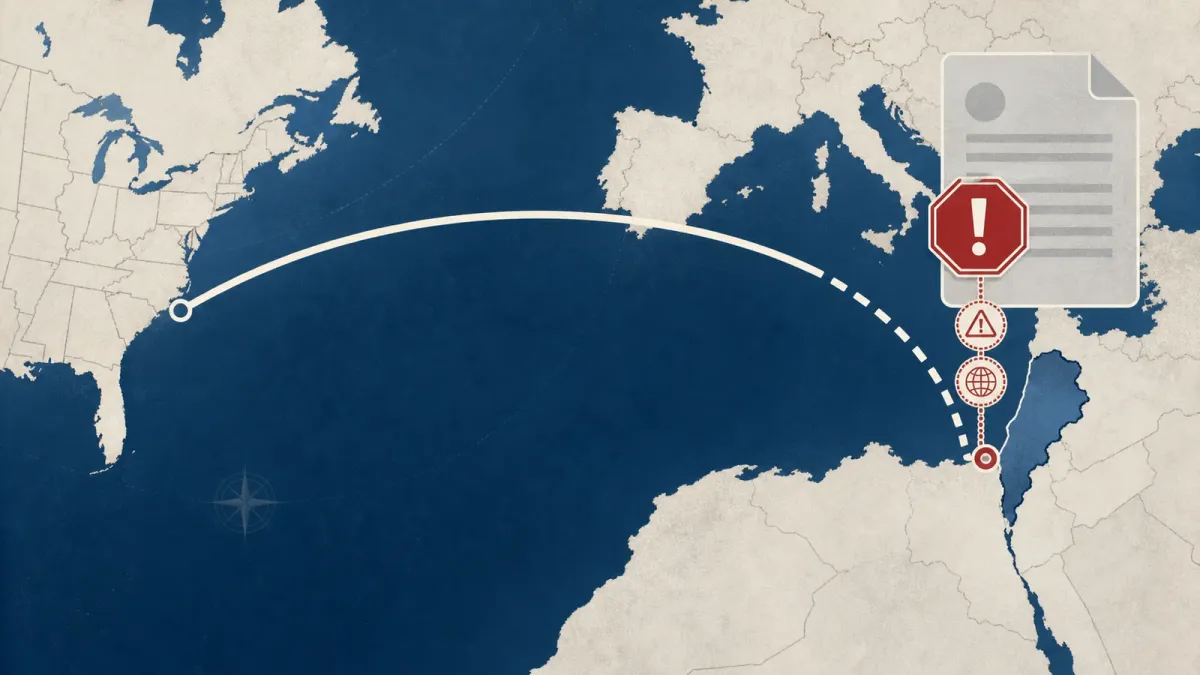
President Donald Trump said Tuesday, July 21, 2026, that American air carriers can resume direct flights to Lebanon, a route U.S. operators have not served directly for more than 40 years. The announcement came after Trump met Lebanese President Joseph Aoun at the White House and pledged support for Lebanon as a U.S.-backed security framework with Israel moves into its first test zones.
For travelers, the practical message is more complicated than a new nonstop route. The State Department still lists Lebanon at Level 4, its highest advisory level, and says U.S. citizens should not travel there for any reason because of risks including terrorism, civil unrest, kidnapping, armed conflict, landmines and limited health facilities.
What changed
The immediate change is regulatory and diplomatic: the White House says U.S. carriers may again fly directly to Lebanon. The Federal Aviation Administration record for Notice 8430.393, the 1985 prohibition on certain carrier operations into Beirut International, is now listed as cancelled, although airlines would still need commercial, security and operational plans before any route appears on a booking site.
The announcement also lands in the middle of a broader U.S. effort to stabilize Lebanon’s border with Israel. A State Department framework signed June 26 calls for Lebanese Armed Forces control in pilot zones, phased Israeli redeployments and the disarmament of non-state armed groups. AP reported that the flight announcement followed Trump’s meeting with Aoun and renewed U.S. support for that process.
What travelers should check before booking
Do not treat the possibility of direct service as an official safety green light. A direct flight can reduce layovers and travel time, but it does not change the security environment on the ground or the limits on what the U.S. government can do in an emergency.
Before buying a ticket, check the State Department advisory date, airline waiver rules, travel insurance exclusions, evacuation options and whether your itinerary depends on roads or border areas named in official warnings. The current advisory specifically flags southern Lebanon, the border with Syria, parts of southern Beirut and refugee settlements as Level 4 areas.
Travelers should also distinguish a future nonstop option from an operating schedule. Airlines may wait for security reviews, insurance terms, crew procedures and market demand before selling seats. If service appears, cancellation flexibility will matter more than saving a few hours on a connection.
Travelers with family, business or humanitarian reasons to go should also build a plan that does not rely on U.S. government evacuation. The State Department advises Americans in Lebanon to enroll in STEP, monitor local media, avoid demonstrations and have a way to leave in an emergency.
What to watch next
The next useful signal is not the political announcement alone. Watch for FAA or Transportation Department implementation details, airline schedule filings, airport security arrangements and any State Department advisory update. Until those pieces move together, direct flights are best understood as a diplomatic opening with unresolved travel risk.


