
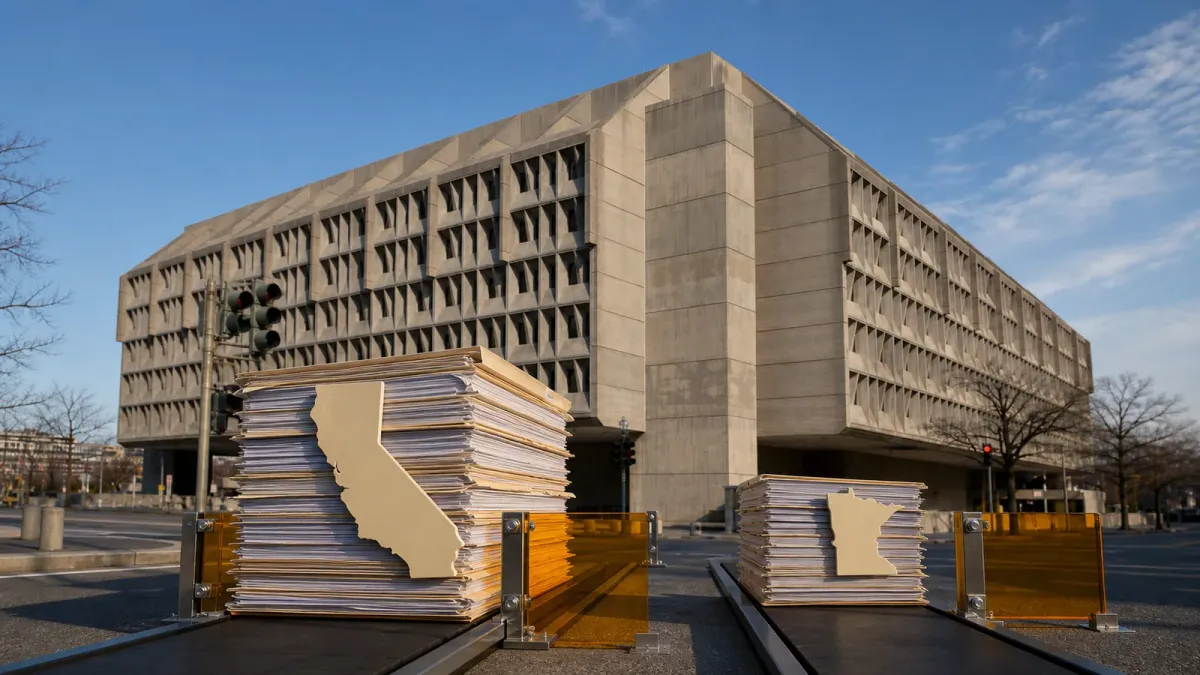
The Trump administration on Tuesday, July 21, deferred about $1.07 billion in federal Medicaid payments to California and Minnesota while it reviews claims that health officials described as high risk. The action pauses approximately $867.5 million for California and $199 million for Minnesota.
The Department of Health and Human Services said the money is being held until the states provide more documentation showing that the claims comply with federal Medicaid rules. HHS stressed that the action is a deferral, not a permanent funding cut. Reuters reported that the holds do not change Medicaid eligibility or benefits, though prolonged delays could increase pressure on state budgets and health-care providers.
What changed
Federal officials said a focused review of California claims found spending growth in certain in-home care programs that exceeded national trends and identified claims needing additional support. In Minnesota, CMS reviewed 14 service areas considered vulnerable to fraud and raised questions about provider eligibility, billing and other program-integrity issues.
HHS Secretary Robert F. Kennedy Jr. and CMS Administrator Mehmet Oz framed the move as a shift toward stopping questionable payments before federal money is released. Reuters and the Associated Press reported that officials cited unusual billing patterns, including providers appearing to bill for several patients at once or after a beneficiary's death, but did not present case-level evidence proving fraud in the claims covered by Tuesday's announcement.
The states dispute the administration's characterization. California Gov. Gavin Newsom said the move was politically motivated and argued that the state's in-home program reduces costs by helping older adults and people with disabilities avoid institutional care. Minnesota Gov. Tim Walz said the policy punishes people who rely on health services rather than alleged fraudsters.
What it means for Medicaid patients
The immediate message for enrollees is that coverage has not been canceled. The payment dispute is between the federal government and the states, which generally pay providers and then seek the federal share of eligible Medicaid costs. A deferral delays that federal reimbursement while supporting records are reviewed.
That distinction matters, but it does not make the dispute cost-free. Minnesota health officials have warned in earlier statements that repeated federal deferrals can create major state budget gaps and threaten the stability of hospitals, clinics, home-care providers and other services. California officials have likewise argued that large reimbursement holds can put pressure on programs serving seniors and people with disabilities.
What remains unclear
It is not yet clear how much of Tuesday's total is new money beyond earlier deferrals announced in 2026. The Associated Press reported that Kennedy did not specify whether the latest figures overlap with previous actions, including a roughly $1.3 billion California deferral announced in May and a roughly $260 million Minnesota deferral announced in February.
That accounting question will determine the total exposure for each state. It also leaves open how long the review could take and whether CMS will accept the records already submitted by Minnesota. Oz said the agency is reevaluating Minnesota's documents.
What happens next
California and Minnesota can seek release of the money by submitting documentation that CMS accepts as proof the claims meet federal requirements. Both states say they are fighting fraud and have been cooperating with federal reviews, while challenging the scale and rationale of the funding holds.
The central test is now administrative rather than clinical: whether the states can satisfy CMS claim by claim, and how quickly the agency makes a decision. Until then, the benefits people receive remain in place, but the financing dispute—and the risk it creates for state budgets—remains unresolved.


