
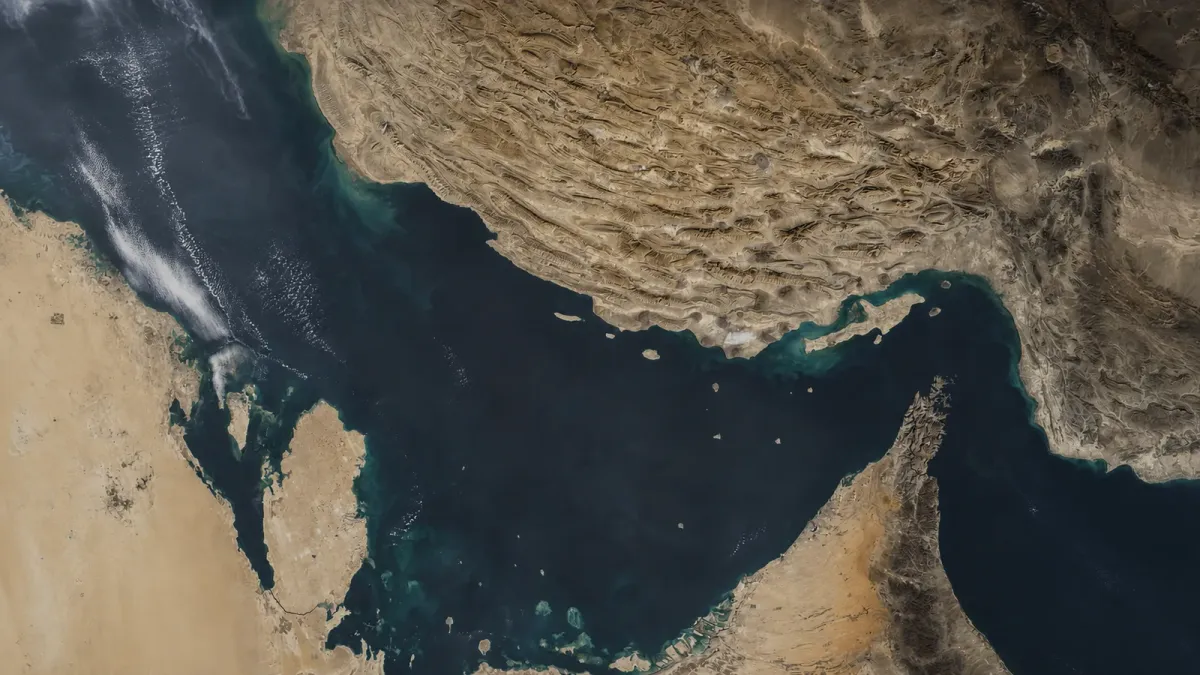
U.S. forces began a new wave of strikes against Islamic Revolutionary Guard Corps targets inside Iran at noon Eastern time on Tuesday, September 1, U.S. Central Command said. The command said the operation followed recent attempted attacks against commercial shipping in the Strait of Hormuz and American service members in the region.
The initial announcement did not identify the targets, their locations, the weapons used, the planned duration of the operation or any damage and casualties. That leaves the scale of the action unclear even as it marks a material escalation beyond the limited U.S. strike on Iran’s Larak Island on August 30.
What changed
Sunday’s action hit two Iranian rocket launchers that CENTCOM said IRGC forces were preparing to use with sea mines near the strait. Iran then said it launched missiles at U.S. sites in Jordan; American and Jordanian officials said the missiles were intercepted. The United Arab Emirates also said it intercepted an Iranian drone over its waters.
Tuesday’s announcement described multiple IRGC targets rather than a single imminent launcher threat. Axios reported before the strikes that U.S. officials were considering limited action around the strait to keep Iran from rebuilding radar, air-defense and anti-ship capabilities. CENTCOM had not confirmed that target description in its opening statement, so it should not yet be treated as the final account of the operation.
Why the Strait matters
The military moves are unfolding alongside renewed pressure on commercial shipping. Reuters reported that two tankers were hit by projectiles while leaving the Strait of Hormuz on Monday. Oil prices rose roughly 2% earlier Tuesday as traders assessed the risk of further disruption through the waterway, which carried about one-fifth of global oil supplies before the war began in February.
Iranian President Masoud Pezeshkian said earlier Tuesday that Tehran would return to the terms of a June interim agreement if the United States did the same. His statement came before CENTCOM announced the new strikes. Iran’s armed forces had also warned that another U.S. attack would bring a heavier response.
What we do not know yet
There was no immediate verified target list, damage assessment or confirmed Iranian response to the new strike wave. Claims about specific locations, casualties or retaliation should be treated as unconfirmed until CENTCOM, Iranian authorities or independently verified reporting provides evidence.
What happens next
The next decisive information will be any CENTCOM after-action statement, an official response from Tehran, and alerts from regional air defenses or maritime authorities. Qatar, Oman and Pakistan have been involved in diplomatic efforts, but the renewed exchange of fire makes an immediate return to the expired interim arrangement less certain.


