
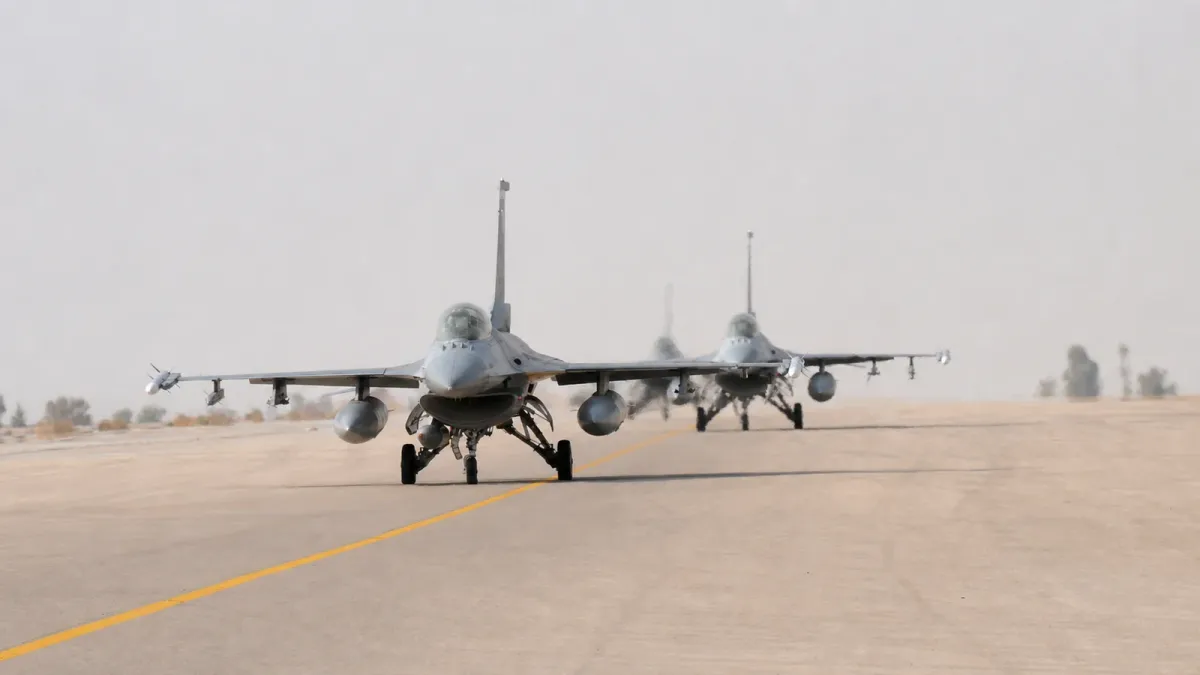
U.S. forces began a new round of airstrikes inside Iran at 8 p.m. Eastern time on Wednesday, July 29, U.S. Central Command said, ending a five-day pause in the American bombing campaign. The military described the operation as retaliation for an Iranian ballistic-missile attack aimed at U.S. forces in Jordan one day earlier.
The immediate consequence is a renewed cycle of direct U.S.-Iran attacks just as mediators had been trying to revive diplomacy. CENTCOM had not disclosed the targets, number of strikes, damage or casualties as of Wednesday evening, and Iranian authorities had not issued a detailed public assessment of the new operation.
President Donald Trump had told reporters earlier Wednesday that the United States would strike Iran “very hard.” The operation followed 13 consecutive nights of U.S. attacks that Trump paused on Friday to allow another opening for negotiations.
What changed
Iran’s Islamic Revolutionary Guard Corps said it fired ballistic missiles at Muwaffaq Salti Air Base in Jordan, a facility used by American forces. Jordan’s military said it intercepted and destroyed five missiles, with no immediate reports of casualties or damage. CENTCOM said the missiles were launched at 5:45 p.m. Eastern time on July 28 in what it called an attempted surprise attack.
The U.S. retaliation inside Iran was separate from American-Saudi strikes carried out against Iran-aligned militias in eastern Iraq. CENTCOM said those strikes hit logistics and weapons sites after more than 30 drone attacks directed by the Revolutionary Guard over the previous 72 hours. The Popular Mobilization Forces, an Iraqi coalition that includes Iran-backed groups, said at least 20 fighters were killed and 32 wounded; Iraqi officials condemned the operation as a violation of the country’s sovereignty.
Together, the actions show how quickly a short pause has given way to a wider regional confrontation. Saudi Arabia has now publicly joined an operation against Iran-aligned groups, while Jordan has again had to intercept missiles headed toward a base hosting U.S. forces.
What we do not know yet
CENTCOM’s first announcement did not identify which Iranian sites were targeted or what weapons were used. There was also no verified account of damage on the ground, civilian harm or an immediate Iranian military response. Reports circulating online about explosions in specific provinces had not been independently confirmed by U.S. or Iranian authorities when this article was published.
Those gaps matter. The choice of targets will help show whether Washington intends a limited response against launch and command sites or a broader return to sustained attacks. Any claim about destroyed facilities or casualties should be treated as unconfirmed until officials provide evidence or independent reporting reaches the locations.
What happens next
The first signal to watch is whether CENTCOM describes the operation as complete or announces additional waves. Iran’s response will determine whether the exchange remains bounded or expands to more U.S. bases, regional allies or shipping routes.
Diplomacy is now more difficult. Iran had denied asking to restart direct talks, while U.S. officials had offered mixed messages about whether negotiations were close. Renewed strikes also threaten to add pressure to energy markets because the conflict has disrupted traffic through the Strait of Hormuz, a critical route for global oil and gas shipments.
This is a developing story. The Daily Newsfront will update confirmed target, casualty and response details as authoritative information becomes available.


