
The United States and Saudi Arabia formally signed a 30-year civil nuclear cooperation agreement Wednesday, turning President Donald Trump's approval into a framework that could open the Saudi market to American reactor and fuel suppliers—and could eventually support uranium enrichment inside the kingdom.
U.S. Energy Secretary Chris Wright and Saudi Energy Minister Prince Abdulaziz bin Salman signed the Section 123 agreement and a separate bilateral safeguards agreement, according to the Energy Department. The Saudi Energy Ministry said the pact would help diversify the kingdom's energy sources and expand investment and technology cooperation.
The signing is consequential, but it is not a reactor sale, an export license or permission to start enriching uranium. A Section 123 agreement establishes the legal terms for significant U.S. civilian nuclear cooperation. The public still has not seen the agreement or the accompanying safeguards text, leaving their most sensitive provisions unresolved.
What the agreement opens
An administration memo reviewed by NPR says U.S. companies would receive priority access to Saudi Arabia's planned nuclear program, including opportunities to supply reactors and fuel. The memo also says the framework does not obligate Washington to transfer enrichment, reprocessing or other fuel-cycle capabilities.
The Associated Press reported that the agreement could nevertheless pave the way for a Saudi uranium-enrichment facility after a joint U.S.-Saudi study. AP also reported that the pact does not require the International Atomic Energy Agency's Additional Protocol, which gives inspectors broader access and information than a standard safeguards agreement.
Those are separate questions. The Atomic Energy Act requires U.S. consent before material covered by a 123 agreement can be enriched or reprocessed, but it does not require every partner to renounce all domestic enrichment. The United Arab Emirates made that stronger pledge in its U.S. agreement, creating the benchmark often called the nuclear cooperation “gold standard.”
Congress gets the next move
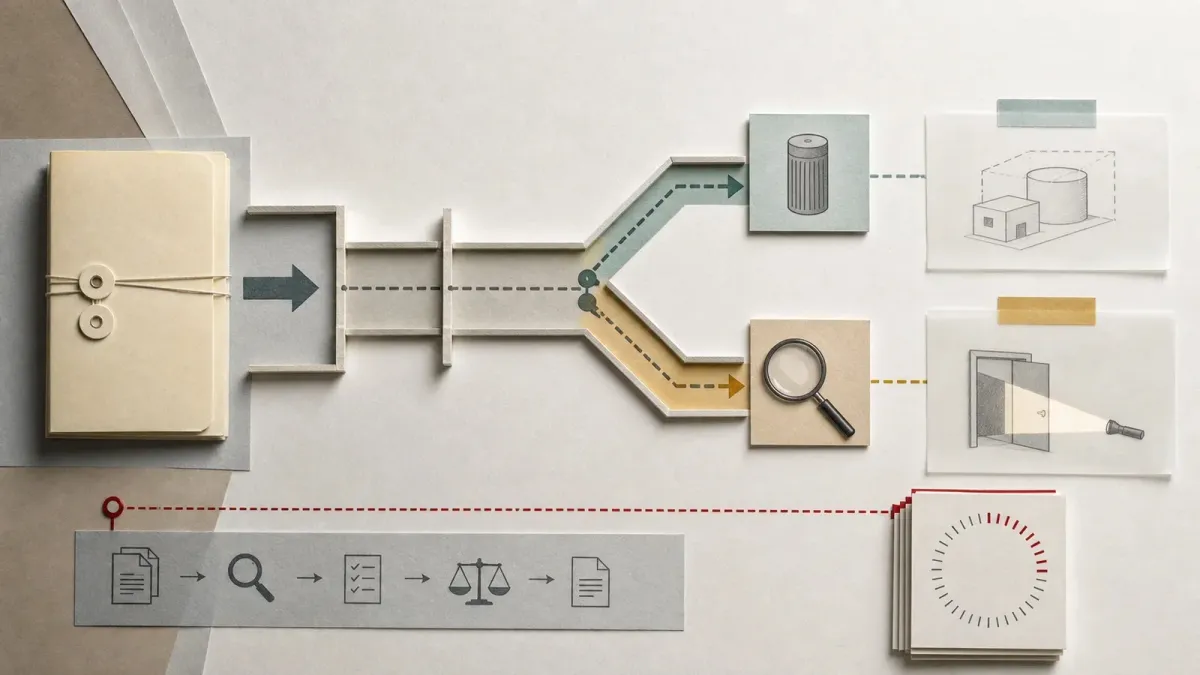
The administration says it will submit the agreement to Congress. According to the Congressional Research Service, the normal review process totals 90 days of continuous session: at least 30 days of committee consultation followed by a 60-day review period. A nonexempt agreement can then take effect unless a joint resolution of disapproval becomes law.
The clock does not begin simply because the ministers signed. It depends on the president transmitting the agreement and the required supporting documents, including a Nuclear Proliferation Assessment Statement. Saudi Arabia's inspection status could also affect timing: federal law restricts submission of that assessment for a country not implementing an IAEA Additional Protocol unless the president supplies a separate national-security report and waits 90 days.
Saudi Arabia told the IAEA in 2024 that it had asked to rescind its Small Quantities Protocol and move toward full implementation of its comprehensive safeguards agreement. That step is not the same as adopting an Additional Protocol. Until the two new texts and the congressional package are public, it is not possible to determine how the bilateral safeguards pact interacts with those international commitments.
Why enrichment is the dividing line
Enrichment is used to make fuel for civilian reactors, but the same technology can produce material at progressively higher concentrations. It does not by itself create a nuclear weapon, yet domestic centrifuge capacity can shorten the technical path to weapons-grade material. Crown Prince Mohammed bin Salman has said Saudi Arabia would seek a bomb if Iran obtained one, intensifying scrutiny of any agreement that leaves enrichment available.
Secretary of State Marco Rubio said the United States would not enter an agreement that creates a proliferation risk. Wright said the two pacts uphold high safety and nonproliferation standards. Critics, including Rep. Brad Sherman and outside nuclear experts, argue Congress should demand the same enrichment ban and enhanced inspections accepted by the UAE.
The decisive evidence will be documentary, not ceremonial. Watch for publication of the 123 agreement and safeguards pact, formal transmittal to Congress, the status of the Additional Protocol, and any later export license or fuel-cycle arrangement. Until those steps occur, the agreement creates a commercial and legal opening—not an operating Saudi nuclear program.


