
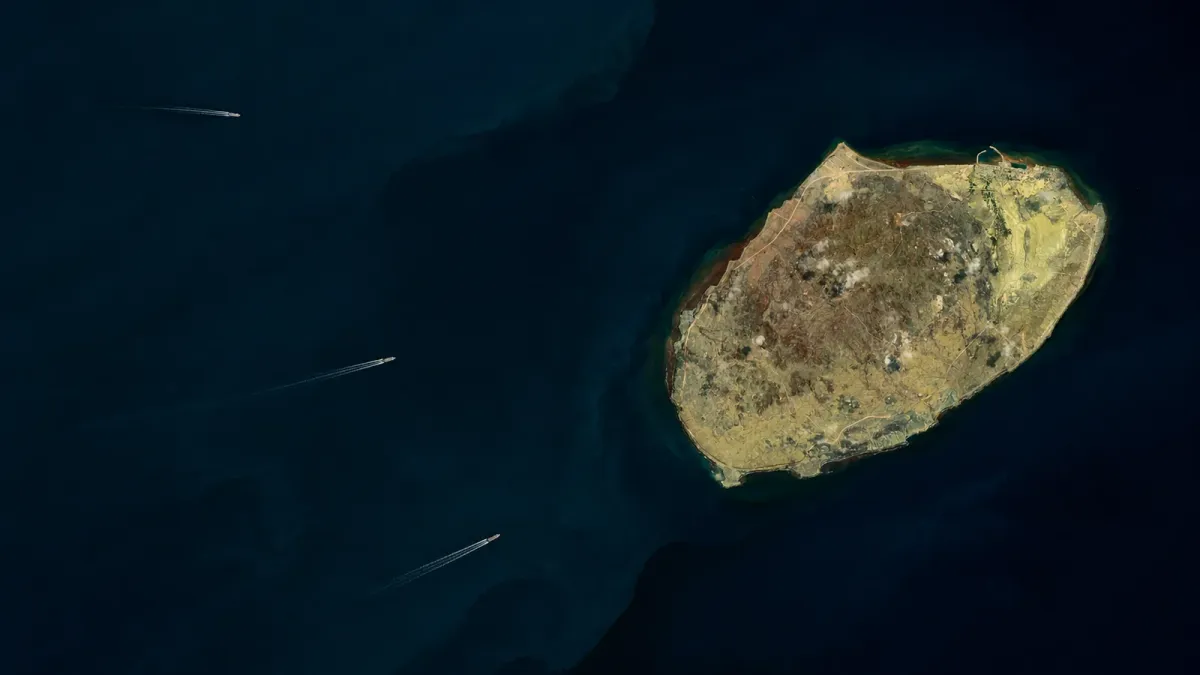
U.S. forces struck Iranian rocket launchers near Larak Island in the Strait of Hormuz on Sunday, August 30, in the first known American military action against Iran in about a month. A U.S. official told The Associated Press that forces with Iran’s Islamic Revolutionary Guard Corps appeared to be preparing rockets with sea mines for use in the strait.
Iran acknowledged that the strike caused deaths and injuries among fighters and civilians, without giving a verified toll, and warned that the attack would bring punishment for the aggressor. The immediate danger is not only another military exchange: renewed mining or attacks in the strait could threaten commercial vessels moving through one of the world’s most important energy corridors.
What changed
The operation interrupts a tentative easing that followed weeks of fighting earlier this summer. U.S. forces had recently completed clearing sea mines from international shipping routes, while Washington said protected commercial traffic was beginning to recover. Sunday’s strike shows that the corridor remains contested even after mines were removed from the lanes.
Reports of explosions came from the area around Larak Island, which sits beside the narrow shipping channel. The American account said the launchers were being readied with rockets carrying sea mines. Iran’s statement, carried by state media, confirmed casualties but did not independently confirm what equipment was present or whether a launch was imminent.
The distinction matters. A defensive strike against equipment about to be used would support Washington’s argument that it acted to protect navigation. Iran’s promised response, however, raises the possibility that Tehran will treat the attack as a renewed phase of the conflict rather than a limited interdiction.
What remains unclear
Neither side has released a full public account of the target, the weapons used by the United States, the number of people killed or injured, or the extent of damage. There is also no independent confirmation yet that sea mines were attached to the rockets. Those gaps should keep early claims about the strike’s scale and intent provisional.
The status of commercial traffic is another open question. Clearing previously laid mines reduces one danger, but it does not eliminate the risk of new launches, harassment of vessels, or temporary route changes by shipping companies and insurers. Any sustained interruption could affect freight schedules and energy prices far beyond the Gulf.
What happens next
The first signals to watch are whether Iran attempts a military response, whether U.S. Central Command changes convoy or patrol operations, and whether maritime authorities issue new guidance to commercial ships. Shipping firms may also adjust routes or security procedures before governments announce broader measures.
For now, the most important fact is that a month-long pause in direct U.S. strikes has ended. The operation may have stopped one immediate threat, but Iran’s retaliation warning means the security picture in the Strait of Hormuz is again moving faster than the reopening of its shipping lanes. Even a limited response could quickly change the calculus for commercial operators.


